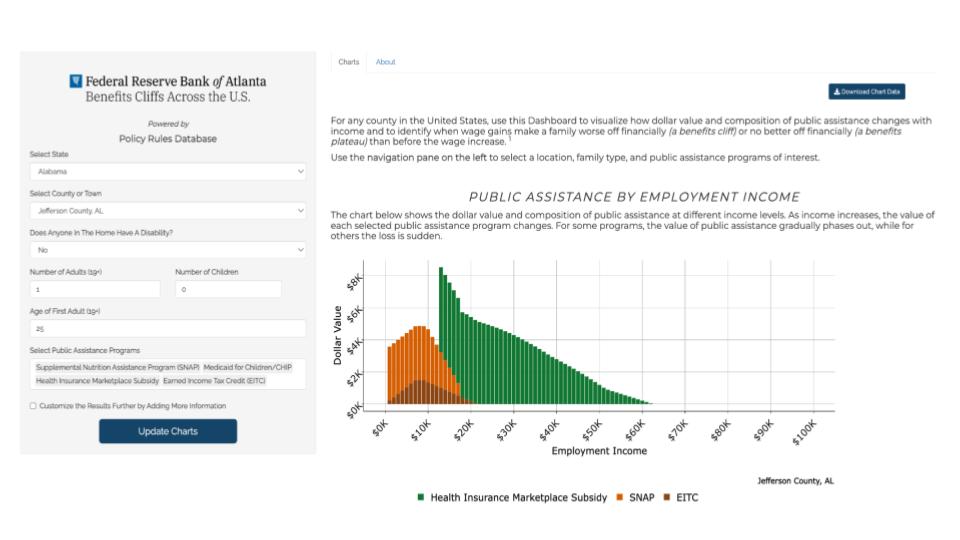
The Policy Rules Database (PRD), developed by the Federal Reserve Bank of Atlanta and the National Center for Children in Poverty, consolidates complex rules for major U.S. federal and state benefit programs and tax policies into a standardized, easy-to-use format. This database allows researchers to model public assistance impacts, simulate policy changes, and analyze benefits cliffs across various household scenarios using common rules and language across different programming platforms.
In our research announcement on theories of change (ToC) for digital government, the Digital Service Network shared our belief that all Digital Service (DS) teams should work to develop a ToC.
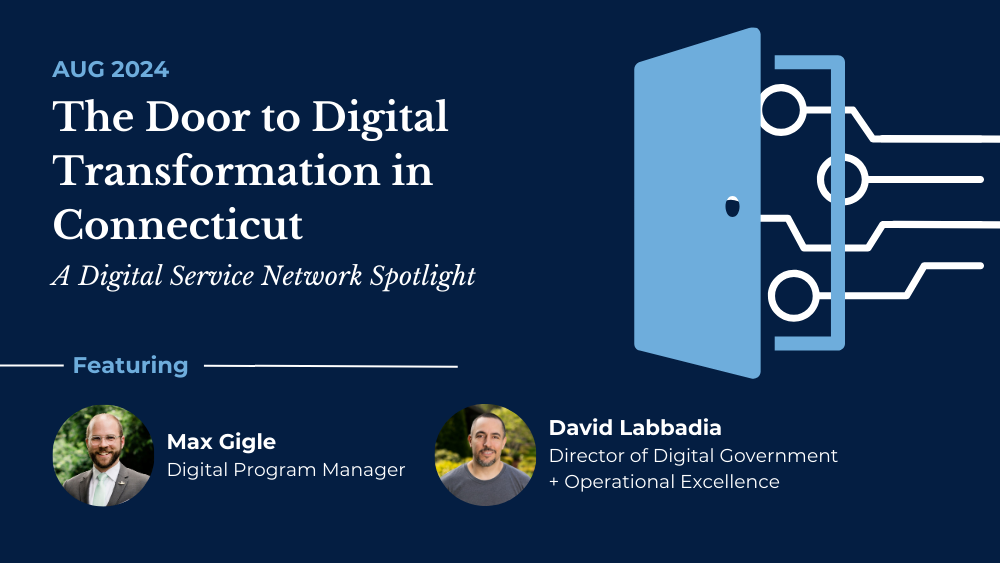
The Digital Services Network (DSN) spoke with Connecticut’s digital program manager, Max Gigle, and Director of Digital Government and Operational Excellence David Labbadia, to learn more about the team’s human-centered approach to developing Business.CT.gov as the first step on the path toward an “all-digital government.”
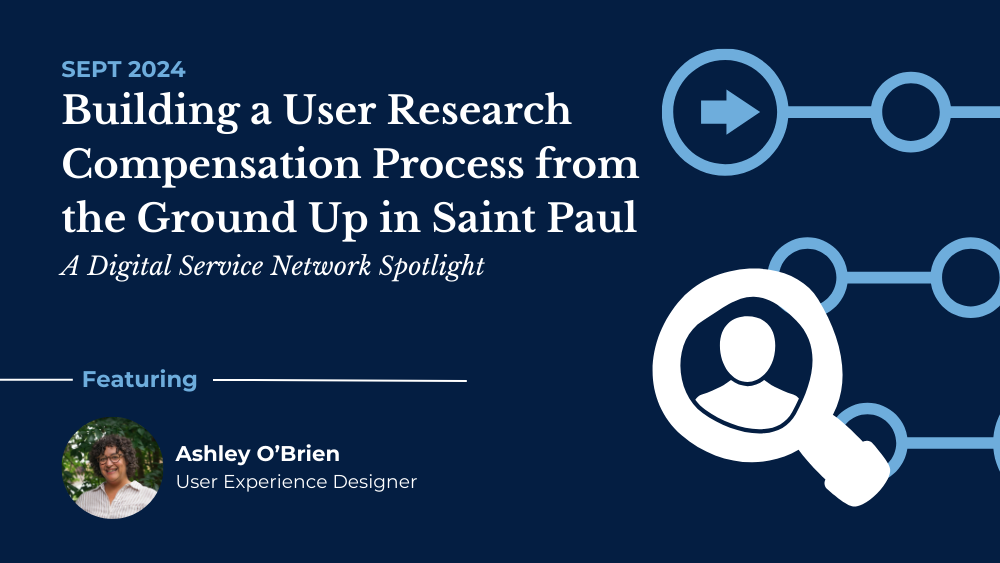
The Digital Service Network (DSN) spoke with Ashley O’Brien, user experience designer for the City of Saint Paul, MN, about the flexible and resourceful approach she took to reach people across the city.
In June 2020, the state implemented an innovative and entirely virtual vendor selection process to evaluate these solutions under the direction of the Colorado Digital Service (CDS).
This webinar session discusses the importance of using CX metrics to guide agency-level decisions and how to gather, analyze, and apply customer feedback to optimize products and services.
At the April 2024 in-person Chief Digital Service Officer (CDSO) convening, the DSN hosted a conversation about building teams that last and focused on three key steps – hiring, retaining talent, and upskilling.
Presentation covering the findings of a research study analyzing the structural and budgetary layout of of eleven US-based Digital Service Teams (DSTs) at the municipal, county, and state levels.
The Policy2Code Prototyping Challenge explored utilizing generative AI technology to translate U.S. government policies for public benefits into plain language and code, culminating in a Demo Day where twelve teams showcased their projects for feedback and evaluation.
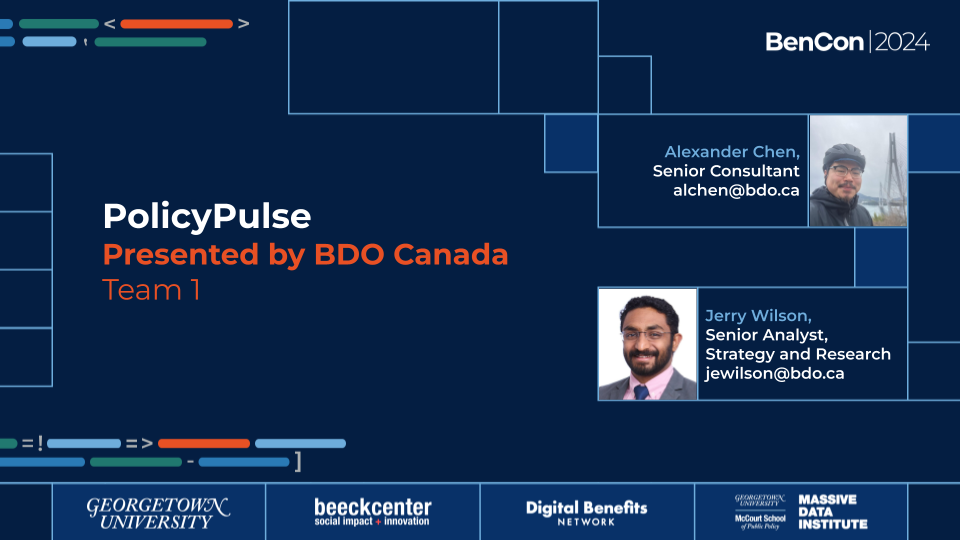
The team introduced "Policy Pulse," a tool to help policy analysts understand laws and regulations better by comparing current policies with their original goals to identify implementation issues.
A profile on FormFest speakers Greg Clapp, Josh Gregor, Sophia Tareen, Sourabh Chakraborty, featuring stories about their motivations for working on public sector form innovation.