Drawing on the Beeck Center’s research on government, nonprofit, academic, and private sector organizations that are working to improve access to safety net benefits, this report highlights best practices for creating accessible benefits content.
At the April 2024 in-person Chief Digital Service Officer (CDSO) convening, the DSN hosted a conversation about building teams that last and focused on three key steps – hiring, retaining talent, and upskilling.
This guide addresses technical and engineering requirements for a text messaging program, including texting platform options, and procurement and vendor management, among other technical implementation topics.
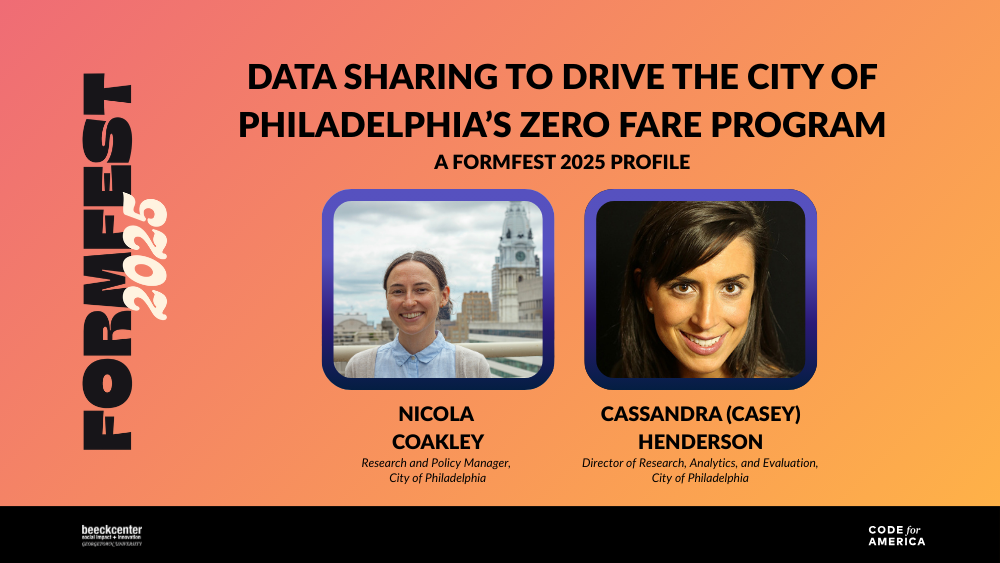
This FormFest profile explores how Philadelphia leveraged cross-department data sharing to launch its Zero Fare program, auto-enrolling eligible residents in unlimited transit benefits while tackling the challenge of outreach and trust-building to deliver passes effectively.
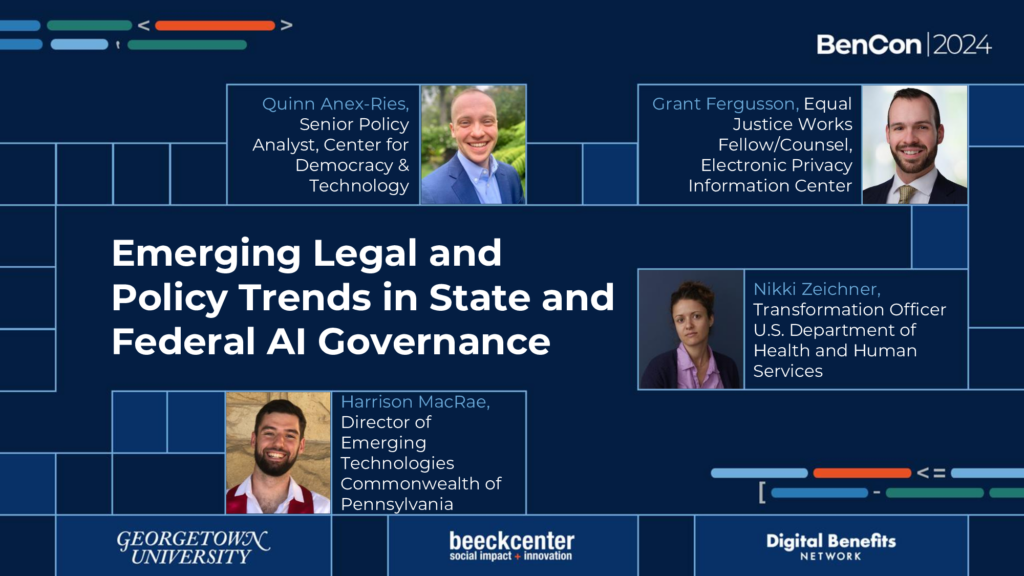
BenCon 2024 explored state and federal AI governance, highlighting the rapid increase in AI-related legislation and executive orders. Panelists emphasized the importance of experimentation, learning, and collaboration between government levels, teams, agencies, and external partners.
This guide provides a detailed overview summarizing the many initiatives and activities from Congress, the White House, federal agencies, and coalitions which may impact the digital identity landscape in the United States, including at state, local, Tribal, and territorial levels.