Best practices for procuring and developing accessible tools that utilize artificial intelligence (AI) and how to ensure that they are in compliance with the Web Content Accessibility Guidelines (WCAG) 2.1 Level A and Level AA.
The Commonwealth of Massachusetts Executive Office of Technology Services and Security (EOTSS)
This page describes how the GSA’s 10x team supported digital trust and security across federal services by building shared tools, automating compliance, and exploring privacy-preserving techniques.
This blog introduces the GSA’s Public Benefits Studio, which partnered with agencies to build shared tools—starting with a multi-channel notifications service—to improve coordination and access across federal public benefits programs.
This impact report showcases how the city used technology to expand digital equity, modernize services, and responsibly deploy emerging tech to better serve New Yorkers.
New York City Office of Office of Technology and Innovation (OTI)
The playbook is a comprehensive guide developed by the Maryland Department of Information Technology to assist state agencies in creating consistent, user-centered, and accessible digital services.
This video demonstrates how to use Iowa's Child Care Connect (C3), a centralized data system that integrates near-real-time child care data to support families, providers, policymakers, and economic development efforts across the state.
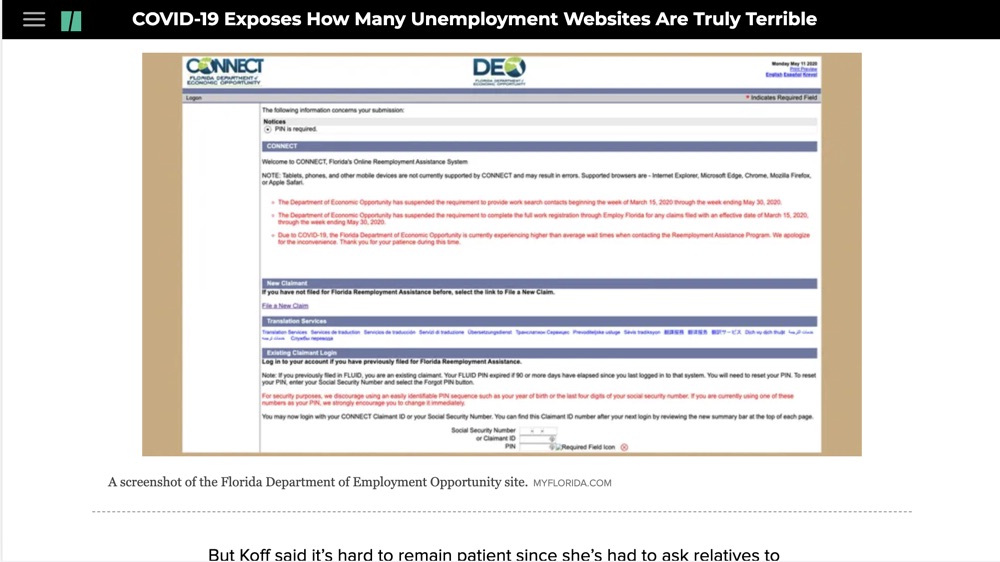
This article shares insights from Minnesota-based focus groups, revealing that low-income women navigating unemployment insurance often face confusion and uncertainty around eligibility, complex administrative processes, and additional challenges related to childcare, housing stability, and mistrust of benefit systems.
An economic analysis estimating how recipients of emergency SNAP benefits during the pandemic allocated additional funds, primarily to food consumption.
These standardized guidelines are intended to manage data quality across Hawaii state agencies, covering key dimensions, compliance expectations, and best practices for both general and geospatial data.
This executive order establishes Operation Hire Hawaiʻi, a statewide initiative directing agencies to prioritize local hiring, expand apprenticeship and workforce development programs, and strengthen partnerships to build a more resilient, resident-based public workforce.
An evaluation of the impact of the USDA’s FFRCA waivers on the WIC program during the COVID-19 pandemic, focusing on how temporary flexibilities such as remote certification and relaxed physical presence requirements affected participant access, program operations, and staff capacity.