These principles and best practices for AI developers and employers to center the well-being of workers in the development and deployment of AI in the workplace and to value workers as the essential resources they are.
Michigan's UIA director, Julia Dale, is leading the agency through transition by prioritizing lived experience, hope, grit, and values. Virginia's SNAP Program Manager, Michele Thomas, highlighted the success of Sun Bucks, a summer EBT child nutrition program that fed over 700,000 kids in its first year.
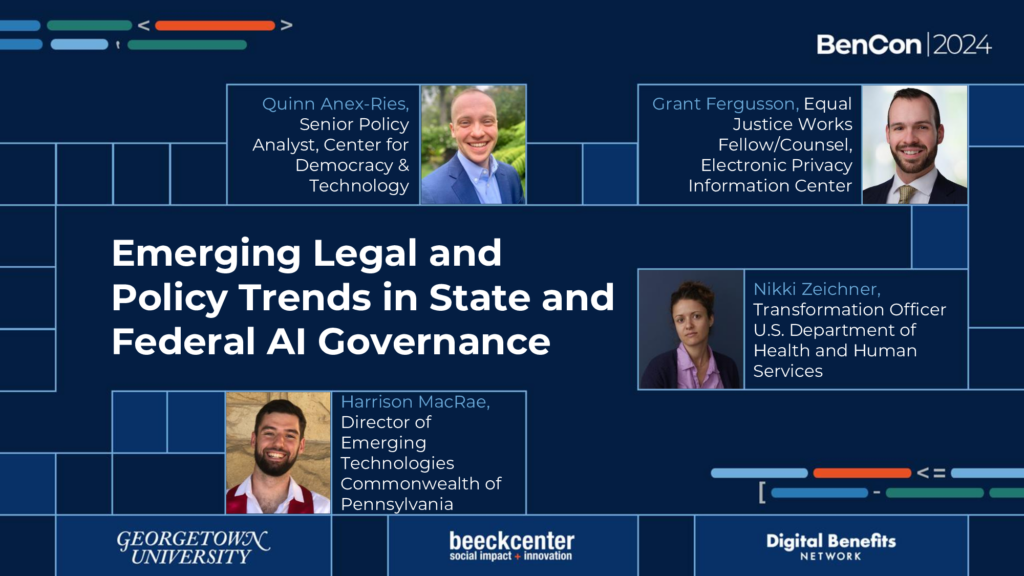
BenCon 2024 explored state and federal AI governance, highlighting the rapid increase in AI-related legislation and executive orders. Panelists emphasized the importance of experimentation, learning, and collaboration between government levels, teams, agencies, and external partners.
This article explores how AI and Rules as Code are turning law into automated systems, including how governance focused on transparency, explainability, and risk management can ensure these digital legal frameworks stay reliable and fair.
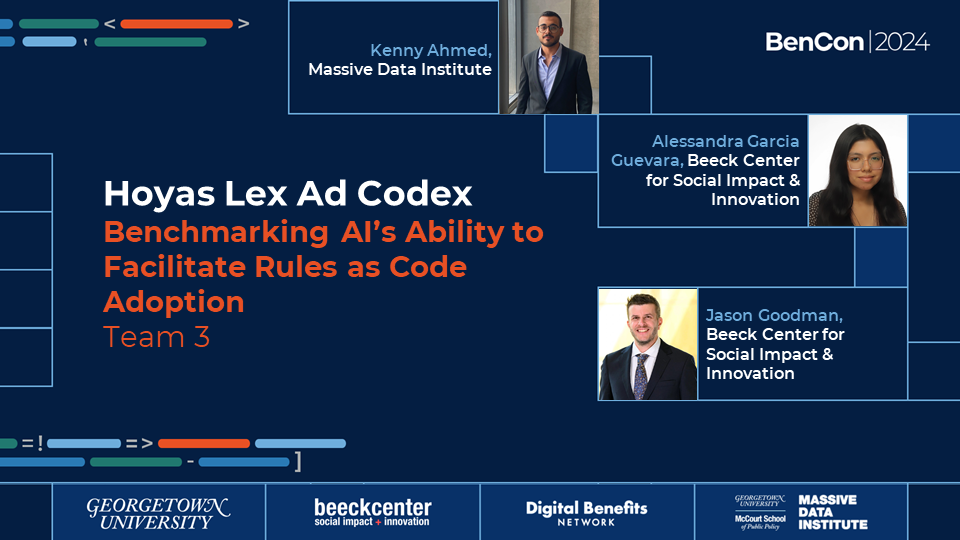
The team explored the performance of various AI chatbots and LLMs in supporting the adoption of Rules as Code for SNAP and Medicaid policies using policy data from Georgia and Oklahoma.
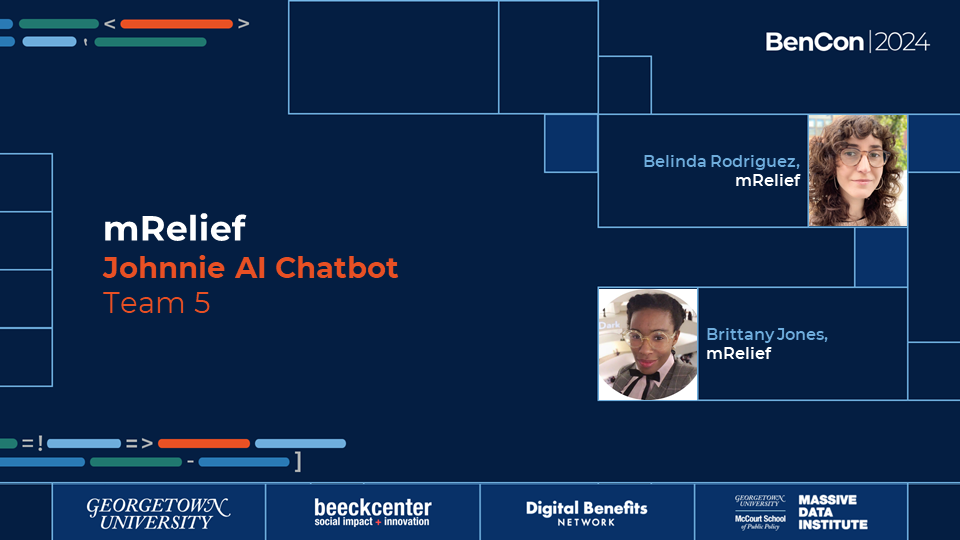
The team conducted experiments to determine whether clients would be responsive to proactive support offered by a chatbot, and identify the ideal timing of the intervention.
This playbook shares best practices and innovations related to data and analytical approaches for improving grant outcomes. Equitable data practices improve the effectiveness and efficiency of federal program dollars through better resource allocation and more informed decision-making.
Public procurement in state governments can be slow and inefficient, but artificial intelligence (AI) offers a solution by automating tasks, improving decision-making, and addressing workforce gaps, as highlighted in a joint brief by NASCIO and NASPO.
National Association of State Chief Information Officers (NASCIO)
A profile on FormFest speakers Greg Clapp, Josh Gregor, Sophia Tareen, Sourabh Chakraborty, featuring stories about their motivations for working on public sector form innovation.