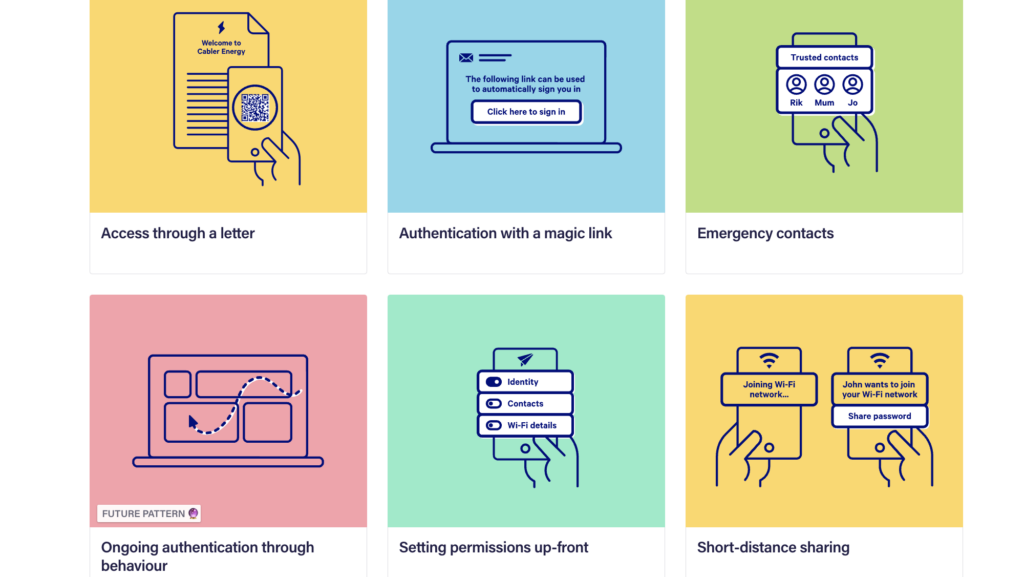
A catalogue to help teams design trustworthy services that work for people. Categories including informing decisions, signing into services, giving and removing consent, and doing security checks.
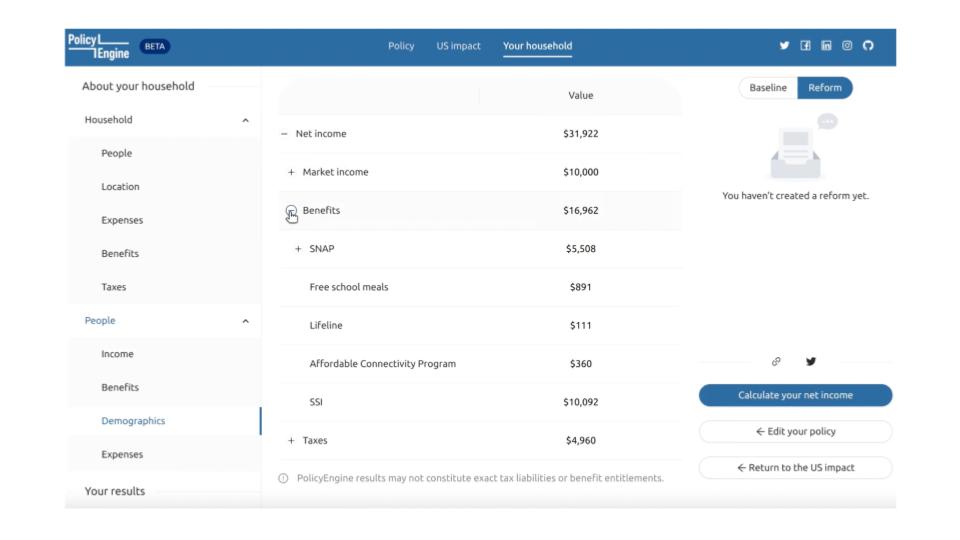
PolicyEngine is a nonprofit that provides a free, open-source web app enabling users in the US and UK to estimate taxes and benefits at the household level, while also simulating the effects of policy changes. By combining tax and benefits data, PolicyEngine helps individuals and policymakers better understand the impacts of existing policies and proposed reforms, using microsimulation models built from legislation and enhanced survey data.
The Technology Code of Practice is a set of government guidelines for designing, building, and buying digital services and technology to ensure they are efficient, accessible, and cost-effective in the UK.
These guidelines provide UK government organizations with best practices for responsibly and effectively procuring artificial intelligence (AI) systems.
This review evaluates the UK public sector's use of digital technology, identifying successes and systemic challenges, and proposes reforms to enhance service delivery.
This playbook provides government-wide guidance for planning, procuring, and managing digital, data, and technology (DDaT) projects with a focus on innovation, agile delivery, cybersecurity, sustainability, and commercial best practices.
This hub introduces the UK government's Algorithmic Transparency Recording Standard (ATRS), a structured framework for public sector bodies to disclose how they use algorithmic tools in decision-making.
The Public Design Evidence Review examines how design practices can improve public policies and services across the UK, exploring what good “public design” looks like, how it’s being used, and what enables or inhibits its impact.
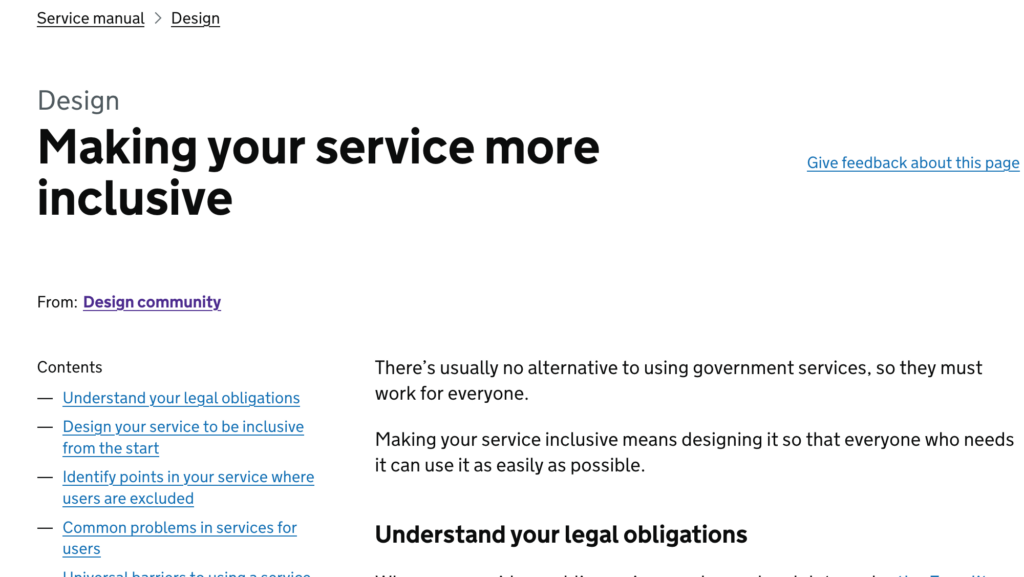
Making your service more inclusive means designing government services so that everyone who needs to use them can do so with as few barriers as possible, by understanding legal duties, identifying and removing exclusion points, and considering a wide range of user needs throughout the design process.
The AI Insights publication series from the UK Government’s Government Digital Service (GDS) provides technical guidance to help public sector organisations understand, implement, and manage artificial intelligence systems safely and effectively.
A collection that provides a comprehensive operational toolkit to help civil servants and public sector organizations deploy artificial intelligence safely, effectively, and securely.