This report calculates the cumulative impact of major benefit programs on two types of families and how their benefits change as they move into the labor market and climb the ladder of upward mobility.
This session from FormFest 2024 focused on improving service delivery by hearing about work in multiple cities to rapidly digitize service delivery and work by the Department of Veteran Affairs around implementing service design principles in form revisions.
An event recap from one of FormFest 2024's breakout sessions featuring speakers from Digital Service Teams across the United States and the Department of Veteran Affairs.
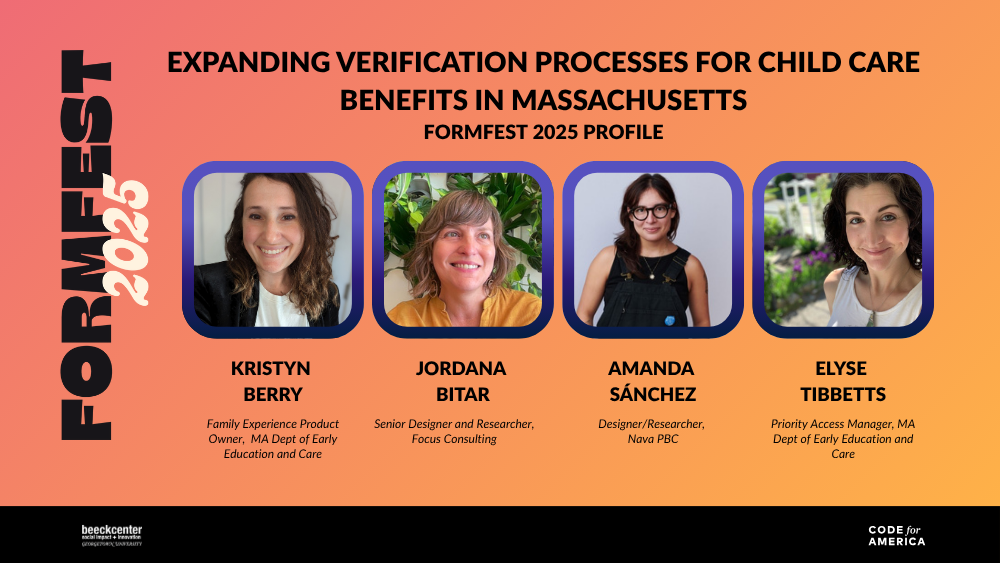
This FormFest profile examines how Massachusetts’ Department of Early Education and Care is modernizing its child care benefits system through human-centered design, making verification and application processes simpler, more compassionate, and more efficient for families and staff.
The City of Boston's disability-aware standards for City resources and the collection of disability data from residents throughout government processes.
The study investigates how state agencies administering SNAP comply with Title VI of the Civil Rights Act by providing language access for individuals with limited English proficiency (LEP).
Led by the Digital Benefits Network in partnership with Public Policy Lab, the Digital Doorways research project amplifies the lived experiences of beneficiaries to provides new insights into people’s experiences with digital identity processes and technology in public benefits. This executive summary gives an overview of the project’s findings.