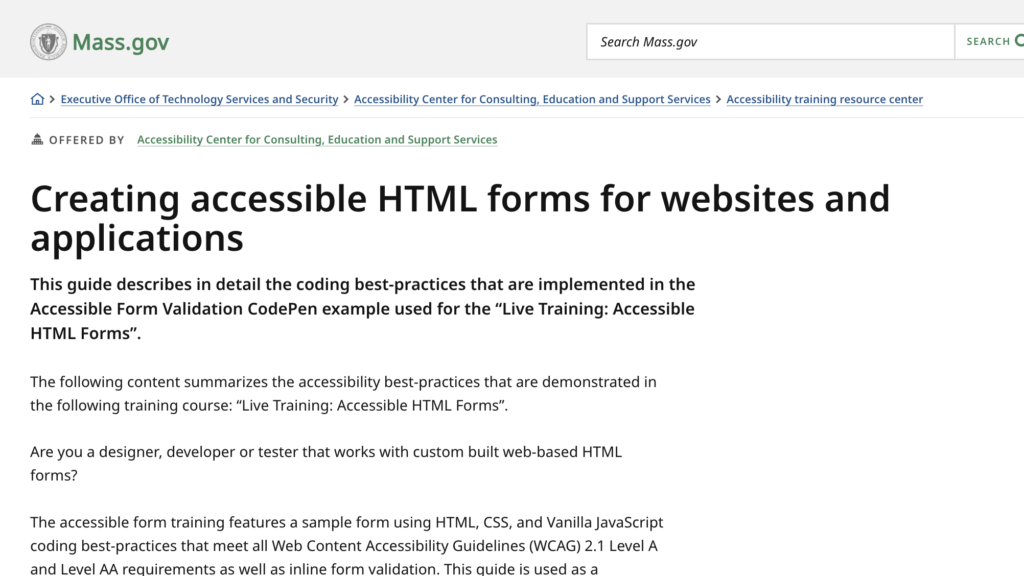
A practical guidance document that explains how to design, code, and test HTML web forms so they are accessible to all users, including people with disabilities.
An event recap from one of FormFest 2025’s breakout sessions featuring speakers from Code for America and Arizona’s Department of Economic Security (DES).
An event recap from one of FormFest 2024's opening main stage featuring speakers from the Commonwealth of Pennsylvania, State of Maryland, Beeck Center for Social Impact + Innovation, and Code for America.
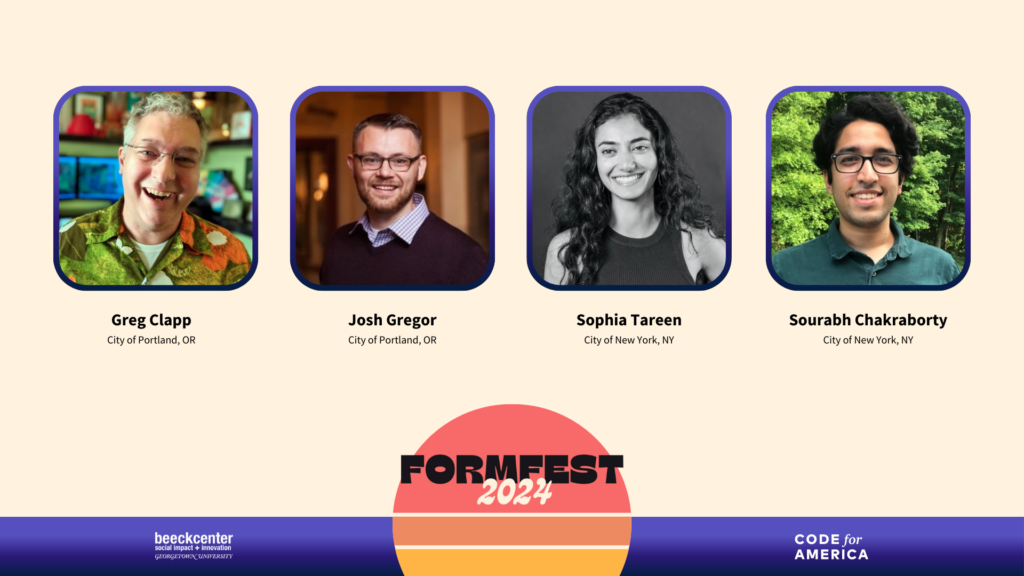
A profile on FormFest speakers Greg Clapp, Josh Gregor, Sophia Tareen, Sourabh Chakraborty, featuring stories about their motivations for working on public sector form innovation.
This session from FormFest 2024 walked attendees through some of the major changes AI is bringing to form design. Learn about the National Head Start Association’s use of AI to reduce administrative burden and the Canadian Digital Service’s tips for protecting government applications systems from AI.
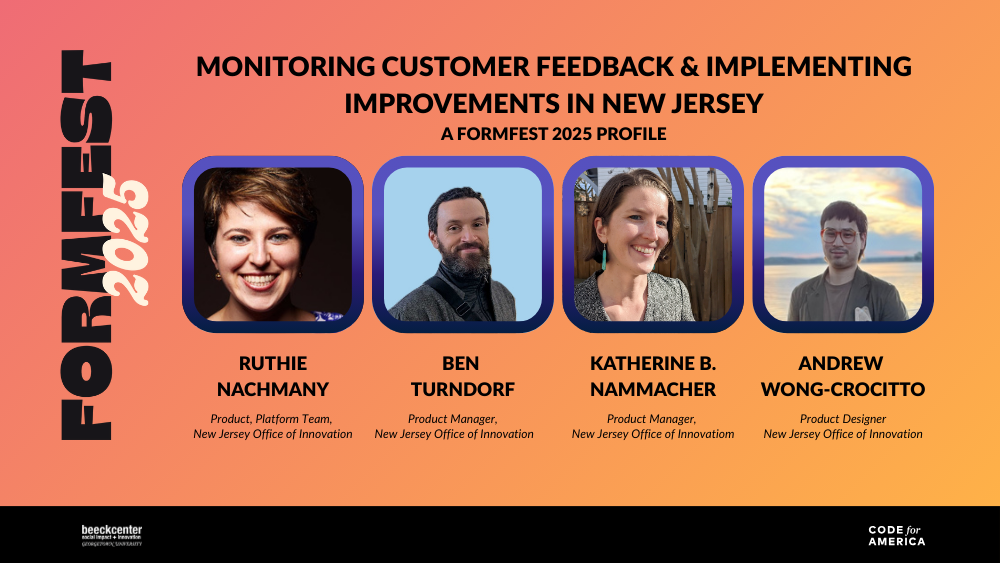
This FormFest profile spotlights the New Jersey State Office of Innovation’s Feedback Widget team, which collects resident input across state websites to improve services and empower agencies to act on real-time feedback.
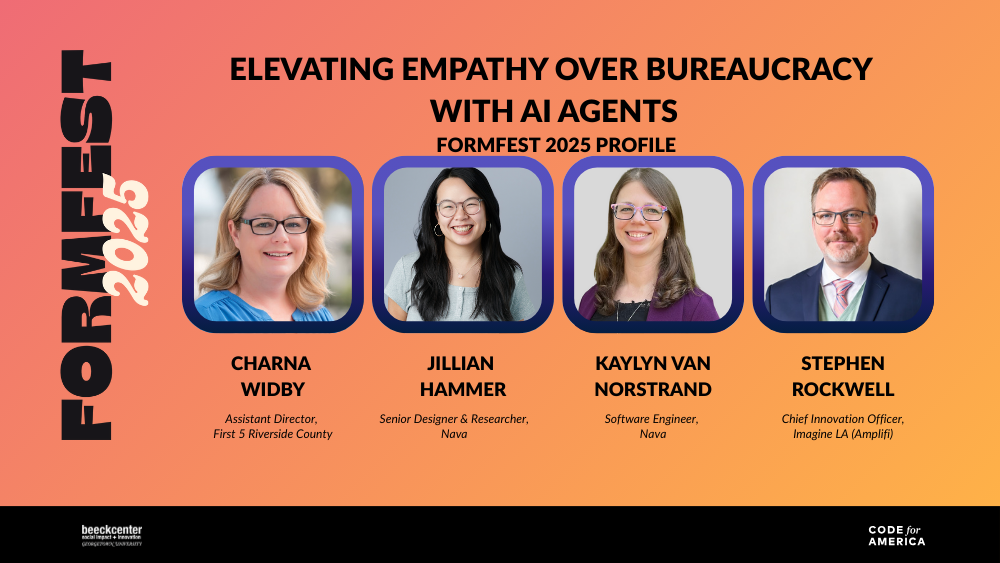
This FormFest profile highlights Riverside County’s pilot of AI-powered interviews that streamline benefit applications, reducing bureaucratic burden on families in crisis while freeing caseworkers to focus on human connection.