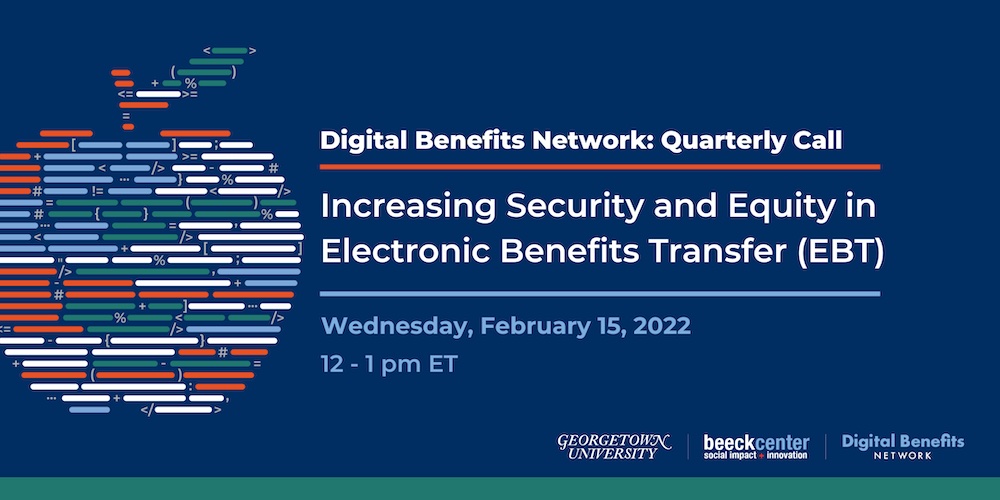
In this webinar, a panel of experts discuss what states can do right now to improve EBT security, how to use data to analyze theft patterns, and how EBT payment technology needs to evolve to ensure efficiency, security, and dignity for beneficiaries.
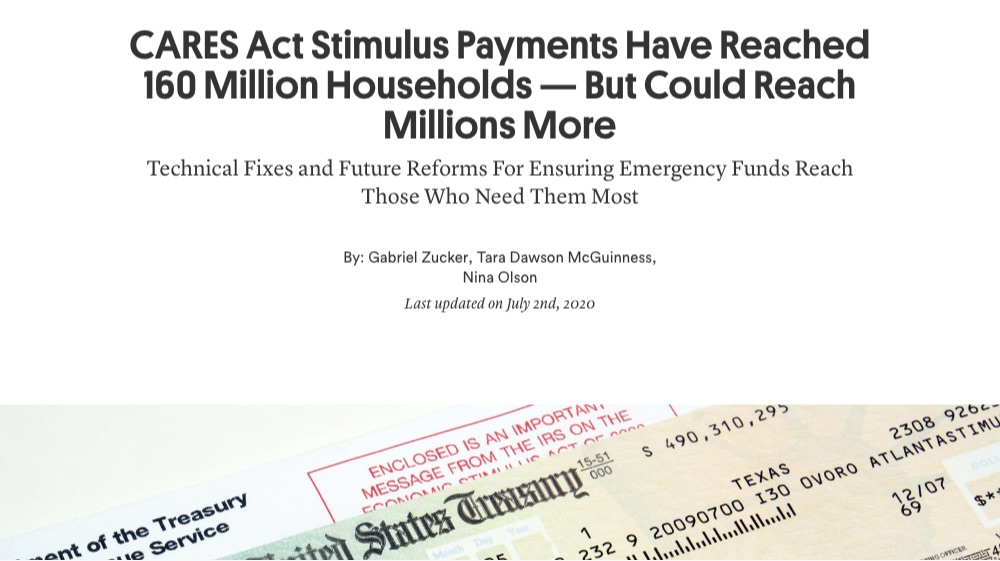
The CARES Act Stimulus Payments Report by New America analyzes the implementation and impact of the Economic Impact Payments (stimulus checks) distributed during the COVID-19 pandemic, highlighting accessibility challenges and policy recommendations for future direct payments.
A webinar presenting fresh data on how young adults aged 22 are faring in terms of poverty, employment, education, living arrangements, and access to public benefits.
The Temporary Assistance for Needy Families (TANF) Data Collaborative Pilot Initiative is a component of the TANF Data Innovation project. The 30-month pilot offered technical assistance and training to support cross-disciplinary teams of staff at eight state and county TANF programs in the routine use of TANF and other administrative data to inform policy and practice.
This provides a comprehensive look at child well-being across the U.S., ranking states and highlighting policy recommendations to improve outcomes for children.
This toolkit provides guidance to protect participant confidentiality in human services research and evaluation, including legal frameworks, risk assessment strategies, and best practices.
U.S. Department of Health and Human Services (HHS)
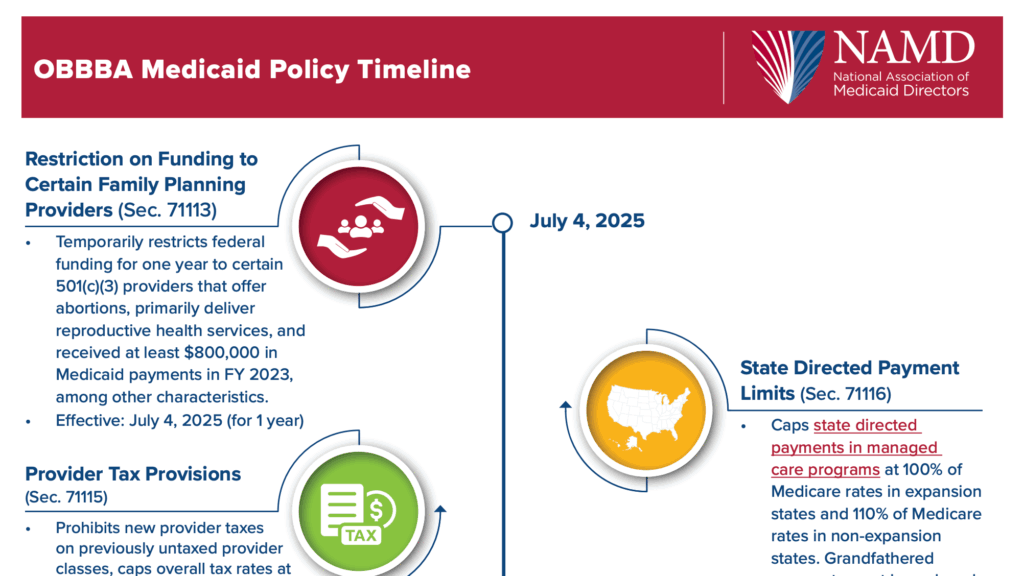
This timeline outlines key Medicaid policy changes introduced by the One Big Beautiful Bill (OBBBA / H.R. 1) with the greatest operational impact on state and territory agencies and highlights upcoming implementation deadlines.
This slide deck describes the main mechanisms in a dynamic analysis of H.R. 1, explains the changes to SNAP, and explains the macroeconomic effects and budgetary feedback of those changes.
These fact sheets provide detailed, state-specific data illustrating SNAP's role in reducing hunger and bolstering local economies across the United States
The Lost in the Labyrinth brief examines how fragmented early care and education (ECE) programs across the U.S. create challenges for families seeking services for young children.