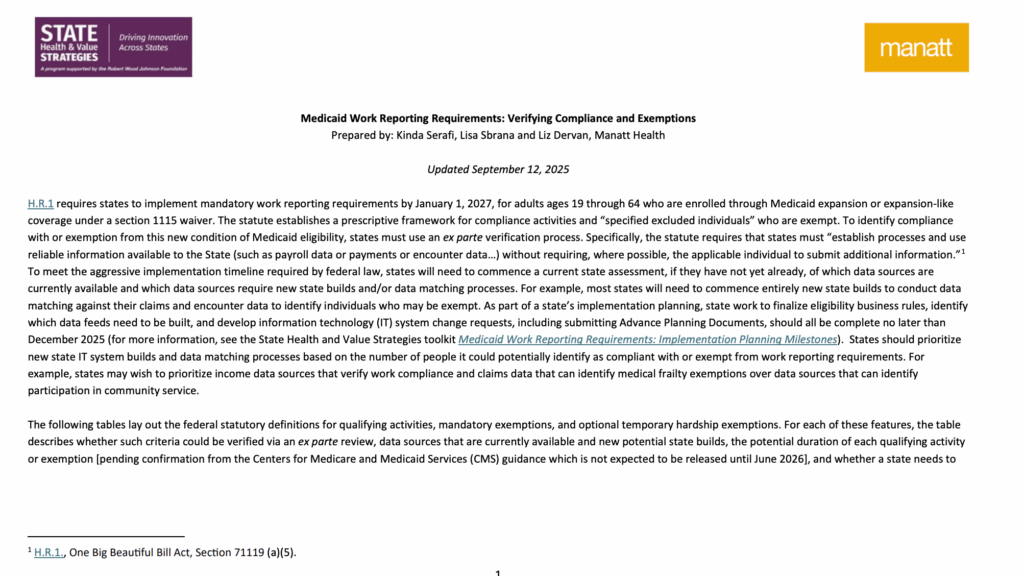
This report provides detailed guidance for states on how to verify compliance with and exemptions from Medicaid work reporting requirements established under H.R. 1.
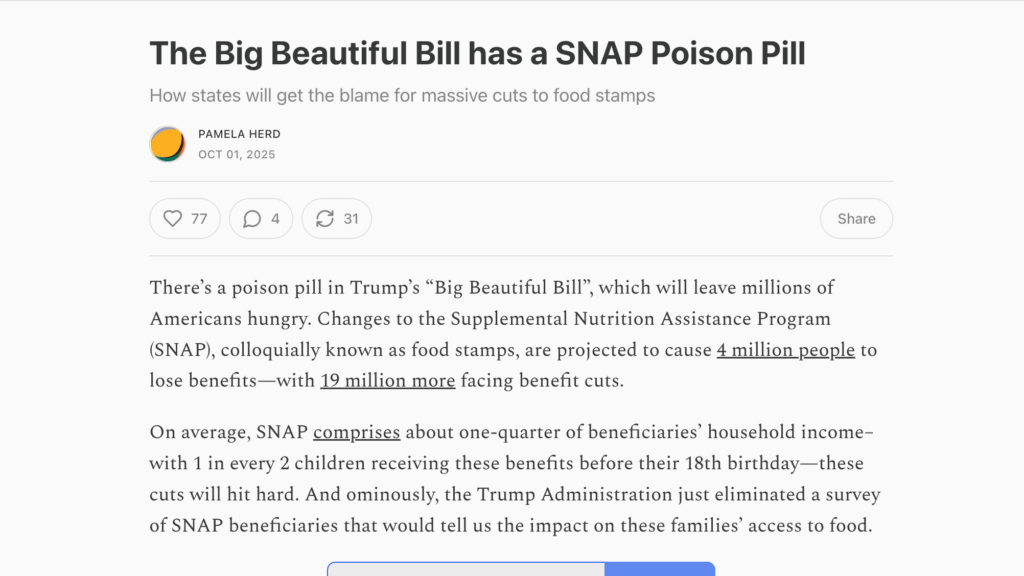
This blog discusses how the “Big Beautiful Bill” (H.R. 1) contains provisions that undermine SNAP and warns that states will be burdened by its fiscal and administrative impact.
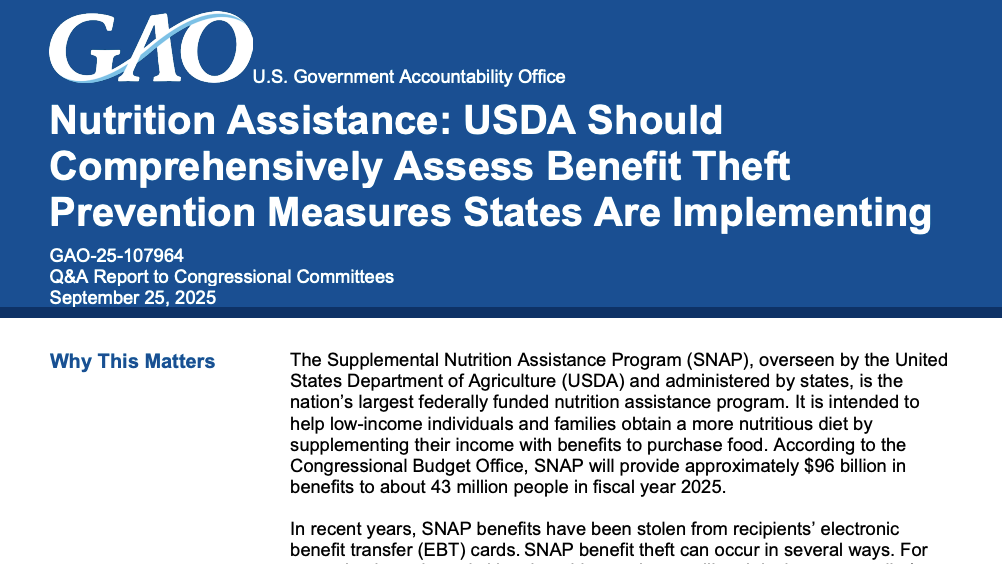
The report reviews the scope and methods of SNAP benefit theft—including card skimming, cloning, phishing, and algorithmic attacks—and examines the effectiveness of state and federal countermeasures.
A national survey of low-wage workers showing that administrative burdens in SNAP and Medicaid are common and strongly linked to food hardship, healthcare hardship, and chronic illness.
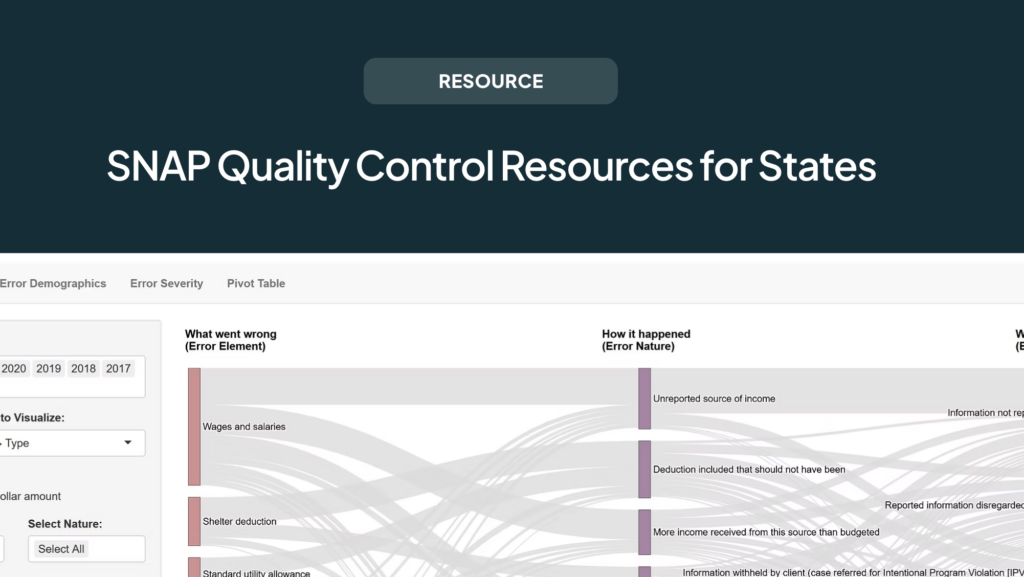
A blog introducing an interactive viewer that helps users explore SNAP Quality Control error data to better understand payment accuracy trends and administrative challenges across states.
Sharing lessons learned via the Medicaid Churn Learning Collaborative, which is working to reduce Medicaid churn, improve renewal processes for administrators, and protect health insurance coverage for children and families.
Approximately 12 million low-income individuals risk missing out on federal stimulus payments due to non-filing status, prompting the Center on Budget and Policy Priorities (CBPP) to recommend targeted state outreach to connect eligible non-filers with their Economic Impact Payments (EIPs).
Differing federal requirements for public benefit applications create significant barriers for applicants and complicate state efforts to integrate services.
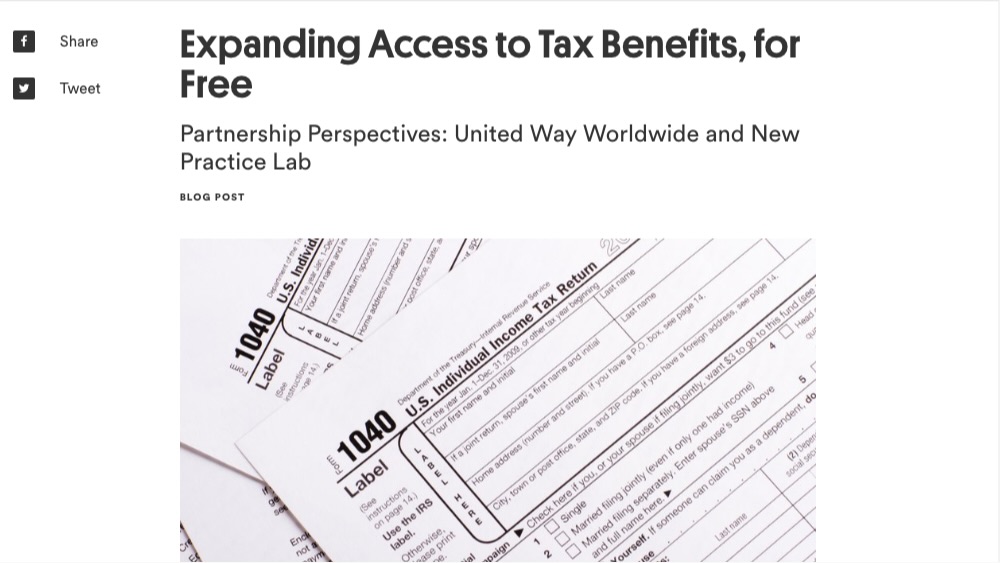
Expanding access to free tax assistance through virtual Volunteer Income Tax Assistance (VITA) programs can help low-income filers claim essential tax benefits without incurring preparation fees.