This report outlines strategies states can adopt to improve access to SNAP, Medicaid, and WIC programs by leveraging policy options, data coordination, and streamlined service delivery.
An outline of the opportunities for modernizing SNAP to better meet participant needs by streamlining enrollment, improving digital access, and enhancing coordination with other safety net services.
A case study on how North Carolina leveraged human-centered design, interagency collaboration, and data-sharing strategies to improve cross-enrollment in SNAP, WIC, and Medicaid, aiming to reduce administrative burden and better serve families.
American Public Human Services Association (APHSA)
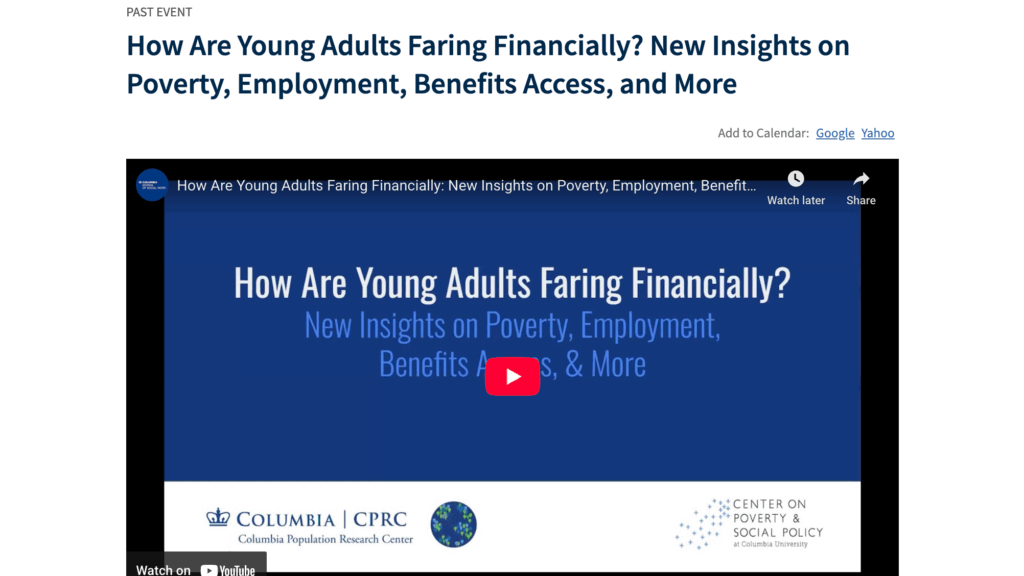
A webinar presenting fresh data on how young adults aged 22 are faring in terms of poverty, employment, education, living arrangements, and access to public benefits.
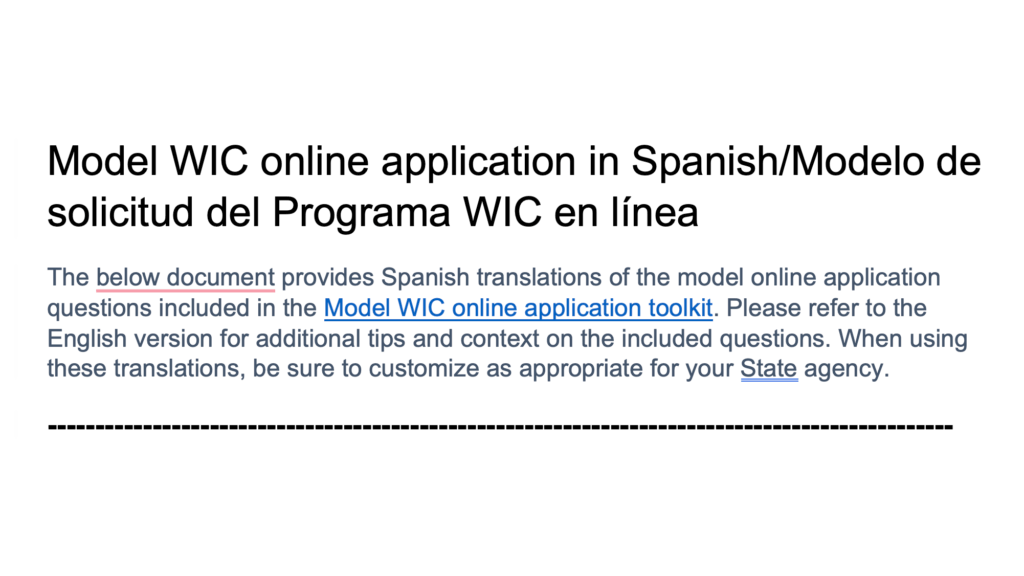
This document is the Spanish-language version of the Model WIC Online Application. It provides a full set of translated application questions and instructions for applying to the Special Supplemental Nutrition Program for Women, Infants, and Children (WIC).
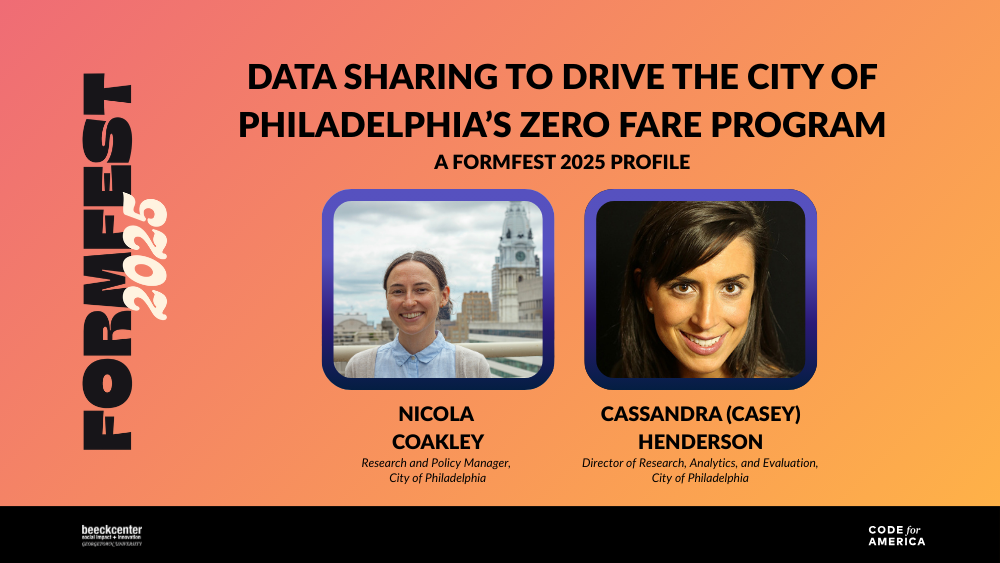
This FormFest profile explores how Philadelphia leveraged cross-department data sharing to launch its Zero Fare program, auto-enrolling eligible residents in unlimited transit benefits while tackling the challenge of outreach and trust-building to deliver passes effectively.
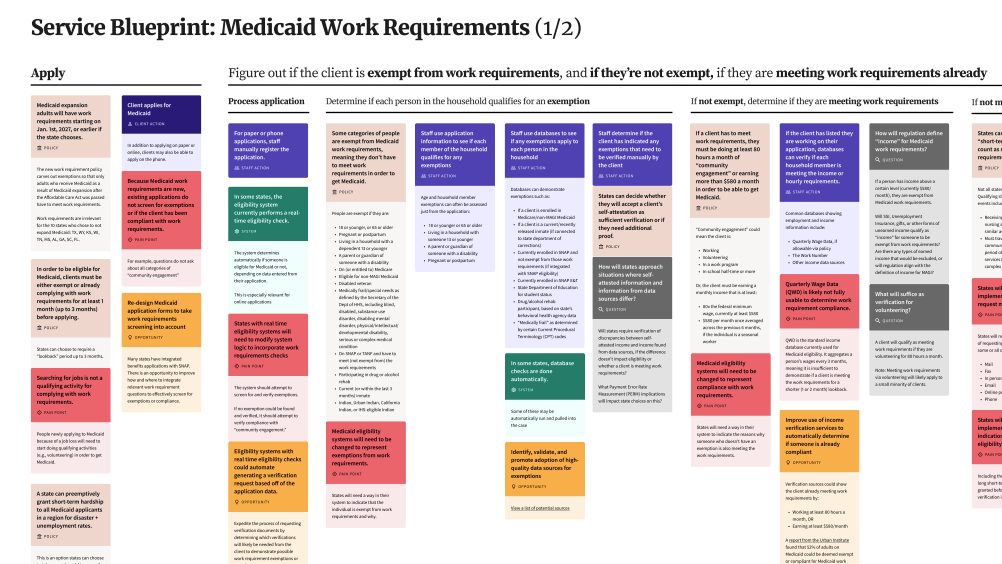
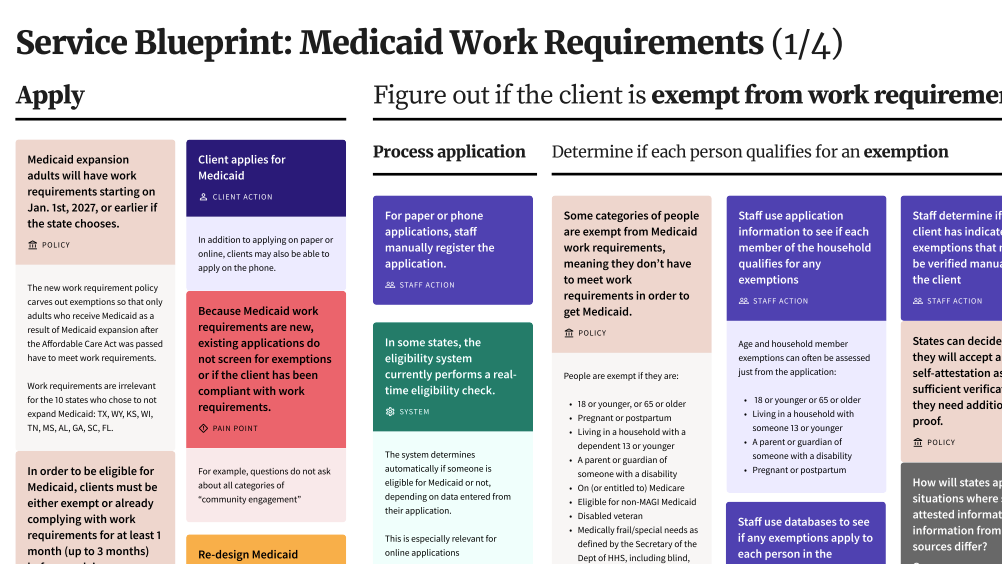
This 11x17 service blueprint visualizes every step, system, and policy decision involved in implementing Medicaid work requirements under H.R. 1—from application to renewal—identifying pain points, questions, and opportunities for states to streamline and humanize the process
This 8.5x11 service blueprint visually maps how Medicaid work requirements will function once implemented in 2027, detailing each policy step, system interaction, and client experience to help states identify administrative challenges and opportunities for human-centered redesign.
This research paper explores how government design systems function as the “translation layer” of digital public infrastructure, transforming technical systems into accessible, trustworthy citizen experiences.
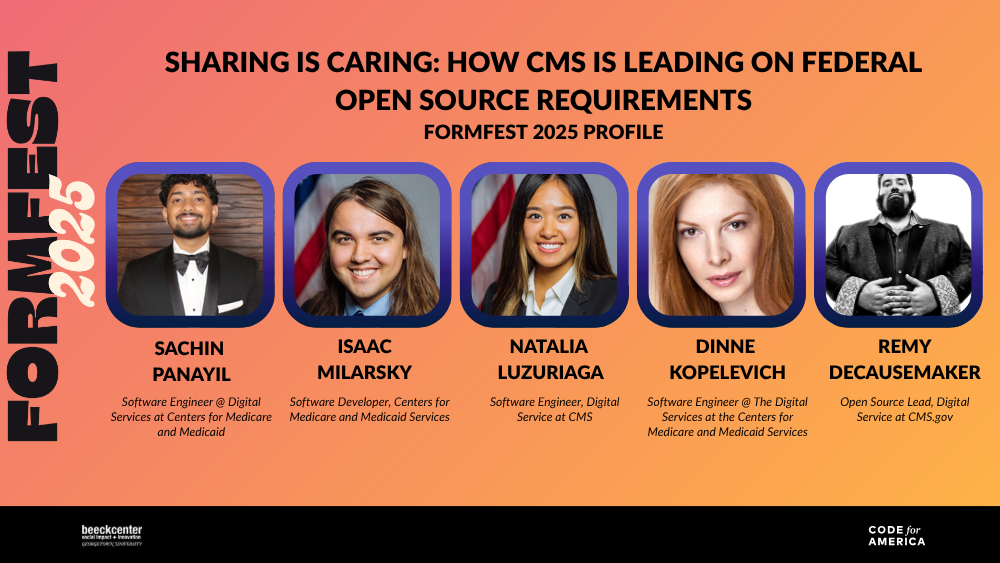
This profile on the Centers for Medicare and Medicaid Services’ (CMS) Open Source Program Office, the first of its kind in the federal government, showcasing how it advances transparency, collaboration, and innovation across agencies through open source software.
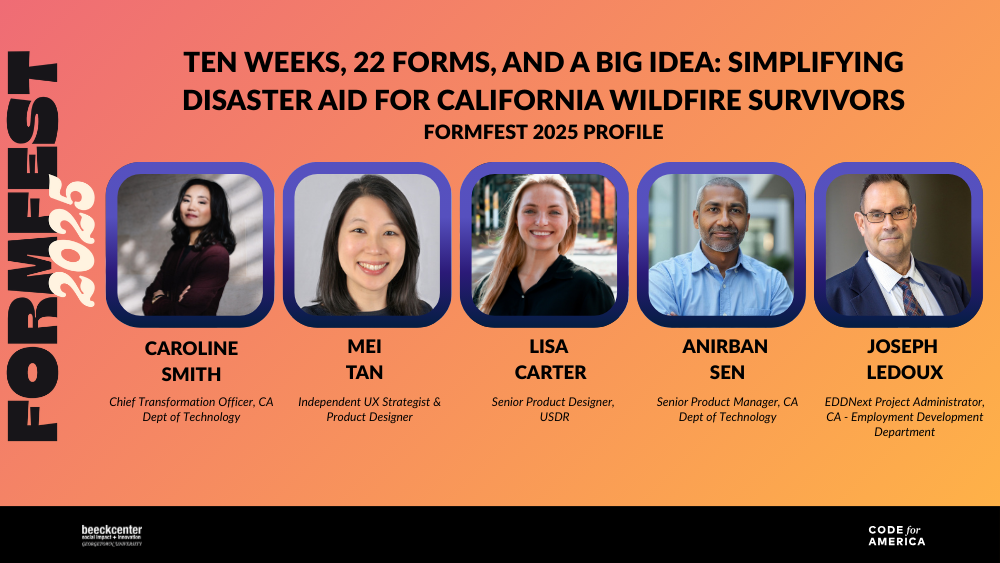
This FormFest profile describes how California rapidly simplified disaster-aid processes for wildfire survivors by auditing 22 forms across eight agencies and developing a concept for a universal eligibility form and relief portal.