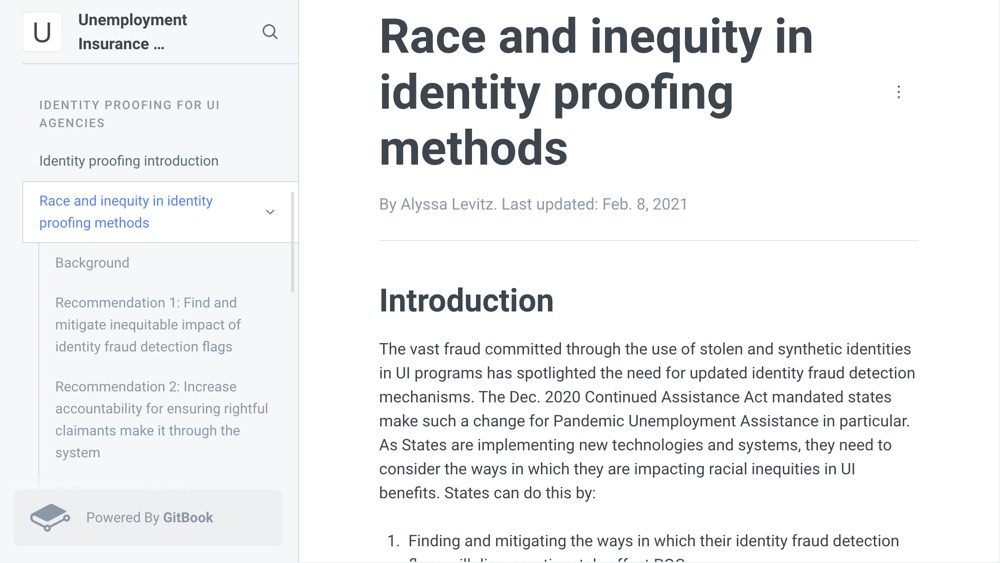
The vast fraud committed through the use of stolen and synthetic identities in UI programs has spotlighted the need for updated identity fraud detection mechanisms. As states are implementing new technologies and systems, they need to consider the ways in which they are impacting racial inequities in UI benefits.
This report from the Joint Financial Management Improvement Program outlines efforts to use identity verification to reduce improper payments in government programs, while mitigating bias and disparate impacts.
The Joint Financial Management Improvement Program (JFMIP)
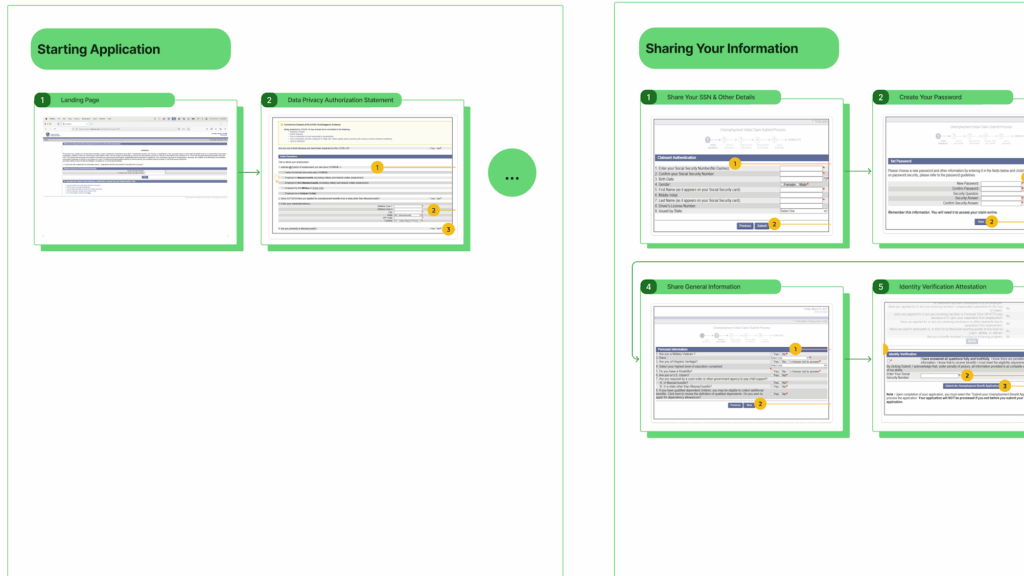
Created for use in the Digital Doorways research project, this design stimuli shows the steps of submitting an application, sharing personal information, and verifying identity for Massachusetts' online application for Unemployment Insurance.
Federal guidelines for digital identity services, outlining technical and procedural requirements for identity proofing, authentication, and federation.
National Institute of Standards and Technology (NIST)
Digital IDs can improve convenience, but they risk surveillance, data misuse, and exclusion if not designed with privacy, security, and accessibility safeguards.
In this webinar, the Center on Budget and Policy Priorities and the Digital Benefits Network explored key terms related to digital identity, and provided ecosystem-level context on how authentication and identity proofing may show up in the online benefits experience and impact clients.
Remote identify proofing is the process federal agencies and other entities use to verify that the individuals who apply online for benefits and services are who they claim to be. If the applicant responds correctly to personal questions, their identity is considered to be verified. However, data stolen in recent breaches could be used fraudulently to respond to knowledge-based verification questions. Alternative methods are available that provide stronger security, but these methods may have limitations in cost, convenience, technological maturity, and they may not be viable for all segments of the public.
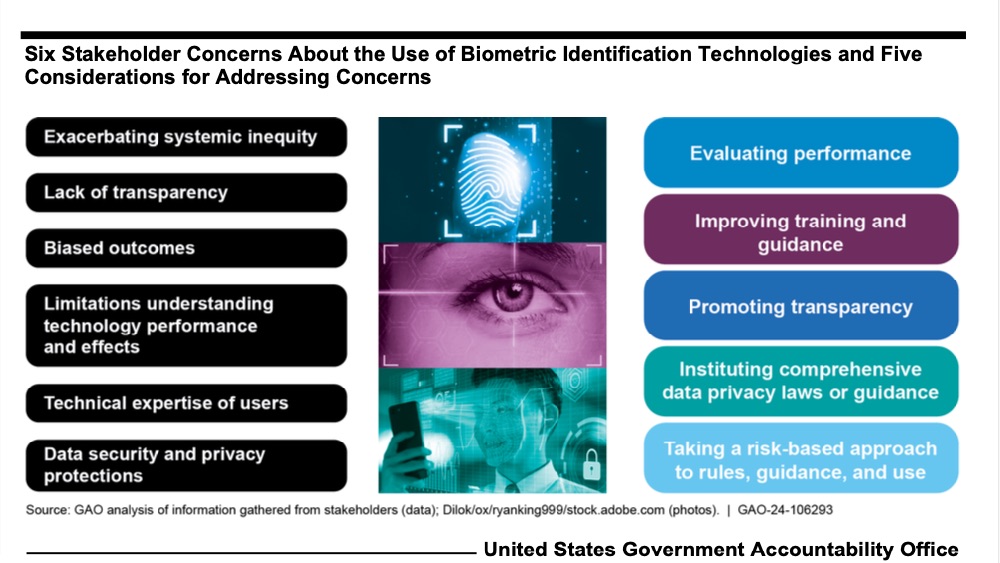
Biometric identification technologies—such as facial recognition and fingerprinting—can affect underserved communities, including low-income and minority communities. GAO interviewed academics, advocacy groups, and technology experts to find out how.