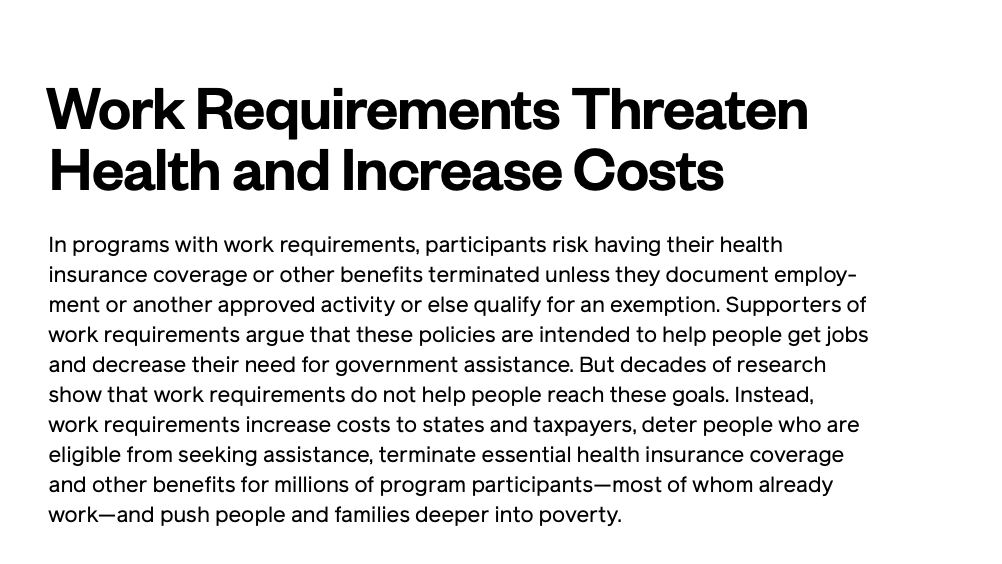
A research brief explaining how work requirements in programs like Medicaid and SNAP reduce coverage, increase administrative costs, and push eligible people deeper into poverty without improving employment outcomes.
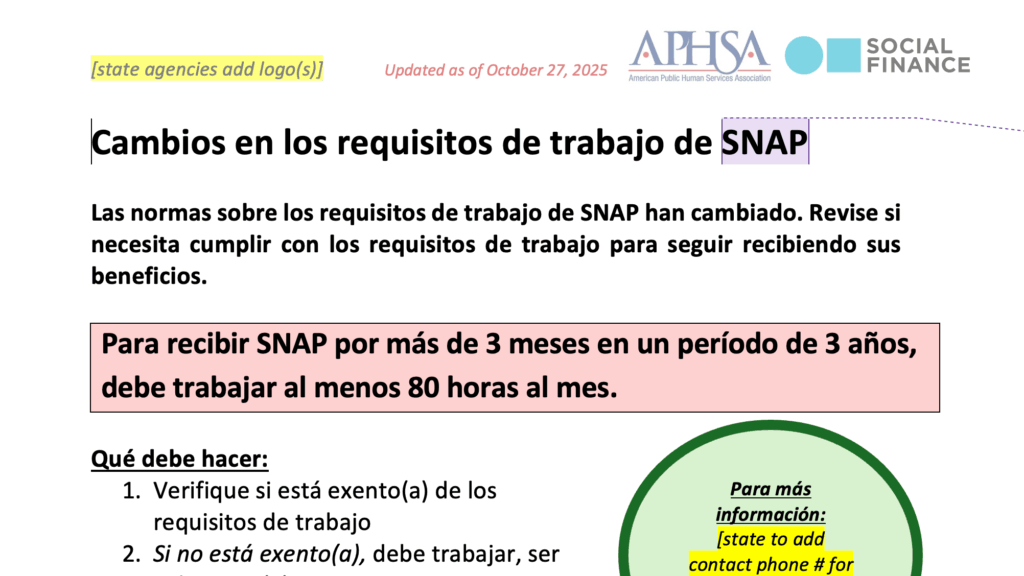
This document provides two Spanish language templates for SNAP agencies to use to communicate SNAP work requirement changes to participants who are newly subject to requirements.
American Public Human Services Association (APHSA)
An overview video describing the Digital Identity Risk Management process outlined in NIST's Digital Identity Guidelines, which organizations can use to develop a risk-based approach to identity management.
The team explored using LLMs to interpret the Program Operations Manual System (POMS) into plain language logic models and flowcharts as educational resources for SSI and SSDI eligibility, benchmarking LLMs in RAG methods for reliability in answering queries and providing useful instructions to users.
This report offers a detailed assessment of how AI and emerging technologies could impact the Social Security Administration’s disability benefits determinations, recommending guardrails and principles to protect applicant rights, mitigate bias, and promote fairness.
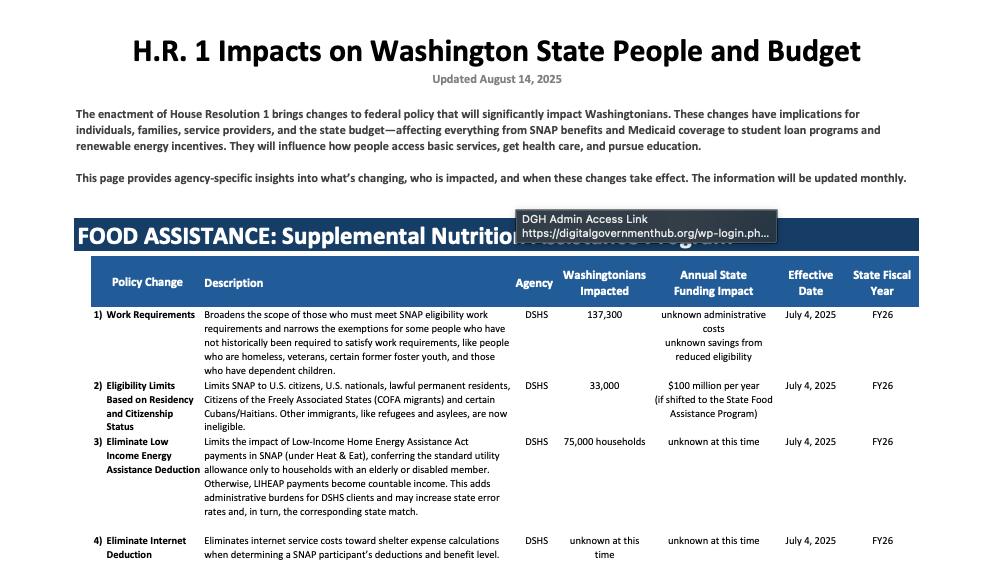
This analysis outlines how the federal H.R. 1 legislation will reshape funding, eligibility, and service delivery across key state programs—including SNAP, Medicaid, higher education, and energy—quantifying projected fiscal and human impacts across multiple agencies
Washington State Office of Financial Management (OFM)
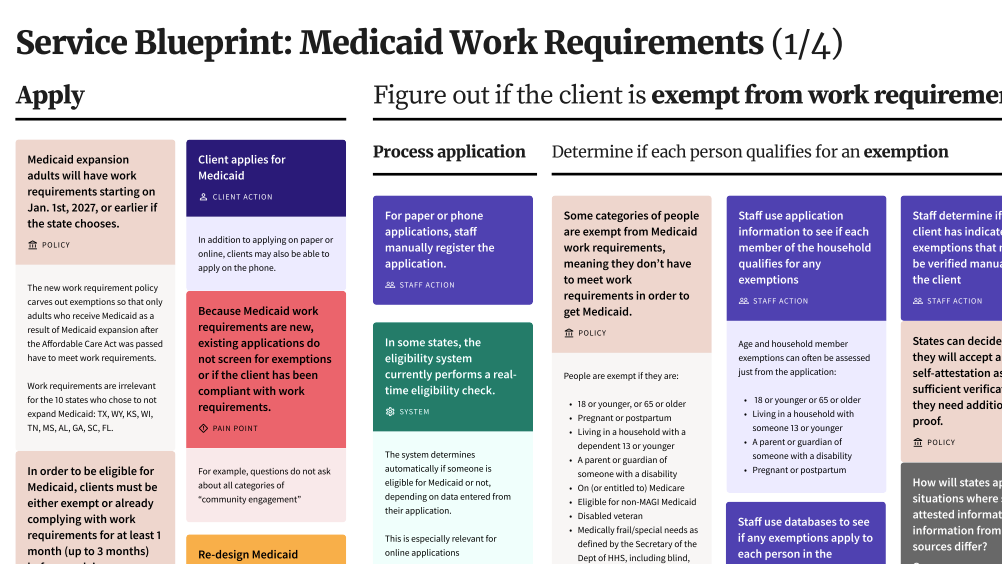
This 8.5x11 service blueprint visually maps how Medicaid work requirements will function once implemented in 2027, detailing each policy step, system interaction, and client experience to help states identify administrative challenges and opportunities for human-centered redesign.
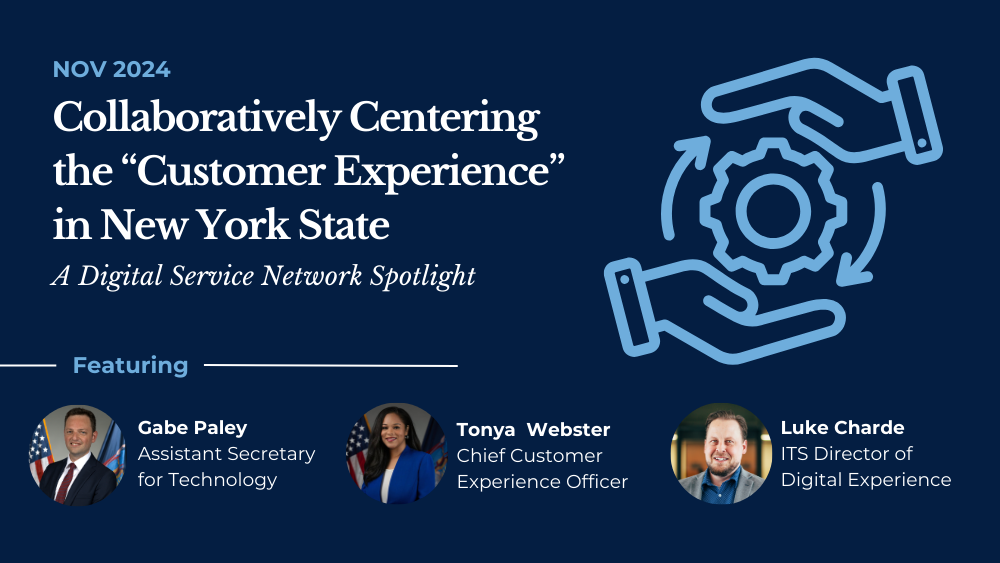
The Digital Service Network (DSN) spoke with three staff members from the New York State Executive Chamber—Gabe Paley, Tonya Webster, and, Luke Charde to learn more about the state's efforts to improve residents’ experiences accessing government programs.