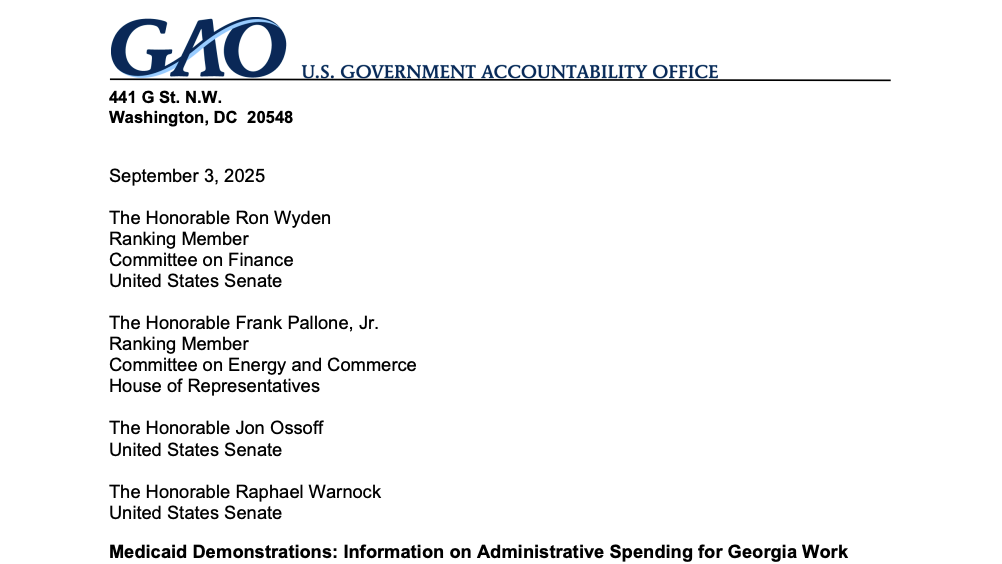
This report examines Georgia’s Medicaid demonstration testing work requirements—the only such active program in the nation—and provides detailed findings on administrative costs, implementation challenges, and federal oversight weaknesses.
A report outlining human-centered design strategies to help states implement new federal Medicaid work requirements in ways that minimize coverage loss and administrative burden
This issue brief provides a comprehensive framework for state officials to monitor and evaluate the far-reaching impacts of the H.R.1 budget reconciliation bill on the Medicaid program.
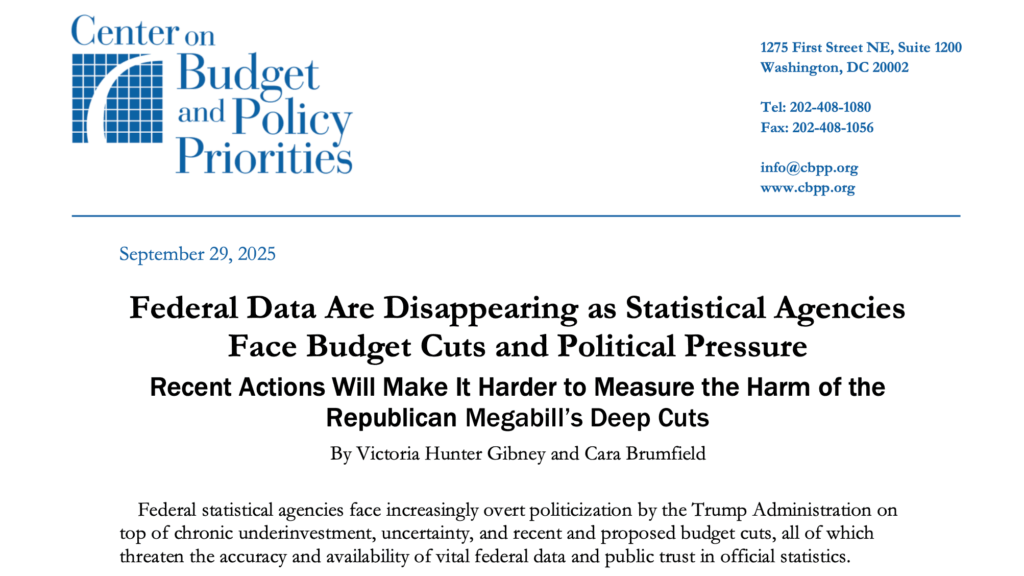
This report warns that federal data collection is being undermined by budget cuts, political interference, and leadership changes that threaten the reliability of core economic and social statistics.
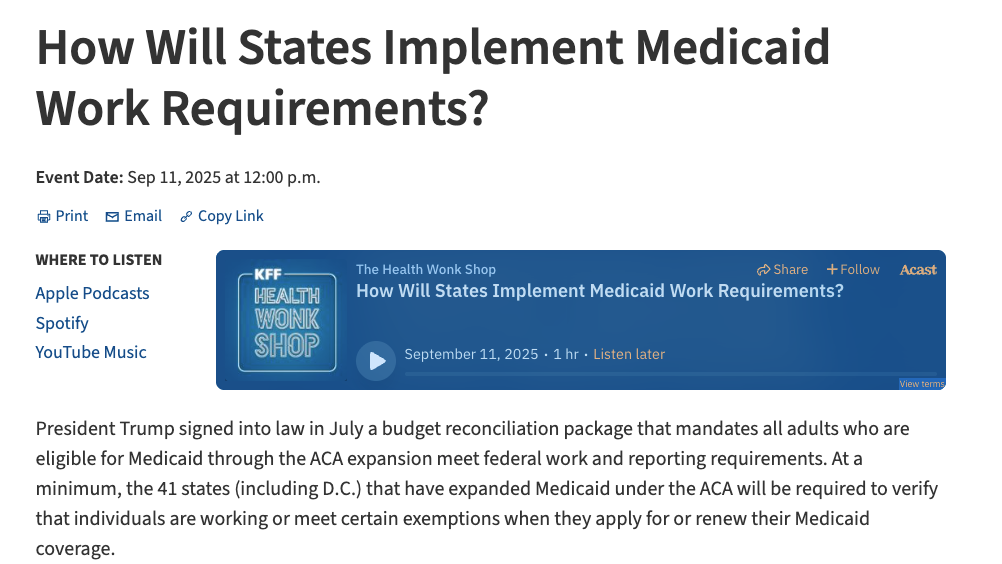
This event convened policy experts and state leaders to explore how states can operationalize new Medicaid work reporting mandates—covering technical, legal, and implementation challenges.
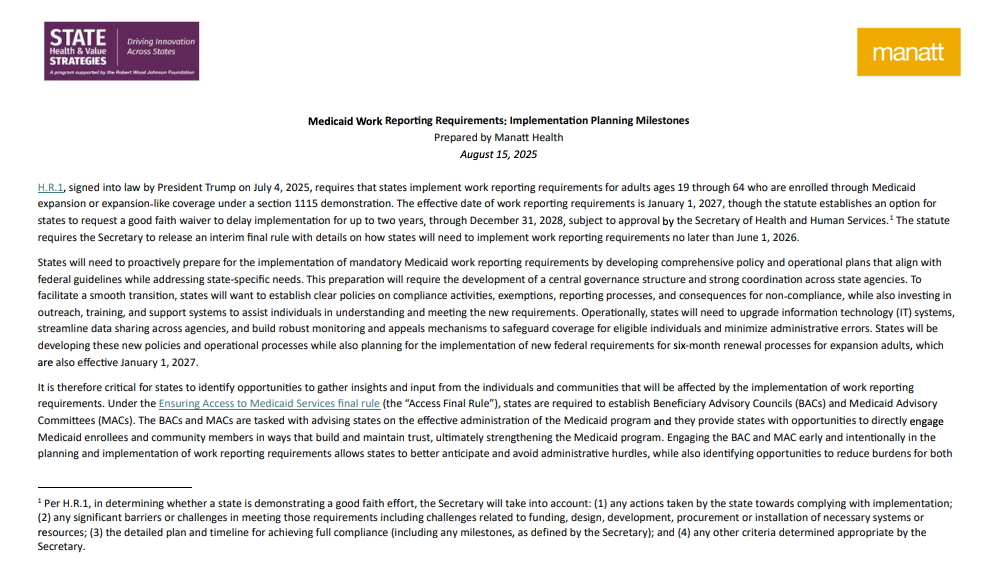
This milestone table outlines a detailed roadmap for states to implement mandatory Medicaid work reporting requirements under H.R. 1 by January 1, 2027.
This discussion paper advocates for states to use the implementation of OBBBA (One Big Beautiful Bill Act) as a catalyst to build integrated, cross-agency data systems.
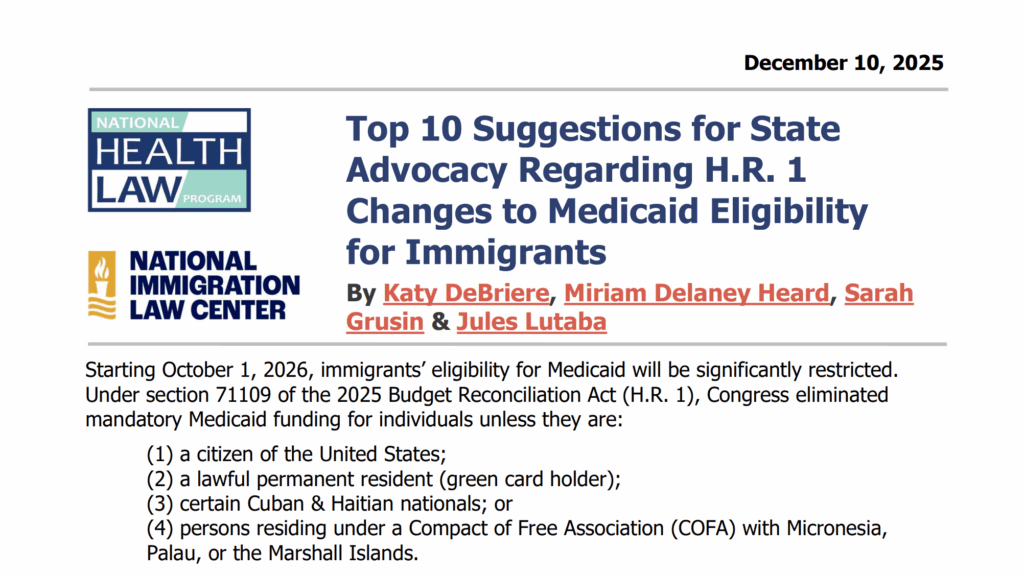
A policy guidance document outlining practical steps states can take to reduce harm to immigrant communities following major Medicaid eligibility restrictions enacted under federal budget reconciliation legislation.
A report examining how risk assessment tools are used to improve payment accuracy in nutrition assistance programs and identifying effective practices for their design and implementation.
This guide explains how states can implement new Medicaid work requirements introduced by H.R. 1, focusing on minimizing harm to eligible clients while preparing for compliance by 2027.