This article describes the General Services Administration’s efforts to get a limited number of state and local governments to try login.gov with their federally funded programs.
This study examines how providing information about administrative burden influences public support for government programs like TANF, showing that awareness of these burdens can increase favorability toward the programs and their recipients.
This guide explains the U.S. Digital Service’s “discovery sprint,” a process by which teams can quickly build a common understanding of the status of complex organization, system, or service.
This article discusses the various benefits of publicly-funded open-source software. These benefits include fairness and transparency, economic stimulus, and support of the Federal Source Code Policy Agenda.
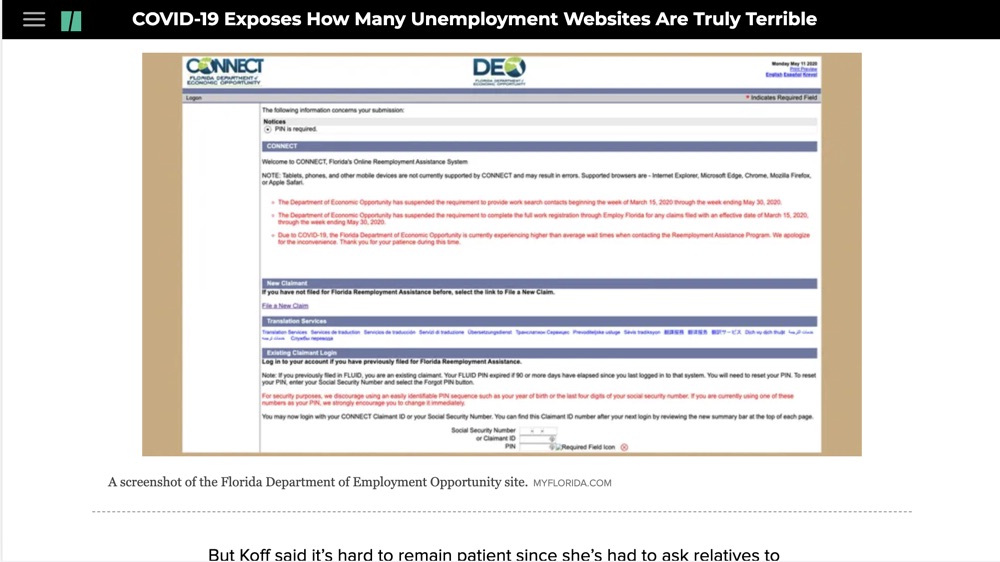
This HuffPost article investigates the widespread failures of state unemployment websites during the COVID-19 pandemic, highlighting outdated technology, accessibility issues, and the human impact of these systemic breakdowns.
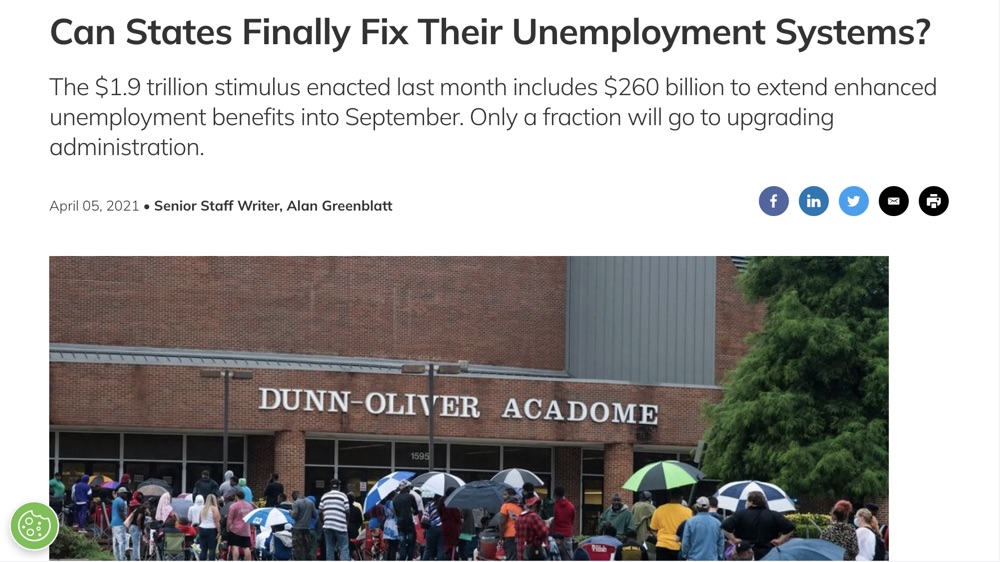
This article explores ongoing efforts to modernize state unemployment insurance (UI) systems, addressing long-standing inefficiencies and challenges exposed by the COVID-19 pandemic.
A primer by New America for government entities thinking about embracing open-source solutions. This report is based on interviews with experts in the field, the organization’s work on piloting open source projects with partners around the world, and a review of nearly 50 reports, documents, and resources on the creation and usage of open source software.
This article explores how anticipatory logics—drawing from foresight, futures thinking, and design—are shaping the future of government by creating space for innovative policy approaches, public participation, and proactive governance.
Technology that automates different processes can save time for caseworkers and constituents, but it can also significantly reduce the transparency of government operations. This paper describes how Pennsylvania advocates addressed the low rate of automated Medicaid renewals.
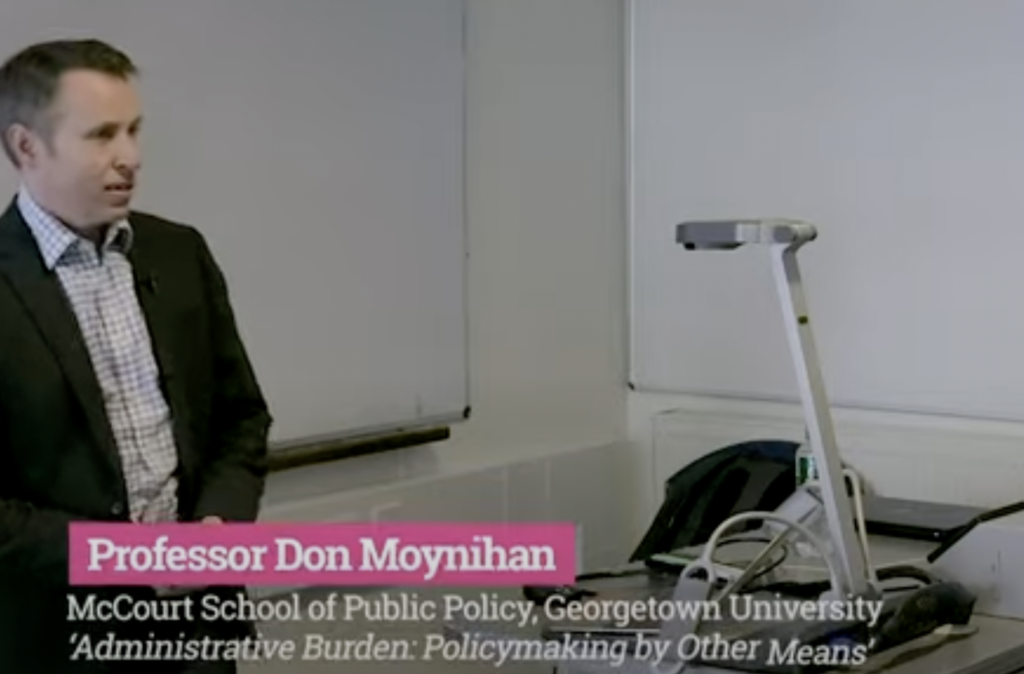
Professor Don Moynihan discusses how administrative burden is an effective tool to make it difficult for people to access certain types of benefits, noting that this is particularly harmful to communities of color.
This report discusses the financial resilience strategies families used to manage gaps before benefits arrived, in addition to providing recommendations for how benefits can be better designed in the future to fit the financial lives of lower-income households.
A modification of Bolder Advocacy’s ACT!Quick capacity self-assessment tool to incorporate additional equity-centered capacities, engage community authentically, and conduct research in culturally responsive ways.