A practical guidance document that explains how to design, code, and test HTML web forms so they are accessible to all users, including people with disabilities.
The Massachusetts Digital Accessibility and Equity Strategic Plan is a three-year roadmap designed to ensure that all state digital services, websites, and IT products are fully accessible to residents and employees, particularly those with disabilities.
The Commonwealth of Massachusetts Executive Office of Technology Services and Security (EOTSS)
A curated collection of practical guides that help government teams improve digital services, website content, and forms using plain language, content design, and user-centered practices.
An introduction to digital accessibility, emphasizing the importance of designing digital content to be usable by individuals with various disabilities, and guidelines and assistive technologies that support inclusive digital interactions.
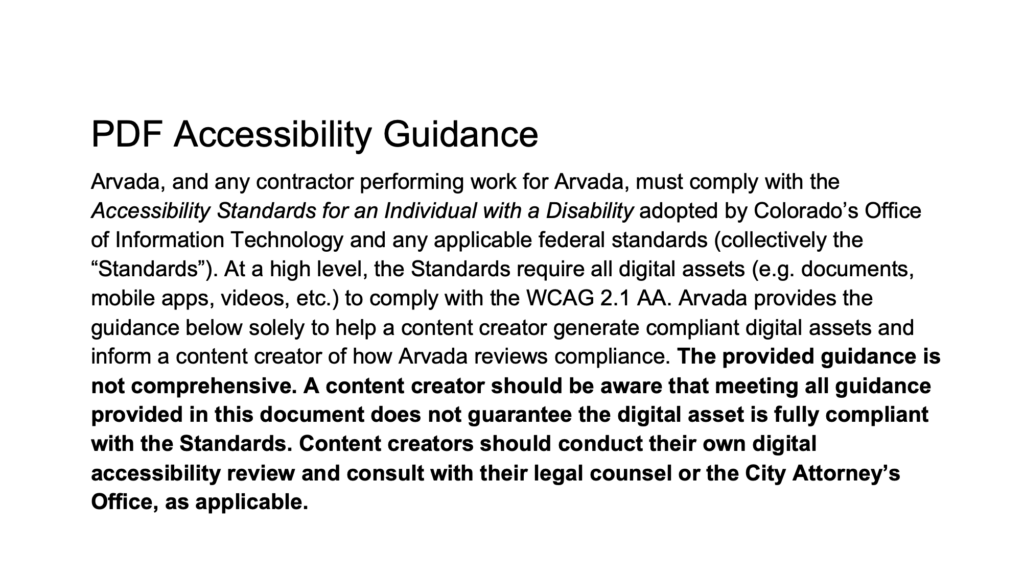
This guidance document outlines how to create and review accessible PDFs to help ensure compliance with WCAG 2.1 AA and other digital accessibility standards.
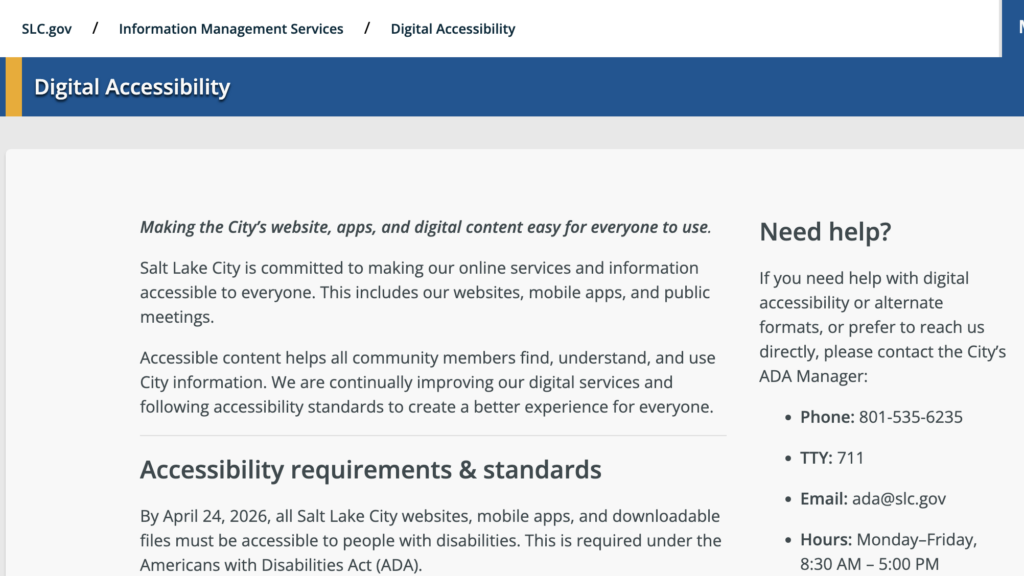
A municipal resource outlining Salt Lake City’s approach to digital accessibility, including standards, policies, and actions to ensure all residents can access online services and information.
This memorandum provides guidance to Federal agencies on how to broaden public participation and community engagement to improve government decision-making, enhance transparency, and build trust by engaging with communities, especially underserved groups.
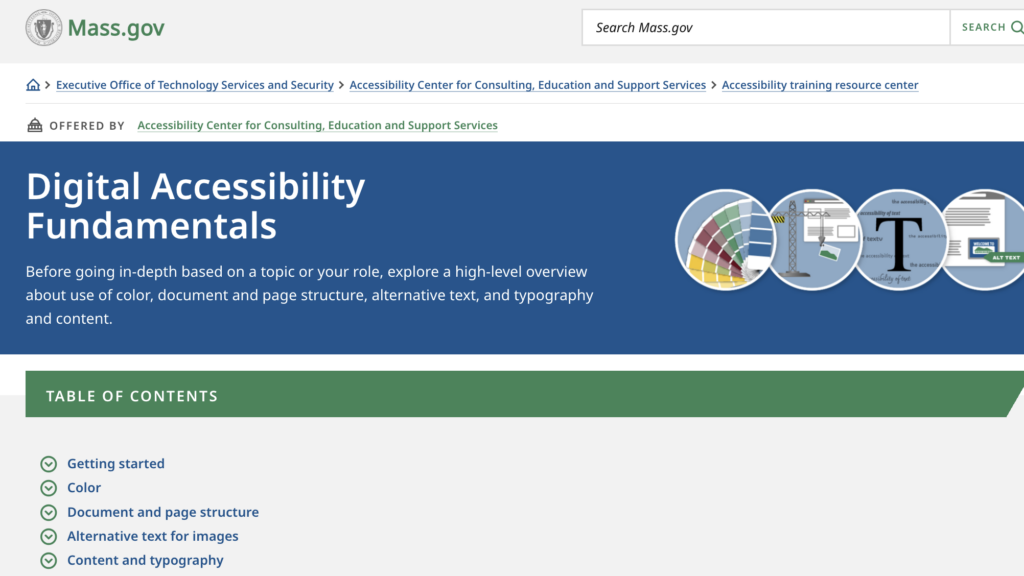
This resource provides practical guidance on the core principles of digital accessibility, helping teams create digital content and services that are more usable and inclusive for people with disabilities.
The Commonwealth of Massachusetts Executive Office of Technology Services and Security (EOTSS)