This fact sheet outlines the key principles for designing an effective Child Tax Credit that reduces child poverty, supports working families, promotes racial and economic equity, and delivers long-term benefits for children and the economy.
This toolkit outlines actionable changes for government practitioners looking to improve the accuracy and accessibility of the questions on their forms that collect information about a user’s gender.
The Community-Driven Policies and Practices project engaged people experiencing poverty in power-building sessions to develop advocacy plans for economic justice. This report offers recommendations for nonprofits to engage people with lived experience of poverty in advocacy.
The Digital Service Network (DSN) spoke with Chief Digital Officer (CDO) Julia Gutiérrez of the Digital Services (DS) Team in the Department of Innovation and Technology (DoIT) and Chief Mariangely Solís Cervera of Boston’s Equity and Inclusion Cabinet.
The City of Boston's disability-aware standards for City resources and the collection of disability data from residents throughout government processes.
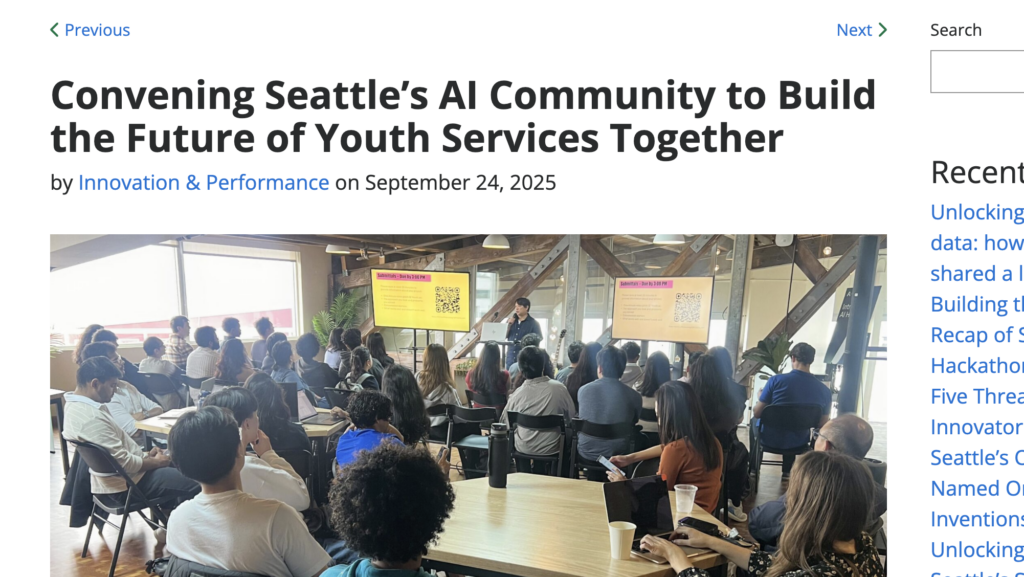
A recap of a community innovation hackathon in Seattle where technologists and students used AI to prototype solutions that help youth discover and access local programs and services.
This toolkit provides guidance to protect participant confidentiality in human services research and evaluation, including legal frameworks, risk assessment strategies, and best practices.
U.S. Department of Health and Human Services (HHS)
The report beings by briefly describing the challenge that disabled workers face in accessing UI and the benefits of reforming the system to better serve these workers. The report then presents a list of considerations for UI reform in the areas of administrative process and technology improvements as well as considerations for policy change.
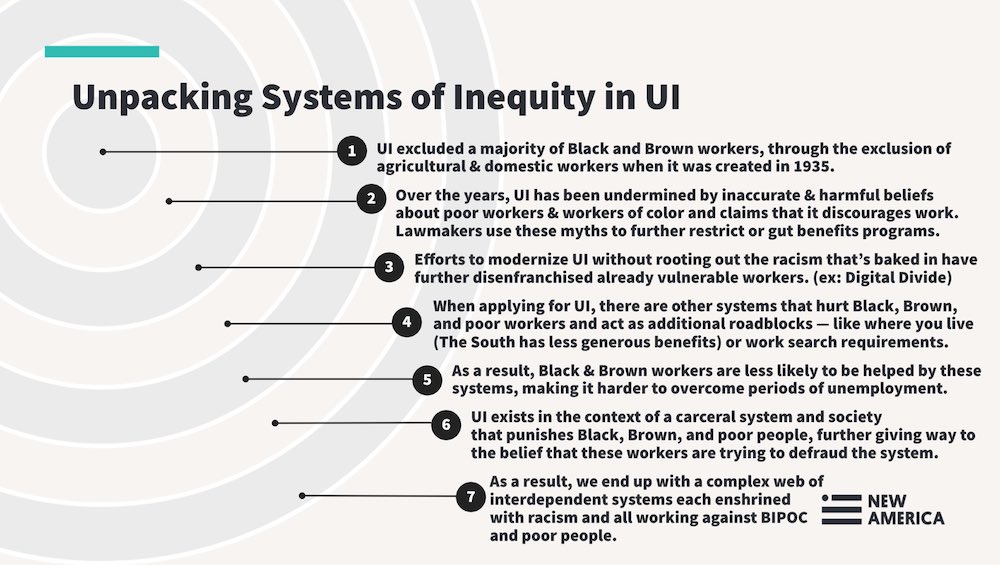
New America’s New Practice Lab discusses insights into racial inequities within the Unemployment Insurance System, and provides recommendations its framework for rectifying inequality in policies and programs moving forward.
This factsheet outlines the Administration for Children and Families’ (ACF) 2024 initiatives to promote health equity across its programs by embedding equity into funding, service delivery, and community engagement.
U.S. Department of Health and Human Services (HHS)