The report reviews the scope and methods of SNAP benefit theft—including card skimming, cloning, phishing, and algorithmic attacks—and examines the effectiveness of state and federal countermeasures.
The article analyzes the impacts of Arkansas's Medicaid work requirements, finding that while coverage losses were reversed after the policy was halted, it did not improve employment and led to negative consequences such as increased medical debt and delayed care.
This economic analysis article examines how state-level policy variations have created increasingly wide disparities in Unemployment Insurance (UI) benefit levels and access.
This project portfolio page details a human-centered service design partnership with the Michigan Unemployment Insurance Agency (UIA) to revitalize and streamline the state's unemployment benefits system following crisis-level strain.
This blog post serves as a guide for state agencies to develop flexible and actionable metrics systems for tracking the implementation and impact of new work requirements under H.R. 1.
An advisory playbook to help state and local government leaders improve SNAP payment accuracy and lower administrative burdens following the passage of H.R. 1.
A blog post outlining key strategies states can use to lower SNAP payment error rates, a priority given new fiscal penalties tied to error rates under recent federal law.
This blog analyzes how the One Big Beautiful Bill Act (OBBBA) will dramatically shift SNAP costs onto state governments, projecting massive budget increases and fiscal strain.
This blog discusses how the “Big Beautiful Bill” (H.R. 1) contains provisions that undermine SNAP and warns that states will be burdened by its fiscal and administrative impact.
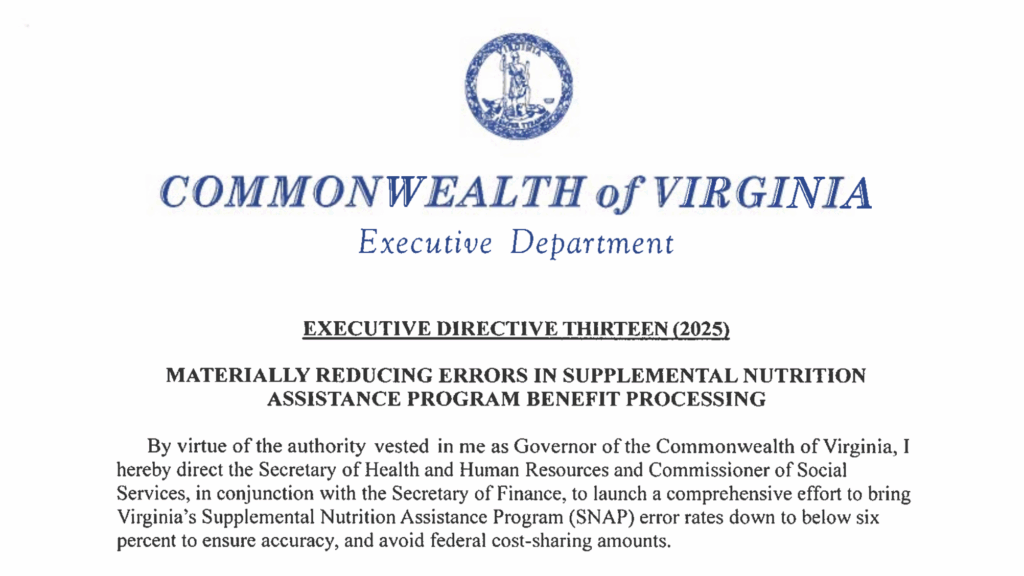
A directive issued by the Commonwealth of Virginia to materially reduce the error rate in Supplemental Nutrition Assistance Program (SNAP) benefit processing among local social services offices.
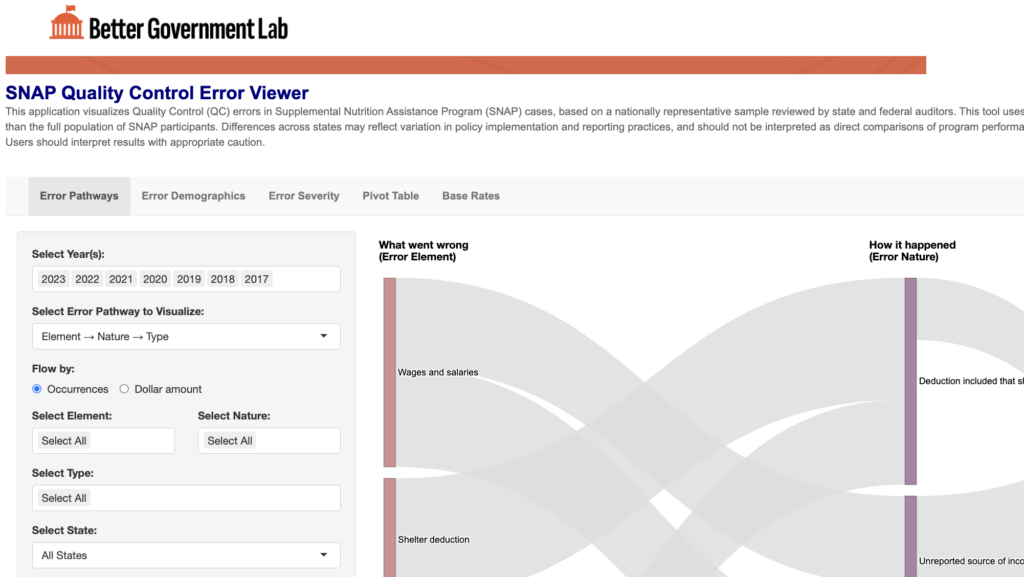
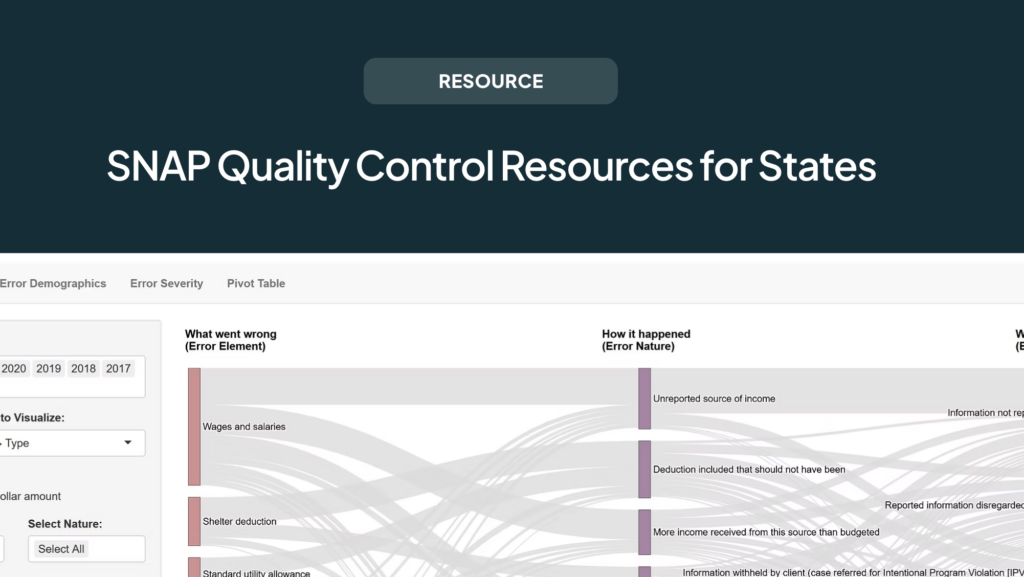
An interactive dashboard that allows users to explore Supplemental Nutrition Assistance Program (SNAP) Quality Control data to better understand payment errors, eligibility issues, and administrative performance across states.
A blog introducing an interactive viewer that helps users explore SNAP Quality Control error data to better understand payment accuracy trends and administrative challenges across states.