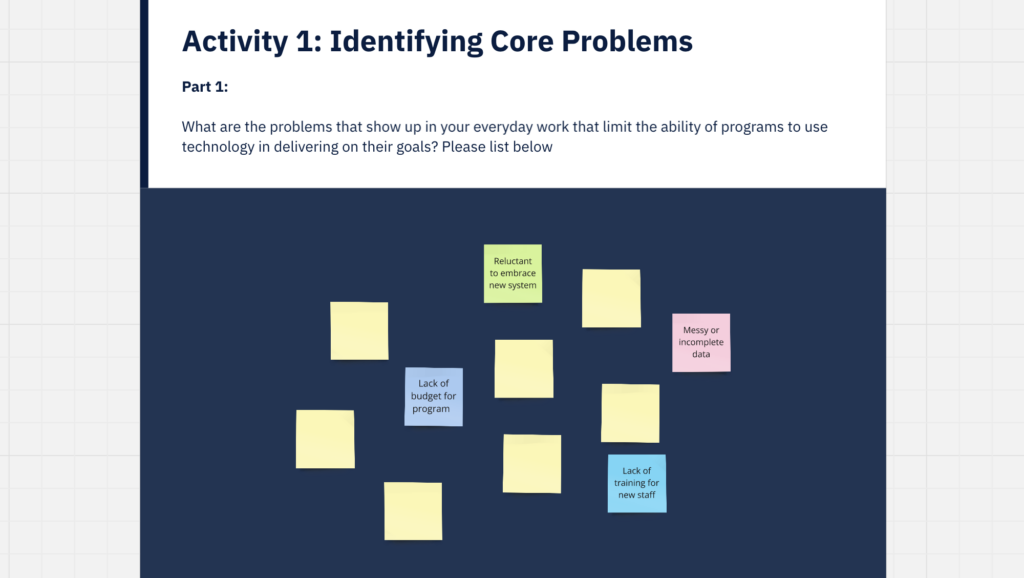
This workshop guide offers teams an opportunity to jointly work toward understanding core problems impacting digital delivery in their organization. The guide is structured in two parts: (1) a Miro template and (2) a Facilitation Guide.
This study describes the potential of human-centered design principles to identify burdens, reducing the effects of what we label as administrative checkpoints.
This session from FormFest 2024 focuses on accessibility, featuring British Columbia’s work to improve legal form usability and tips from the Wisconsin Department of Public Instruction on making forms more accessible overall.
Learn how to use generative AI to quickly create unemployment insurance translations that are accurate, easy to understand, and tailored to your state.
The strategic plan outlines intentions to responsibly leverage artificial intelligence (AI) to enhance health, human services, and public health by promoting innovation, ethical use, and equitable access across various sectors, while managing associated risks.
U.S. Department of Health and Human Services (HHS)
The Figma library offers designers a comprehensive set of pre-built components and templates to create consistent and accessible digital services for the Government of Canada.
This "Page Templates" section offers pre-built, responsive page layouts that combine various components to ensure consistent, accessible, and user-friendly experiences across Government of Canada digital services.
This report documents four experiments exploring if AI can be used to expedite the translation of SNAP and Medicaid policies into software code for implementation in public benefits eligibility and enrollment systems under a Rules as Code approach.
The report documents how grantees implemented specialized Transitional Living Programs for LGBTQ youth and young adults aging out of foster care, highlighting approaches, challenges, and lessons learned.