Led by the Digital Benefits Network in partnership with Public Policy Lab, the Digital Doorways research project amplifies the lived experiences of beneficiaries to provides new insights into people’s experiences with digital identity processes and technology in public benefits. This executive summary gives an overview of the project’s findings.
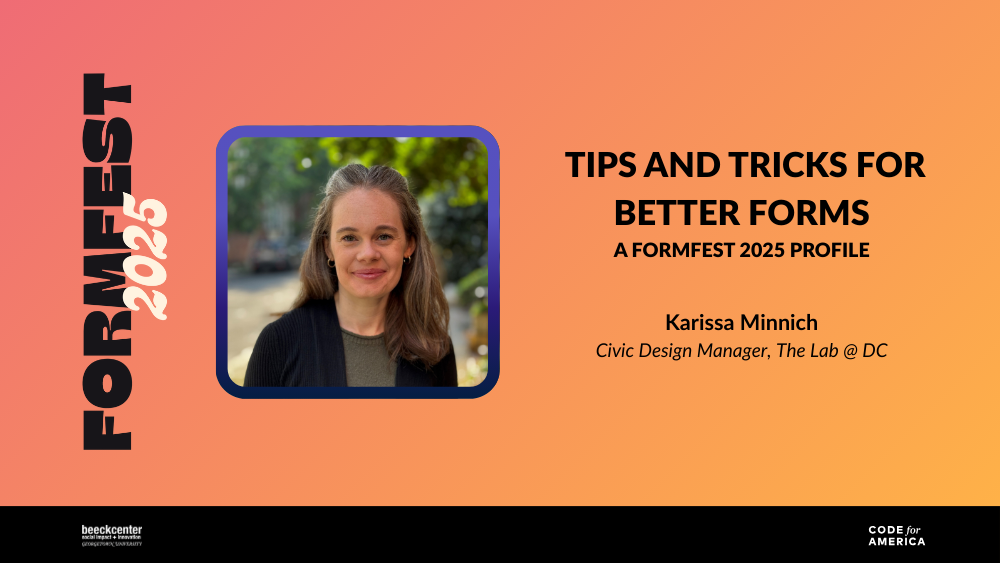
A profile on FormFest speaker Karissa Minnich, a civic design manager with The Lab @ DC, whose innovative approach to redesigning government forms has transformed paperwork into a model of human-centered design.
An online course that introduces core concepts of web accessibility, including why it matters, key standards, and how to make digital content accessible to a wider range of people and situations.
A reusable UI design template showcasing key interface patterns, components, and layout structures for the Seattle Next Move digital service to support consistent, user-centered design across screens.
A virtual event showcasing how one city applied technology, including artificial intelligence, to streamline municipal code administration and reduce bureaucratic friction.
A comprehensive assessment that maps how artificial intelligence is currently being used, governed, and managed across local, state, and federal governments in the United States.
A plain-language overview explaining how federal law regulates automated calls and text messages to the public, including when consent is required and who is exempt.
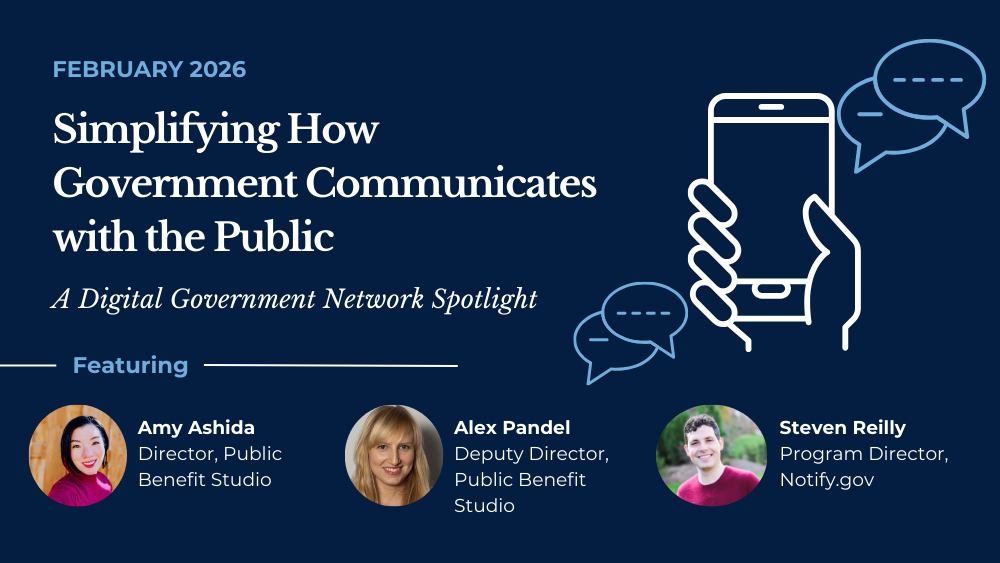
DGN Spotlights are short-form project profiles that feature exciting work happening across our network of digital government practitioners. Spotlights celebrate our members’ stories, lift up actionable takeaways for other practitioners, and put the resources and examples we host in the Digital Government Hub in context.
This blog summarizes a FormFest session where the Center for Civic Design shared research on how screen reader users navigate voter registration forms and offered guidance for designing more accessible digital and PDF forms.
A practical, step-by-step guide for government agencies to design, implement, and evaluate community engagement efforts around the use of artificial intelligence.
This publication offers a starting point into the current research and practice landscape on data interoperability for public benefits administration. It identifies key takeaways for those looking to advance such efforts in their jurisdiction. In particular, it pinpoints what the research reveals about key challenges benefits agencies face, as well as recommendations for addressing those challenges and examples of states and localities that have done so.