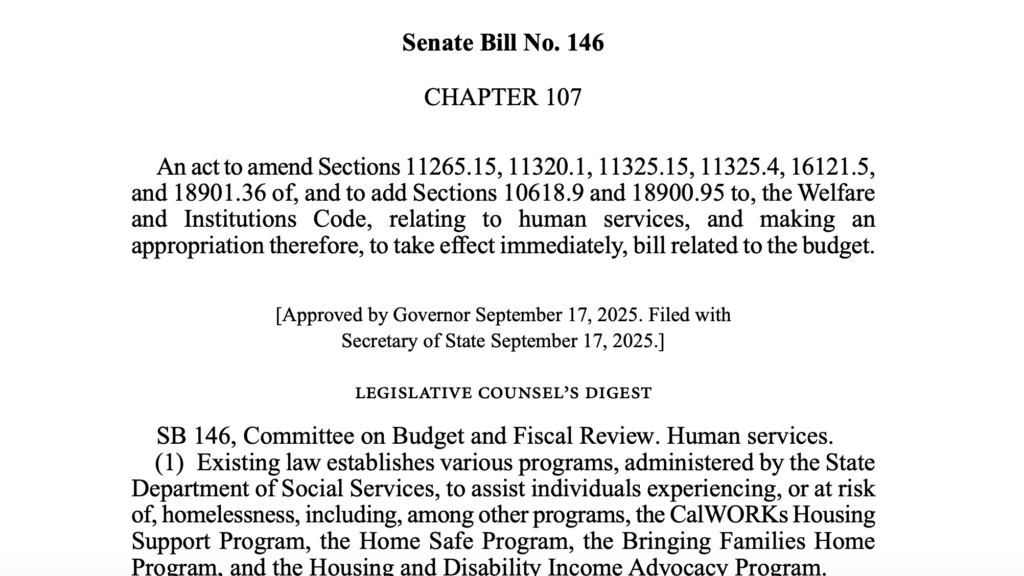
A comprehensive human services policy that strengthens due process, transparency, and administrative fairness across housing assistance, CalWORKs, and CalFresh programs while funding system changes to reduce payment errors and administrative burden.
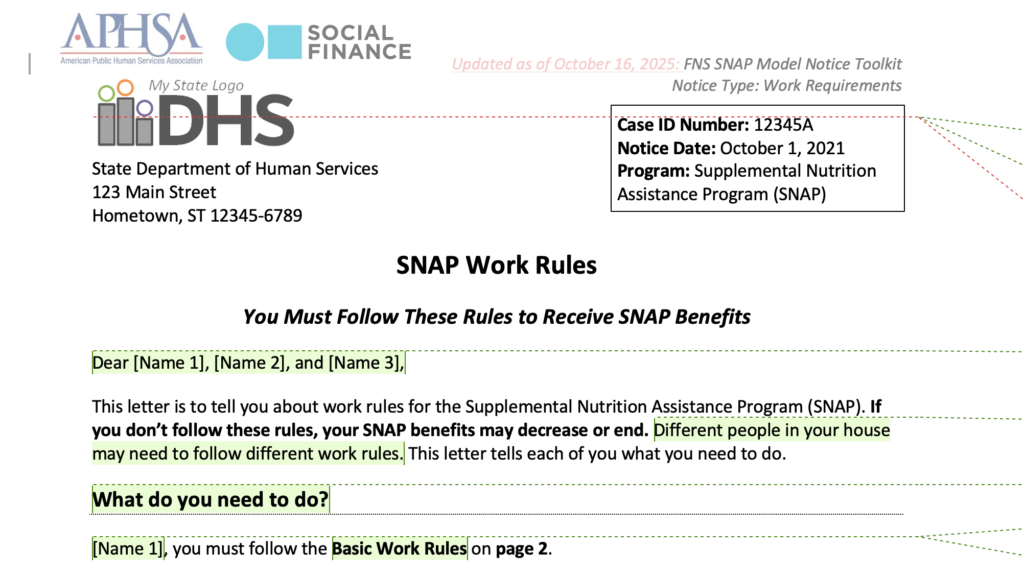
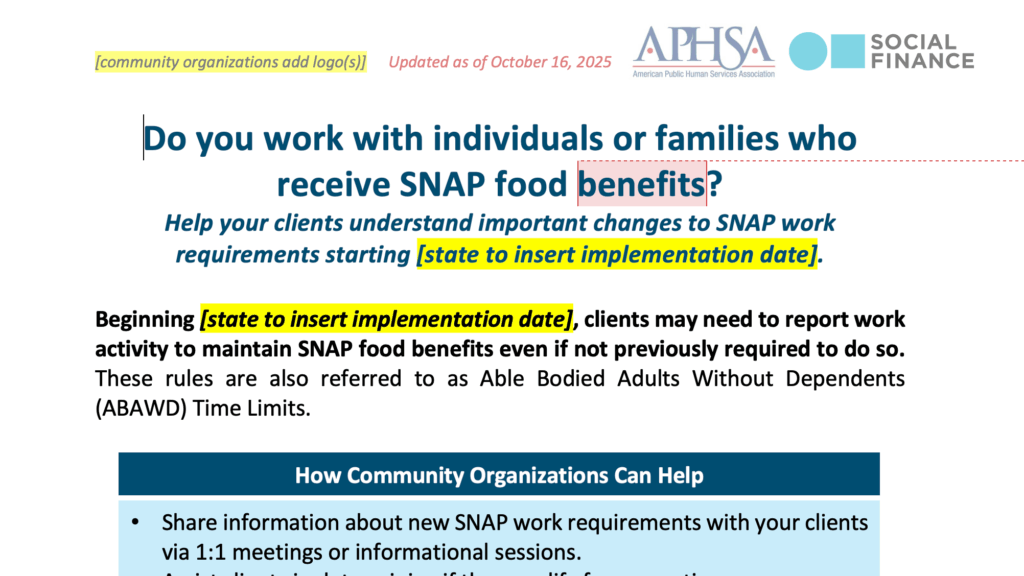
This document is a template for creating a community-based organization (CBO)-facing flyer that explains HR1 work requirements changes and how CBOs can help spread the work and screen SNAP participants and applicants.
American Public Human Services Association (APHSA)
This site contains resources explaining the 2025 Working Families Tax Cut Act (WFTC) — formally Public Law 119-21, which changes eligibility, financing, and community-engagement requirements for Medicaid and Children’s Health Insurance Program (CHIP).
A case study describing how Massachusetts is building long-term public-sector capacity to deliver people-centered digital services by strengthening in-house expertise, shared tools, and agency-embedded support.
This publication explains the fundamentals of state IEE systems—including the technology, opportunities, risks, and stakeholders involved. It is a resource for state officials, advocates, funders, and tech partners working to implement these systems.
A policy guidance document outlining practical steps states can take to reduce harm to immigrant communities following major Medicaid eligibility restrictions enacted under federal budget reconciliation legislation.
A nationwide survey capturing how state chief data officers are structured, resourced, and operating, and how the role is evolving to support data-driven government.
National Association of State Chief Information Officers (NASCIO)
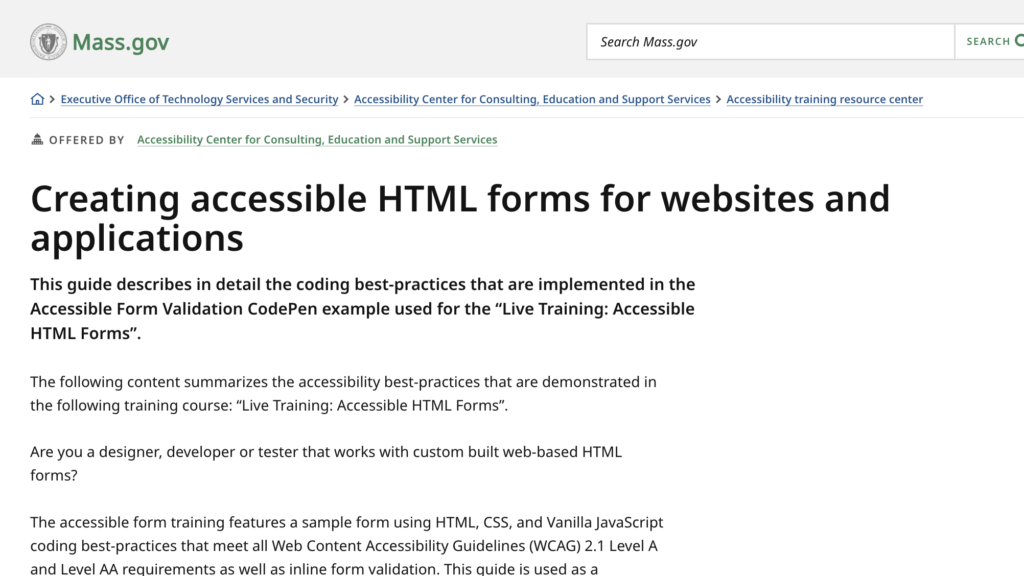
A practical guidance document that explains how to design, code, and test HTML web forms so they are accessible to all users, including people with disabilities.
Recapping the work and achievements of the Digital Benefits Network (DBN), Digital Service Network (DSN), and the State Chief Data Officers Network (CDO) in 2025.