This article offers three human‑centered strategies to help state agencies implement expanded work reporting requirements in SNAP and Medicaid under H.R. 1 with minimal burden on clients and staff.
This report catalogs the policy choices, demonstration projects, and waivers each state uses to administer SNAP, highlighting how states adapt federal rules to local needs.
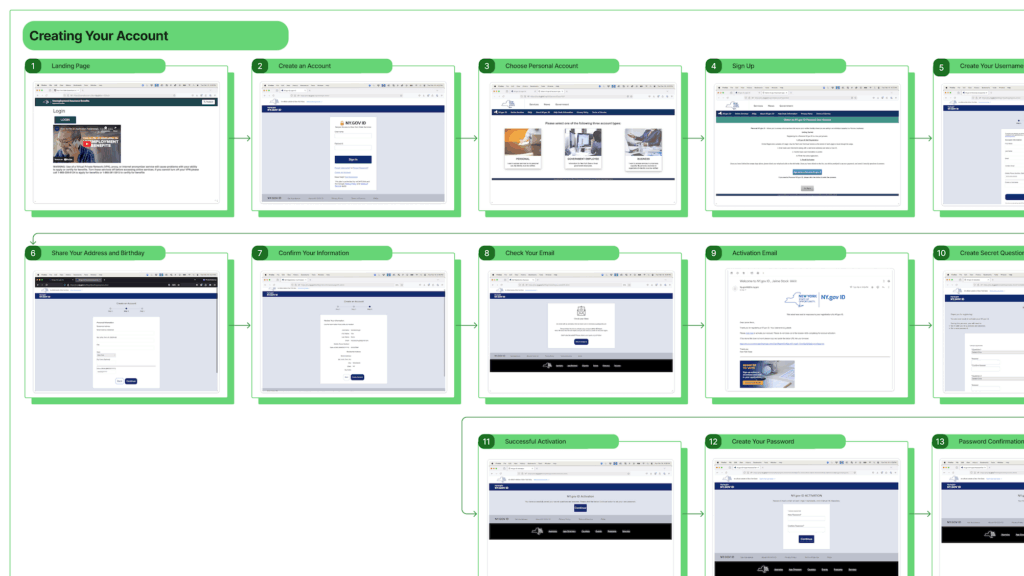
Created for use in the Digital Doorways research project, this design stimuli shows the steps of submitting an application, sharing personal information, and verifying identity for New York's online application for Unemployment Insurance.
This budget request details ADES's FY2027 funding priorities—including developmental disability services, child care, IT modernization, and compliance with H.R. 1—and outlines projected fiscal impacts, caseload growth, and programmatic needs across the state
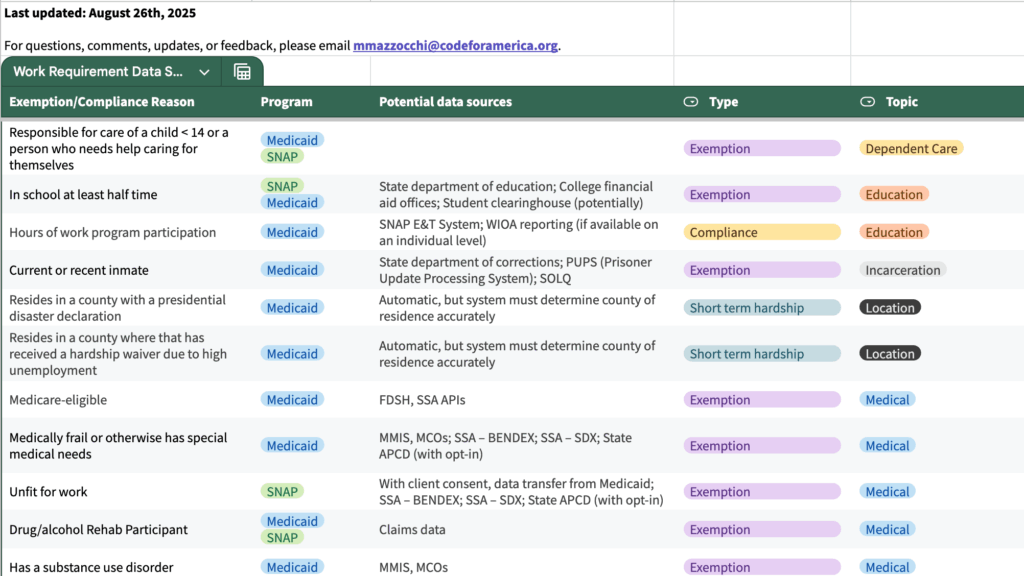
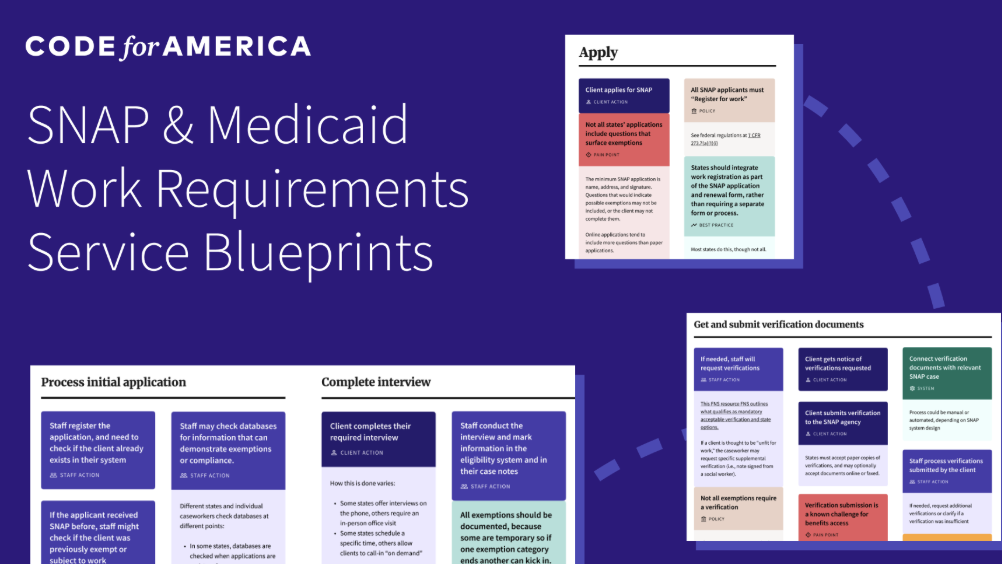
This file contains two, state-agnostic service blueprints that visualize how the new work requirements policy passed as part of H.R. 1 impacts the process of applying for, determining, and maintaining eligibility for SNAP and Medicaid benefits.
This memorandum summarizes the fiscal and programmatic impacts of Public Law 119-21 (H.R. 1 – “One Big Beautiful Bill”) on the state, detailing major provisions related to SNAP, Medicaid, higher education, taxation, and other federally funded programs.
This report provides an initial fiscal analysis of how H.R. 1 (the “One Big Beautiful Bill”) will affect the state’s federally funded programs across agencies, estimating multi-billion-dollar reductions in SNAP, Medicaid, education, and infrastructure revenues.
This guide outlines key strategies, definitions, and procedures for improving SNAP payment accuracy and reducing quality control (QC) error rates across states.
A 2025 policy agenda outlining comprehensive federal and state recommendations to eliminate benefits cliffs and strengthen economic mobility for families transitioning off public assistance.
A comprehensive guide that provides role definitions, hiring guidance, interview materials, and evaluation rubrics for building effective UX design and research teams.