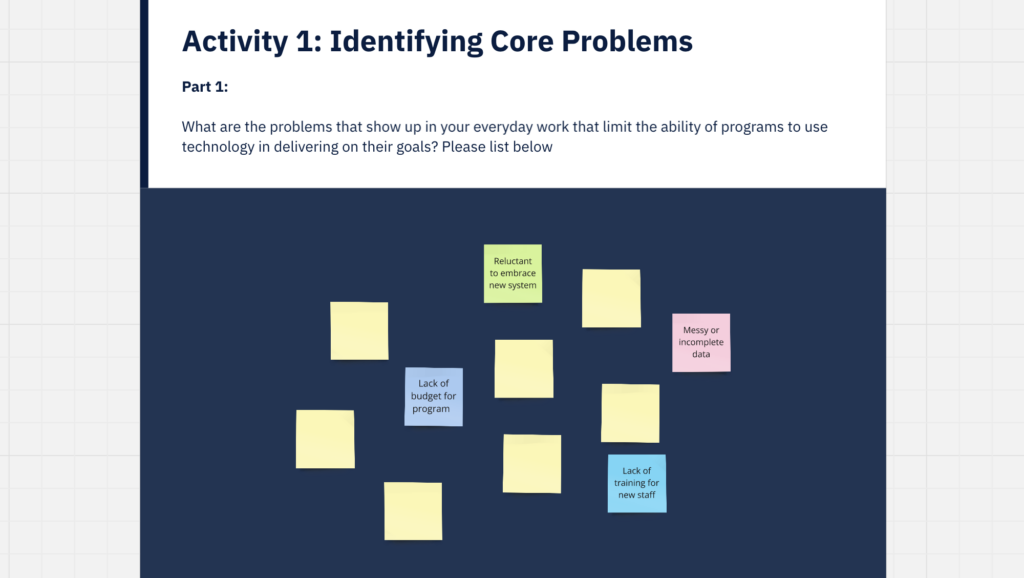
This workshop guide offers teams an opportunity to jointly work toward understanding core problems impacting digital delivery in their organization. The guide is structured in two parts: (1) a Miro template and (2) a Facilitation Guide.
The study investigates how state agencies administering SNAP comply with Title VI of the Civil Rights Act by providing language access for individuals with limited English proficiency (LEP).
Michigan's UIA director, Julia Dale, is leading the agency through transition by prioritizing lived experience, hope, grit, and values. Virginia's SNAP Program Manager, Michele Thomas, highlighted the success of Sun Bucks, a summer EBT child nutrition program that fed over 700,000 kids in its first year.
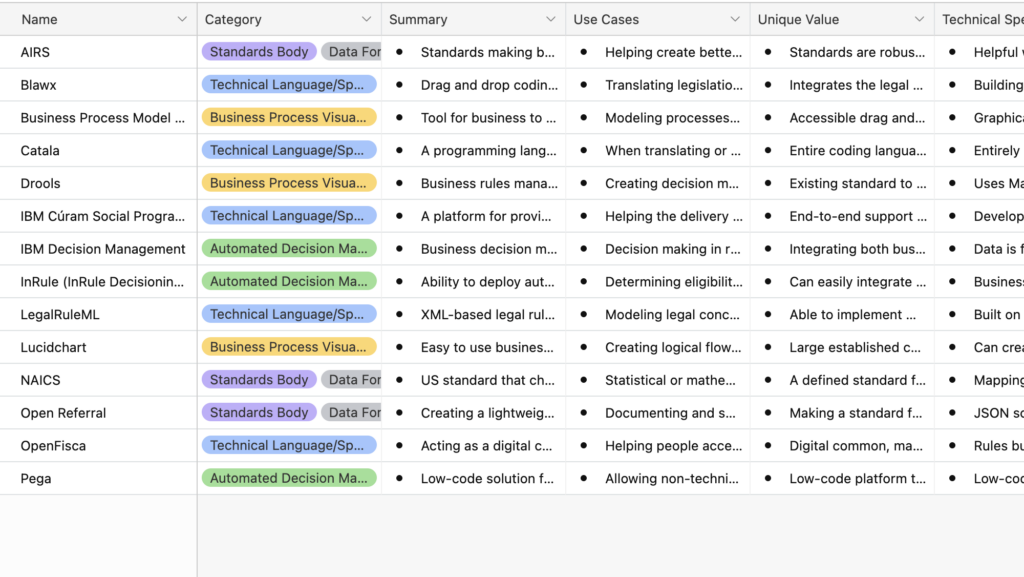
There are frameworks available that could inform the standardization of communicating rules as code for U.S. public benefits programs. The Airtable communicates the differences between the frameworks and tools. Each entry is tagged with different categories that identify the type of framework or tool it is.
To improve the .gov registrar, 18F and CISA created customer panels to gather feedback, opinions, and suggestions. Using a customer-centric approached enabled 18F and CISA to identify areas for improvement, build a product roadmap, and establish relationships with users.