
Intended Audience: State/Provincial Government: Agency
-

Family Benefits in America: 2023 Report Card
This report calculates the cumulative impact of major benefit programs on two types of families and how their benefits change as they move into the labor market and climb the ladder of upward mobility.
-
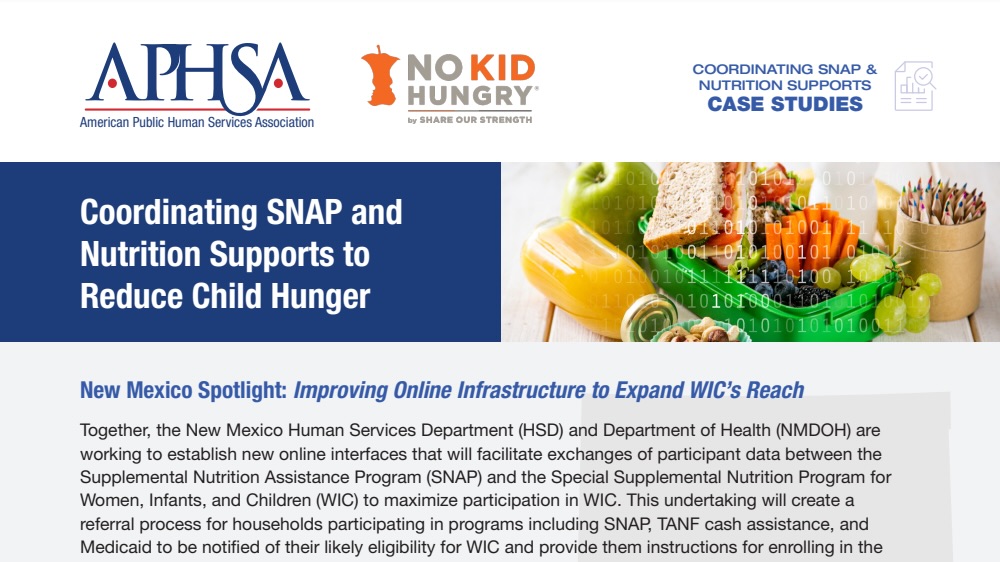
CSNS New Mexico: Improving Online Infrastructure to Expand WIC’s Reach
New Mexico is integrating SNAP and WIC data systems to improve outreach and increase WIC participation.
-

Executive Assistant
This is a job description for the role of Executive Assistant from the Canadian Digital Service (CDS).
-

Team Lead, Partnerships Business Development
This is a job description for the role of Team Lead, Partnerships Business Development from the Canadian Digital Service (CDS).
-

Senior Product Manager
This is a job description for the role of Senior Product Manager from the Canadian Digital Service (CDS).
-
Customer Experience Specialist
This is a job description for the role of Customer Experience Specialist from the Centers of Excellence.
-
English to French Translator Content Coordinator
This is a job description for the role of English to French Translator Content Coordinator from the Canadian Digital Service (CDS).
-
Senior Research Associate
This is a job description for the role of Senior Research Associate from the New York City Mayor's Office for Economic Opportunity (NYC Opportunity).
-
UK Artificial Intelligence Resources for the Public Sector
A collection that provides a comprehensive operational toolkit to help civil servants and public sector organizations deploy artificial intelligence safely, effectively, and securely.
-
Integrated Benefits Form Design from the Front Lines
See how Arizona centered eligibility workers in the design of an integrated benefits application, making it smoother for clients and staff.
-
Head of Internal Operations
This is a job description for the role of Head of Internal Operations from the Canadian Digital Service (CDS).
-

3 Ways to Get Benefits to the Families that Need Them
In a time of crisis, behavioral science offers insights into how to reduce the paperwork and other administrative burdens that prevent people from taking advantage of crucial support services.