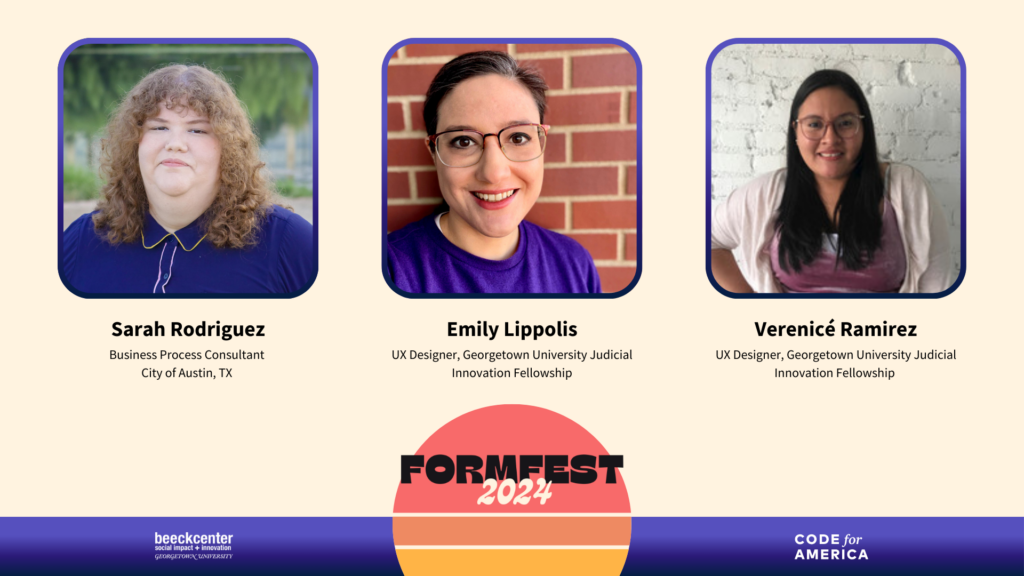
A profile on FormFest speakers Sarah Rodriguez, Emily Lippolis, and Verenice Ramirez, featuring stories about their motivations for working on public sector form innovation.
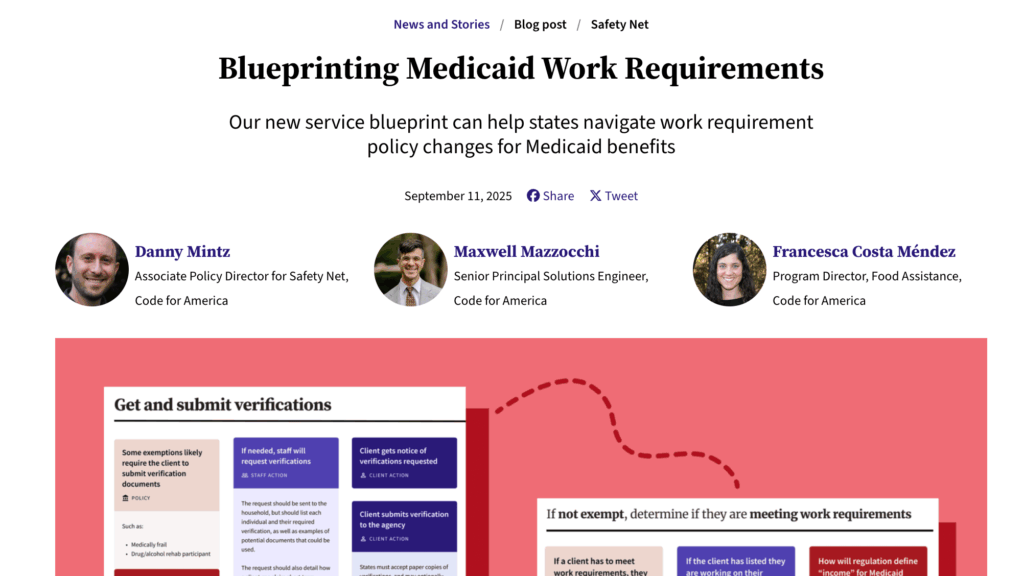
This blog introduces Code for America’s new service blueprint for Medicaid work requirements, highlighting how it can help states map system changes, identify pain points, and prioritize human-centered design.
This session from FormFest 2024 focused on how to help people get the assistance they need from the U.S. Department of Health and Human Services’ work on the Low Income Home Energy Assistance Program (LIHEAP) and the Maryland Social Services Administration’s work to improve welfare support for kinship caregivers.
This report provides a comprehensive analysis of administrative burdens, offering strategies to reduce unnecessary obstacles in public service delivery, with a focus on improving access to government services for underserved and marginalized populations.
This report summarizes insights from interviews with seven states on how they are adapting integrated eligibility and enrollment (IEE) systems in response to sweeping federal changes to SNAP and Medicaid under H.R. 1.
This is a job description for the role of Communications Design Fellow from the New York City Mayor's Office for Economic Opportunity (NYC Opportunity).
This page includes data and observations about authentication and identity proofing steps specifically for online applications that include MAGI Medicaid.
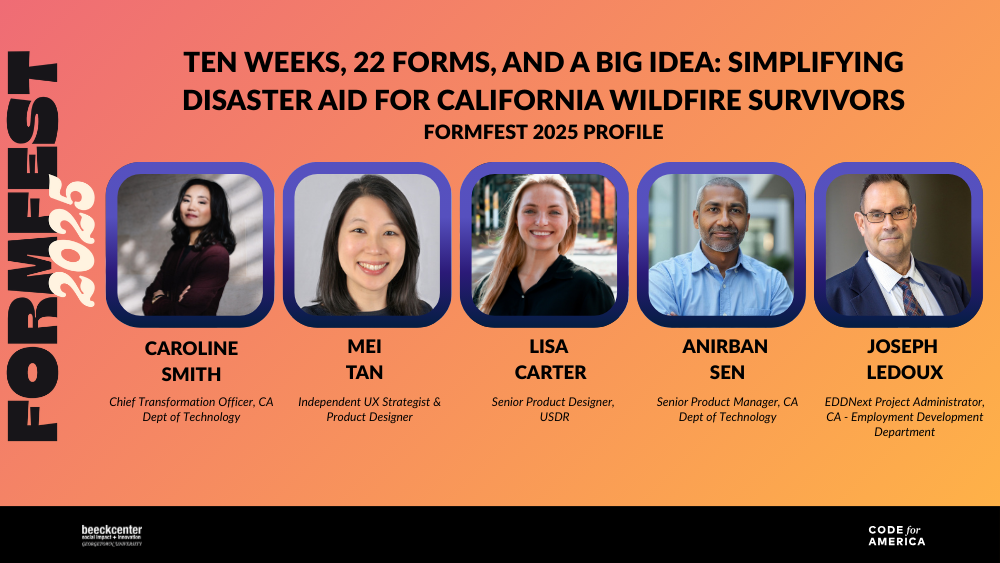
This FormFest profile describes how California rapidly simplified disaster-aid processes for wildfire survivors by auditing 22 forms across eight agencies and developing a concept for a universal eligibility form and relief portal.
This workshop summary provides practical guidance for web developers and designers on implementing accessible web design practices, emphasizing the importance of inclusivity and usability for all users.