This Spanish translated fact sheet provides strategies for organizations to support and affirm LGBTQIA2S+ youth and young adults experiencing homelessness.
U.S. Department of Health and Human Services (HHS)
Making your service more inclusive means designing government services so that everyone who needs to use them can do so with as few barriers as possible, by understanding legal duties, identifying and removing exclusion points, and considering a wide range of user needs throughout the design process.
Key functionalities and design elements recommended for creating effective online WIC applications, focusing on usability, accessibility, and compliance to improve participant experience and streamline agency operations.
The Digital Benefits Network at the Beeck Center for Social Impact + Innovation at Georgetown University and Public Policy Lab co-hosted a webinar presenting breaking research on beneficiary experiences with digital identity processes in public benefits.
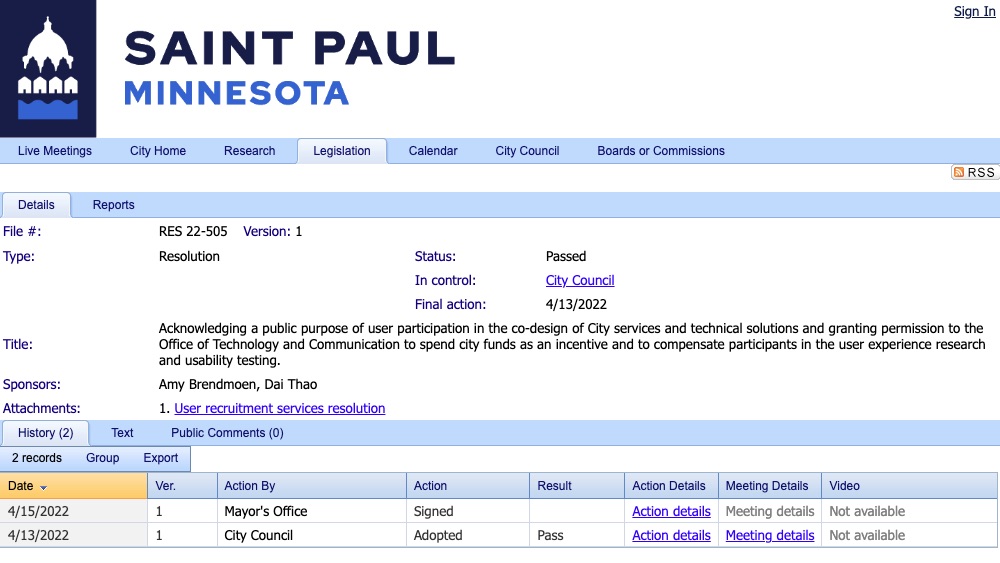
City of Saint Paul's website for community members to sign up to participate in paid research opportunities in order to test and provide feedback on the design of digital services and products.
In Austin, there are over 2,000 individuals without a safe place to sleep. There are many reasons a person can become homeless, and these reasons range from the lack of affordable housing to the loss of family and community. In 2017, the Innovation Office secured a three-year $1.25m grant from Bloomberg Philanthropies to focus on the city's goal of ending homelessness. The grant funds an i-team to help the city identify the best ways for City Council, departments, and the community to collaborate towards a shared understanding of homelessness in Austin.
This brief outlines the U.S. federal government’s framework to identify, reduce, and address administrative burdens through a series of executive orders, legislative actions, and updated policies focused on improving customer experience and increasing access to government benefits.