Intended Audience: Local/Municipal Government: Agency
-
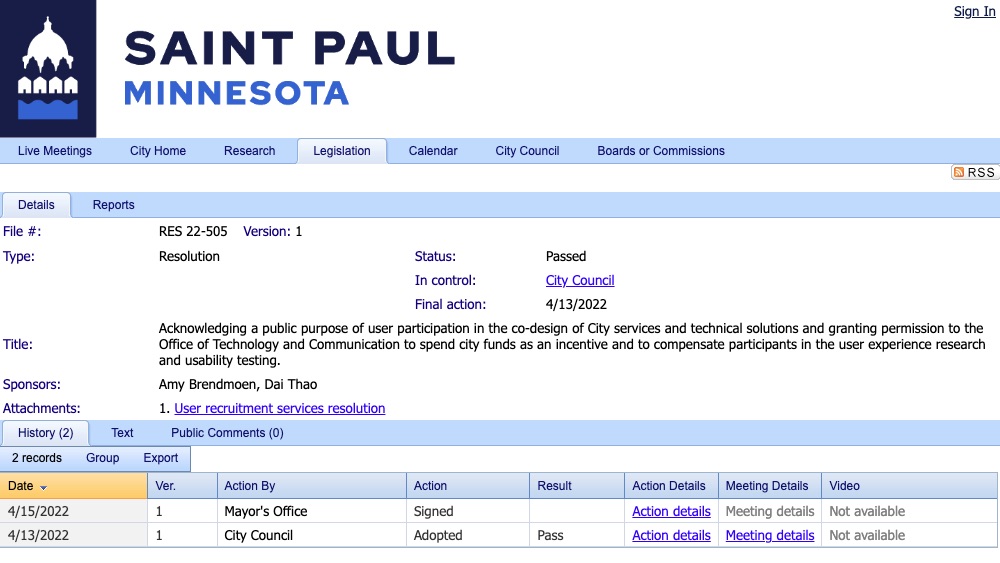
City of St. Paul User Experience Participation Legislation
Policy from the City of Saint Paul to provide compensation to those participating in user experience research and usability testing.
-

Civic Designer
This is a job description for the role of Civic Designer from the City of Baltimore Mayor's Office of Innovation.
-

Temp Software Developer (Notify)
This is a job description for the role of Temp Software Developer (Notify) from the Canadian Digital Service (CDS).
-

Visual Designer
This is a job description for the role of Visual Designer from the Canadian Digital Service (CDS).
-
Community Centered Designer
This is a job description for the role of Community Centered Designer from the City of Durham.
-
Engineering Practices Lead
This is a job description for the role of Engineering Practices Lead from the City of Austin.
-
Creative Recruiter
This is a job description for the role of Creative Recruiter from the Canadian Digital Service (CDS).
-
Design Researcher
This is a job description for the role of Designer Researcher from the Canadian Digital Service (CDS).
-
Diversity, Equity, Inclusion Program Manager
This is a job description for the role of Diversity, Equity, Inclusion Program Manager from the Canadian Digital Service (CDS).
-
Senior Product Manager
This is a job description for the role of Senior Product Manager from the Canadian Digital Service (CDS).
-
Senior Designer
This is a job description for the role of Senior Designer from the Canadian Digital Service (CDS).
-
Head of Software Development
This is a job description for the role of Head of Software Development from the Canadian Digital Service (CDS).