This Spanish translated fact sheet provides strategies for organizations to support and affirm LGBTQIA2S+ youth and young adults experiencing homelessness.
U.S. Department of Health and Human Services (HHS)
This resource provides updated draft digital identity guidelines for identity proofing, authentication, and federation, aiming to improve security, privacy, usability, and equity in digital identity systems.
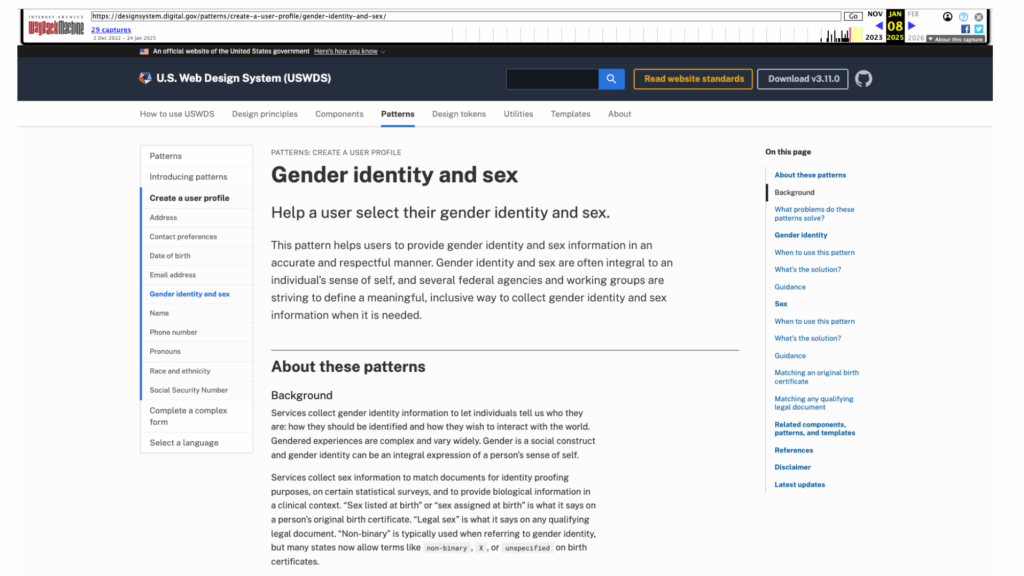
When creating a user profile, this U.S. Web Design System pattern helps users to provide gender identity and sex information in an accurate and respectful manner.
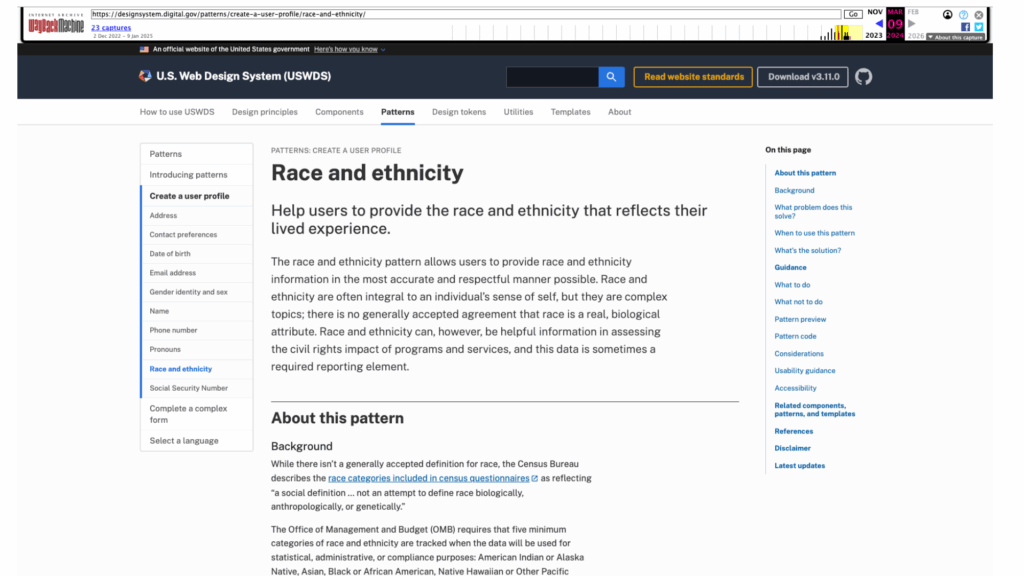
This page provides a U.S. Web Design System pattern for collecting race and ethnicity information in user profiles in a way that respects identity, supports data standards, and promotes inclusion.
This guide introduces privacy-enhancing technologies (PETs) and provides practical guidance for government agencies on selecting and implementing them to securely use, share, and protect sensitive data.
This case study details the development of a document extraction prototype to streamline benefits application processing through automated data capture and classification.
A toolkit that explains how to apply a content-first design approach to public services, helping teams design content strategy and interfaces based on user needs.
This blog post outlines how address validation tools can improve delivery of critical benefits by ensuring mailing addresses are accurate and up-to-date.
In our research announcement on theories of change (ToC) for digital government, the Digital Service Network shared our belief that all Digital Service (DS) teams should work to develop a ToC.
In this updated primer, the DBN describes how identity proofing and authentication show up in public benefits applications and outlines equity and security concerns raised by common identity proofing and authentication methods.
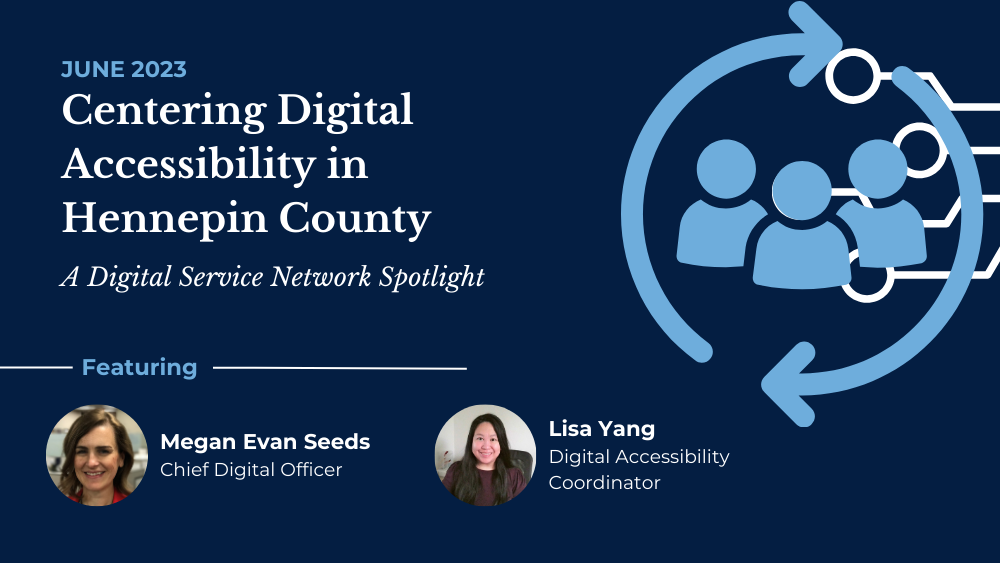
The Digital Service Network (DSN) spoke with staff from ODX — Megan Evans Seeds, chief digital officer, and Lisa Yang, digital accessibility coordinator — to discuss their efforts to help center digital accessibility across Hennepin County government.
This report outlines state Medicaid program priorities, including expanding access to services, addressing health disparities, and implementing cost-containment measures amid post-pandemic uncertainties.