This review evaluates the UK public sector's use of digital technology, identifying successes and systemic challenges, and proposes reforms to enhance service delivery.
Executed on March 28, 2024, this memorandum establishes new agency requirements and guidance for AI governance, innovation, and risk management, including through specific minimum risk management practices for uses of AI that impact the rights and safety of the public.
Executed April 3, 2025, this memo provides federal agencies with government-wide guidance for accelerating AI adoption through innovation, governance, and public trust.
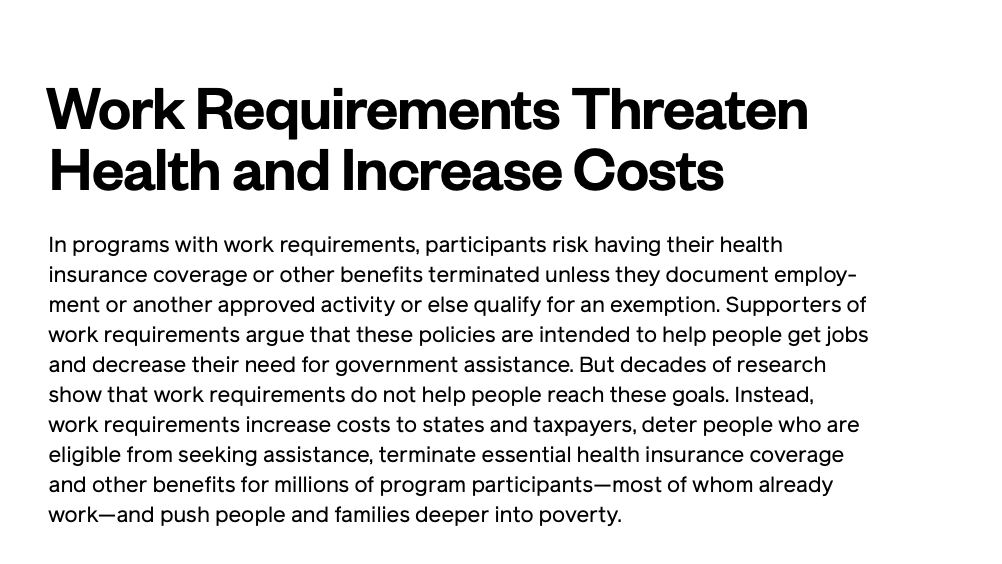
A research brief explaining how work requirements in programs like Medicaid and SNAP reduce coverage, increase administrative costs, and push eligible people deeper into poverty without improving employment outcomes.
This framework provides voluntary guidance to help employers use AI hiring technology in ways that are inclusive of people with disabilities, while aligning with federal risk management standards.
The AI RMF Playbook offers organizations detailed, voluntary guidance for implementing the NIST AI Risk Management Framework to map, measure, manage, and govern AI risks effectively.
National Institute of Standards and Technology (NIST)
This is a searchable tool that compiles and categorizes over 4,700 policy recommendations submitted in response to the U.S. government's 2025 Request for Information on artificial intelligence policy.
This hub introduces the UK government's Algorithmic Transparency Recording Standard (ATRS), a structured framework for public sector bodies to disclose how they use algorithmic tools in decision-making.
This report shares the progress of the Biden-Harris Administration on health care access, prescription drug affordability, mental health, maternal health, and public health investments.