A blog post offering four distinct types of visualization maps that help digital project teams quickly build shared understanding and alignment when starting new work.
This site contains resources explaining the 2025 Working Families Tax Cut Act (WFTC) — formally Public Law 119-21, which changes eligibility, financing, and community-engagement requirements for Medicaid and Children’s Health Insurance Program (CHIP).
A national survey of low-wage workers showing that administrative burdens in SNAP and Medicaid are common and strongly linked to food hardship, healthcare hardship, and chronic illness.
A curated toolkit of plain-language writing resources, training, and guidance aimed at helping government and public-service staff create accessible, easily understood communications.
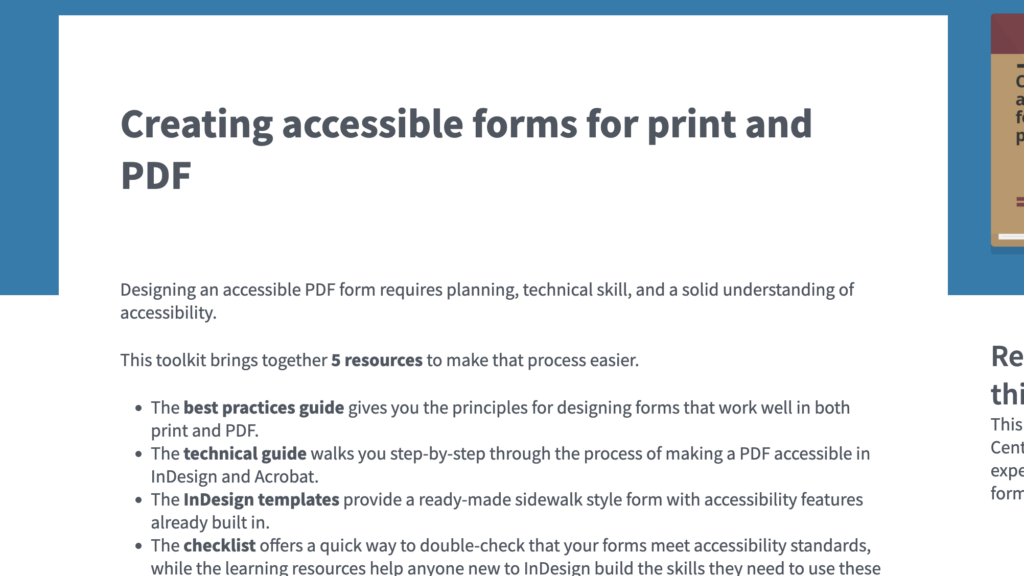
A practical toolkit that guides teams through designing and building accessible forms in print and PDF formats that are usable by people with disabilities and meet accessibility standards.
This publication explains current state integrated eligibility and enrollment (IEE) system implementation processes, approaches, and opportunities for future processes and technologies. It is a resource for state officials, advocates, funders, and tech partners working to implement these systems.
This blog summarizes a FormFest session where the Center for Civic Design shared research on how screen reader users navigate voter registration forms and offered guidance for designing more accessible digital and PDF forms.
This report analyzes the current state of digital identity in the United States, outlines challenges such as privacy concerns, fragmented systems, and lack of standards, and proposes policy and technology solutions to build a secure, interoperable, and user-friendly national digital identity framework.
Information Technology & Innovation Foundation (ITIF)
This field guide is for digital services and technology leaders working at the federal, state, or local government level. It describes a way of applying research approaches to strategic decision making across digital services.