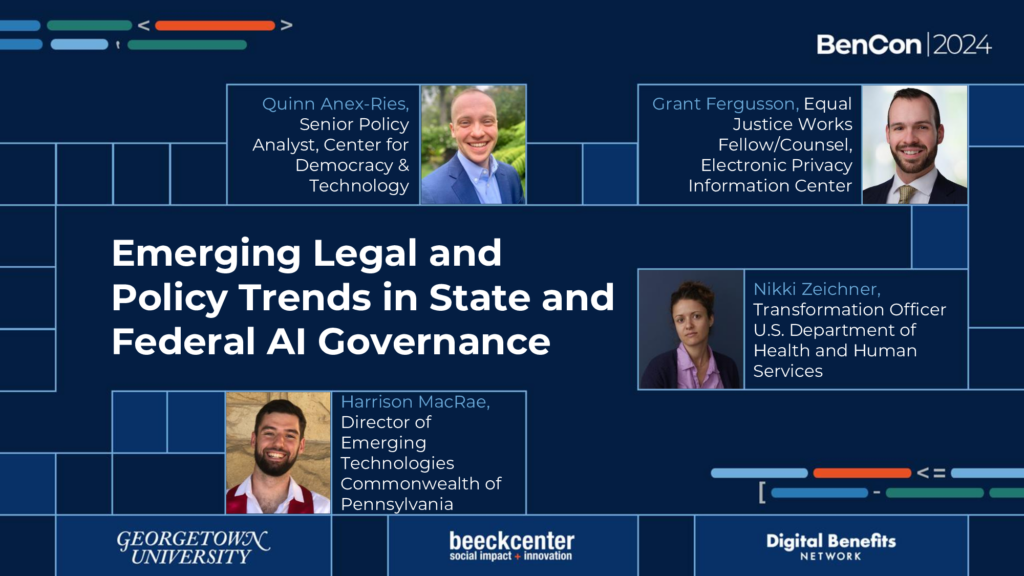
BenCon 2024 explored state and federal AI governance, highlighting the rapid increase in AI-related legislation and executive orders. Panelists emphasized the importance of experimentation, learning, and collaboration between government levels, teams, agencies, and external partners.
This article explores how AI and Rules as Code are turning law into automated systems, including how governance focused on transparency, explainability, and risk management can ensure these digital legal frameworks stay reliable and fair.
This playbook shares best practices and innovations related to data and analytical approaches for improving grant outcomes. Equitable data practices improve the effectiveness and efficiency of federal program dollars through better resource allocation and more informed decision-making.
A profile on FormFest speakers Paul Pistorius and Julian Rosner, featuring stories about their motivations for working on public sector form innovation.
This publication describes the research process and protocol used in the Digital Benefits Networks research project, "Digital Account Creation and Identity Proofing in Public Benefits Applications."
This resource helps tech professionals navigate how their skills and roles align with government job types and titles, providing a starting point for exploring positions within the structured civil service system.
This session from FormFest 2024 featured the Department of Homeland Security and the United States Digital Service talking about their work to reduce form burdens for internal and external users.