The Policy2Code Prototyping Challenge explored utilizing generative AI technology to translate U.S. government policies for public benefits into plain language and code, culminating in a Demo Day where twelve teams showcased their projects for feedback and evaluation.
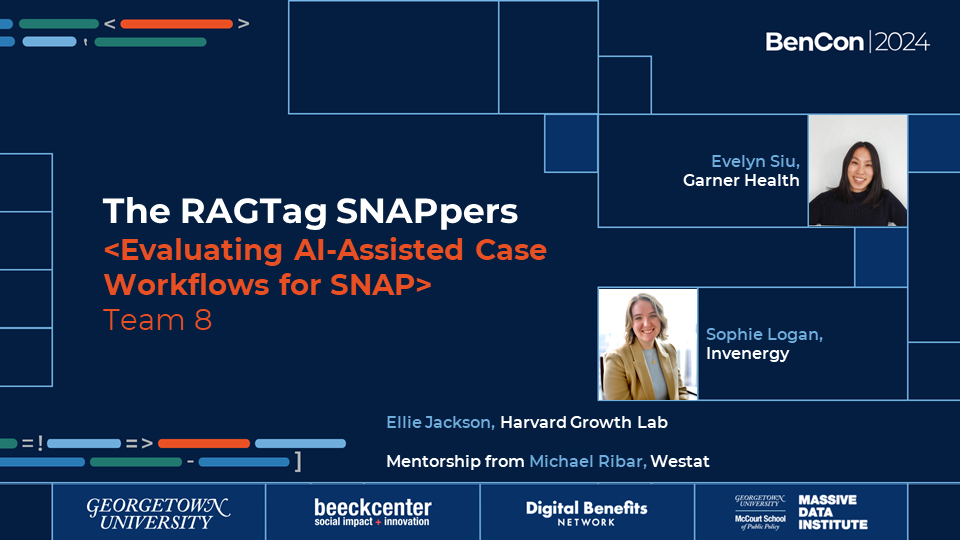
The team examined how AI, specifically LLMs, could streamline the case review process for SNAP applications to alleviate the burden on case workers while potentially improving accuracy.
This interview template includes questions designed to help teams conduct exploratory, semi-structured interviews with government stakeholders involved in program delivery to gather information that can help them evaluate the status quo of digital delivery in their organization.
The report evaluates the 2023 Newborn Supply Kit pilot program, highlighting its effectiveness in reducing maternal stress, alleviating financial burdens, and increasing trust in government services among new parents, especially in low-income communities.
U.S. Department of Health and Human Services (HHS)
This session from FormFest 2024 walked attendees through some of the major changes AI is bringing to form design. Learn about the National Head Start Association’s use of AI to reduce administrative burden and the Canadian Digital Service’s tips for protecting government applications systems from AI.
Sheev Davé, Product Manager at Notify.gov (GSA), provides an overview of what makes an effective multilingual translation through the principles of designing tools that have the ability to have conversations, meeting communities where they are, use of plain language and prioritize tricky topics, key life events and using trusted delivery sources.
The article presents the True Cost of Economic Security (TCES) measure, showing that over half of U.S. families struggle to meet the comprehensive costs required to thrive, highlighting significant disparities based on family type, location, and race.
This blog discusses the importance of phased rollouts for government software products, emphasizing the benefits of starting small, gathering real-world user feedback, and resolving issues before a full public release.
This blog post discusses the importance of prototyping in the public sector, focusing on how it helps test assumptions, gather user feedback, and refine ideas before making significant investments in building or launching a product or service.