Rules as Code
Interest Area
The Digital Government Network (DGN) offers opportunities to engage on select topics. These spaces are for practitioners who want to learn, share, and collaborate. They allow you to connect with peers, exchange resources, and stay informed about relevant discussions and opportunities.
All members are able to join a Google Group for the select topic(s). Government practitioners will also be sent an invitation to join a closed Slack space. All members agree to adhere to our community code of conduct and will receive guidance on our communications norms and the different ways to engage.
Rules as Code Interest Area
Welcome! This interest area creates a shared learning and exchange space for people working on public benefits eligibility and enrollment systems — and specifically people tackling the issue of how policy becomes software code.
This interest area brings together cross-sector experts who share approaches, examples, and challenges. Participants are from state, local, tribal, territorial, and federal government agencies, nonprofit organizations, academia, and private sector companies.
We aspire to have a standardized, open Rules as Code approach for U.S. public benefits programs. When this is achieved, rules will be communicated using a common, expandable syntax, they will be easy to find and incorporate into digital systems, and will be kept up to date to reflect the latest policy changes and new types of policies and benefits as they arise.
We value the experience and expertise from diverse backgrounds, disciplines, and sectors. We are focused on cross-benefit approaches for key programs including: food and nutrition (SNAP, WIC), health (Medicaid/CHIP), cash assistance (TANF, basic income), and unemployment insurance (UI).
Why Join?
- Collaborate with cross-sector practitioners and experts working on benefits eligibility rules, policy, and digital systems.
- Share resources, knowledge, and best practices related to Rules as Code.
- Stay up to date with the latest developments and advancements in Rules as Code.
- Contribute to improving the efficiency and effectiveness of public benefits systems.
New to Rules as Code?
Welcome! We engage people at all levels of familiarity with Rules as Code.
We like to use the Rules as Code definition from the Organisation for Economic Co-operation and Development (OECD):
“an official version of rules (e.g., laws and regulations) in a machine-consumable form, which allows rules to be understood and actioned by computer systems in a consistent way.”
The OECD report Cracking the code: Rulemaking for humans and machines is an excellent introductory read on the foundational concepts of Rules as Code and offers numerous international examples. We also recommend Rules as code: Seven levels of digitisation which classifies “digital transformation” of legal rules into a hierarchy of levels to help establish common terms.
Under a future approach to rules as code for benefits eligibility, policy, laws, or regulations would be translated into 1) plain language logic flows and, 2) computer-consumable code developed in a standardized syntax. The code can then be implemented in digital systems including benefits applications, eligibility screeners, policy analysis tools, and more. Any stakeholder can review the legislation or regulation, plain language logic, and code side-by-side and know that all are official and ready for implementation.

In our research, we’ve been asking questions such as “what if all coded rules utilized a standard format?” and “what if many systems could utilize shared code?” Based on our research and engagement with cross-sector practitioners, we believe the best place to begin prototyping is with developing a data standard and syntax for writing rules and creating shared documentation in a code library. Providing this baseline within the ecosystem would then open up further technical possibilities. These could include having a shared business rules engine to centrally store and manage the rules and provide the integration point for application programming interfaces (APIs) to allow for direct integration of the rules, including a managed flow for updates and testing.

With eligibility rules published in policy documents, as plain language logic flows, and computer-consumable code written in a common syntax, it would improve transparency around individuals’ and families’ benefits eligibility determinations, and make it easier for people to receive benefits they are eligible for.
Past Offerings
Events
Rules As Code Demo Day | June 2022
- More than 200 attendees joined for eight demonstrations of Rules as Code followed by discussion sessions.
Sector-Specific Roundtables | April and September 2023
- The DBN hosted three roundtables for rules as code practitioners by sector: the grassroots technical community, federal government practitioners, and state, local, tribal and territorial (SLTT) government practitioners.
“Thank you so much for hosting us! The SLTT Rules as Code Roundtable is a unique and important group making some big improvements to lives that need it the most. It’s an honor to be here!” – State Government Policy Administrator
Cross-Sector Roundtable | February 2024
- On February 22, 2024, over 90 practitioners from various sectors, including federal agencies, state and local agencies, non-profit organizations, industry, and academia joined us for the Cross-Sector Rules as Code Roundtable. We also welcomed participants from seven countries! Check out the videos:
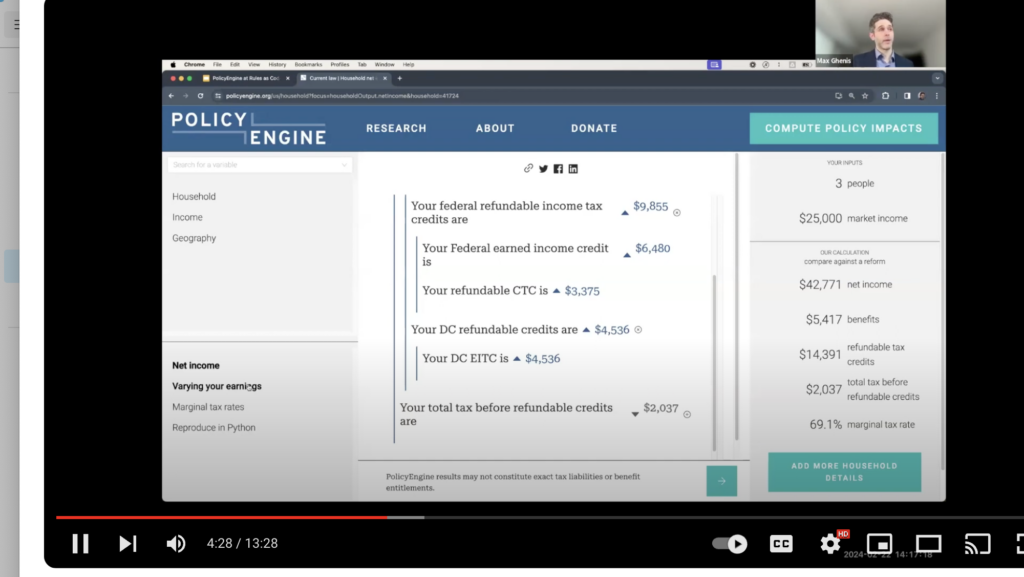
Policy Engine Demo at the Cross-Sector Rules as Code Roundtable
In this video, Policy Engine provides a demonstration of their product and API and discusses use cases in Rules as Code.
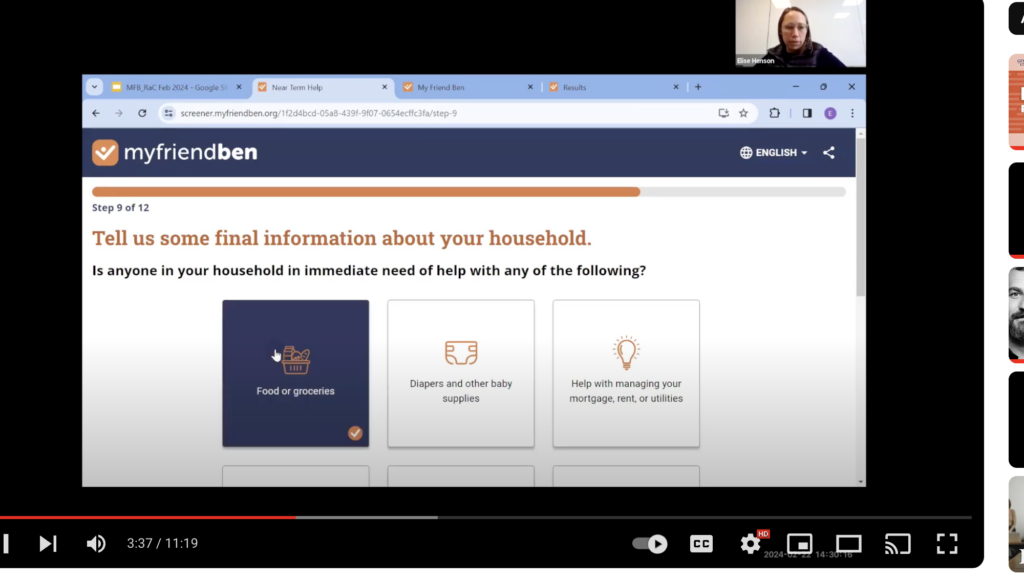
MyFriendBen Demo at the Cross-Sector Rules as Code Roundtable
MyFriendBen.org leaders demo their new Colorado benefits eligibility tool in a February 2024 webinar.
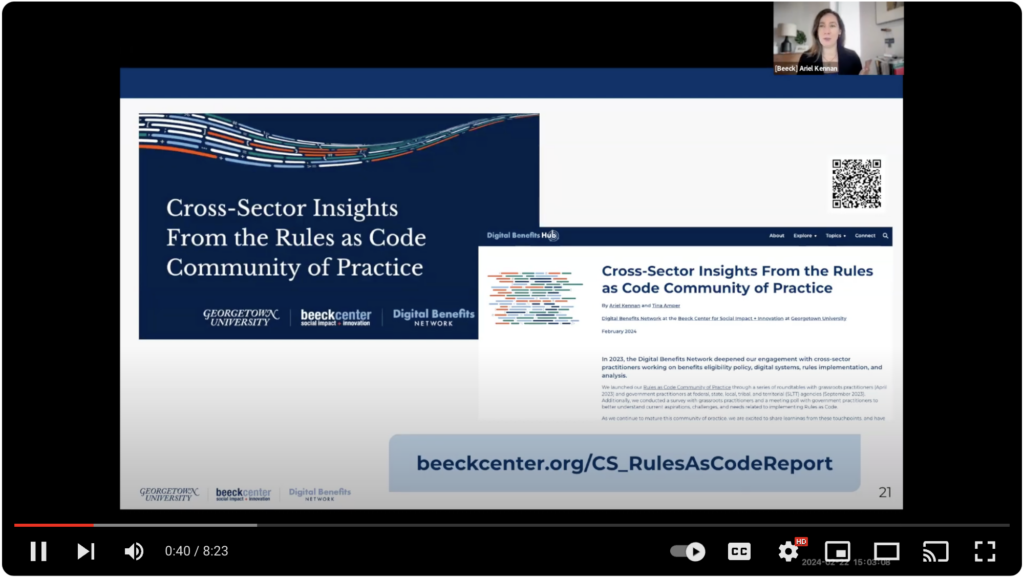
Community Insights at the Cross-Sector Rules as Code Roundtable
This video presents highlights from the Cross-Sector Insights From the Rules as Code Community of Practice report released in February 2024.
Policy2Code Prototyping Challenge & Demo Day | Summer 2024

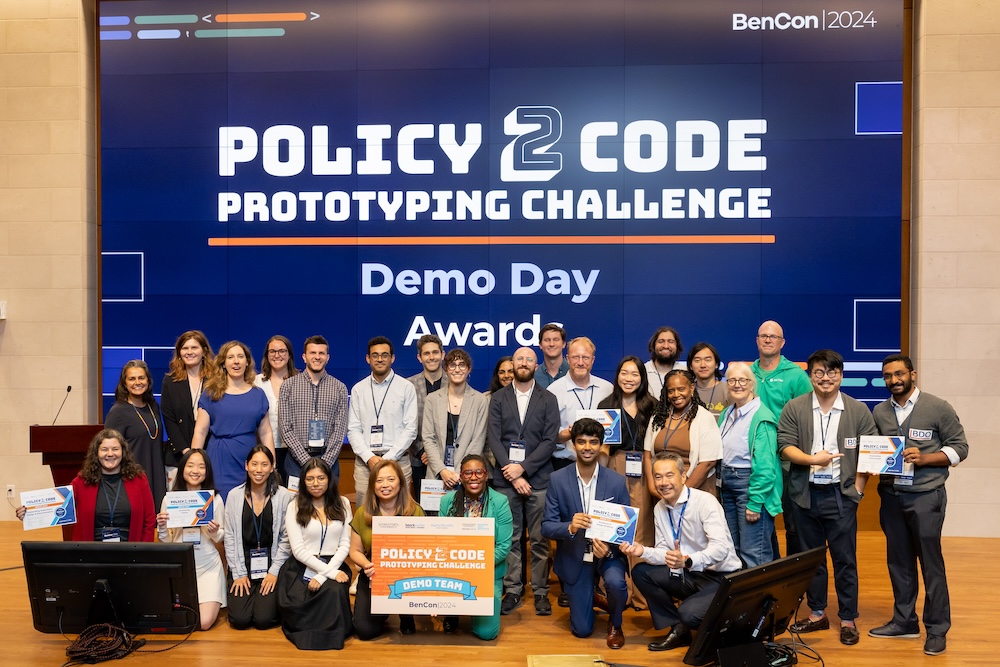
The Policy2Code Prototyping Challenge—organized by the Digital Benefits Network (DBN) at the Beeck Center for Social Impact and Innovation and the Massive Data Institute (MDI), both based at Georgetown University—culminated in the Policy2Code Demo Day on September 17, 2024 during BenCon 2024. Twelve teams presented their experiments, prototypes, and other developments to an audience of technologists, data scientists, civic tech specialists, public benefits advocates, non-profit organizations, private industry consultants, researchers, students, and government officials for feedback, awareness, and evaluation.
Since June 2024, Policy2Code Prototyping Challenge teams tested ways in which generative AI tools—such as Large Language Models (LLMs)—could help make policy implementation more efficient by converting policies into plain language logic models and software code under a Rules as Code (RaC) approach. Teams tested specific technologies and use cases ranging from eligibility screening, caseworker support, and translation to logic and code for a variety of U.S. public benefit programs, including SNAP, Medicaid, SSI/SSDI, LIHEAP, and Veterans benefits.
Conferences & Gatherings
We regularly present at conferences and gatherings. Get in touch if you’d like our team to speak at your event.
Research and Content
Latest Work and Information from Across the Ecosystem
We curate resources, examples, and case studies on the Digitizing Policy + Rules as Code page of the Digital Government Hub.
Research
Our team is among the first to extensively research how to apply a Rules as Code framework to the U.S. public benefits system. We draw from international research and examples, and have documented numerous U.S.-based projects that could inform a national strategy and shared syntax and data standard.
- Our February 2022 report Benefit Eligibility Rules as Code: Reducing the Gap Between Policy and Service Delivery for the Safety Net, and resulting two short form summaries Applying Rules as Code to the Social Safety Net and Envisioning a Federal Rules as Code Approach to Public Benefits Eligibility.
- Our June 2023 report Exploring Rules Communication: Moving Beyond Static Documents to Standardized Code for U.S. Public Benefits Programs which explores state program guides, how projects are transforming those policies into code, and potential frameworks and examples to build up from.
- We have written project spotlights on ACCESS NYC & Benefits Screening API, Benefits Data Trust’s Benefits Launch, MITRE’s Comprehensive Careers and Supports for Households (CCASH)™, Mes Aides, PolicyEngine, the Federal Reserve Bank of Atlanta’s Policy Rules Database, 18F’s Eligibility APIs Initiative, mRelief, and Alluma’s One-x-Connection.
- In early 2024, we published the Cross-Sector Insights Report based on engagement with cross-sector practitioners in 2023. The DBN distilled key insights to inform a path forward, including:
- The complexities in policy across programs and jurisdictions create challenges for both teams implementing policy into technology systems and people seeking benefits.
- There is strong interest in sharing knowledge, tools, and code across organizations.
- Benefits administrators and policymakers need more training and technical assistance to understand and champion Rules as Code as an approach to digitizing policy.
- There is willingness to collaborate on an open standard for writing rules and developing a shared code library.
Benefit Eligibility Rules as Code: Reducing the Gap Between Policy and Service Delivery for the Safety Net
This report examines how the U.S. federal government can enhance the efficiency and equity of benefit delivery by simplifying eligibility rules and using a Rules as Code approach for digital systems.
Applying Rules as Code to the Social Safety Net
This short report outlines the promise and potential of digitizing benefits eligibility policy.
Envisioning a Federal Rules as Code Approach to Public Benefits Eligibility
Digitizing public benefits policy will make the biggest impact for administrators and Americans, but only if it happens at the highest level of government.
Exploring Rules Communication: Moving Beyond Static Documents to Standardized Code for U.S. Public Benefits Programs
This brief analyzes the current state of federal and state government communication around benefits eligibility rules and policy and how these documents are being tracked and adapted into code by external organizations.
Cross-Sector Insights From the Rules as Code Community of Practice
This report highlights key findings from the Rules as Code Community of Practice, including practitioners’ challenges with complex policies, their desire to share knowledge and resources, the need for increased training and support, and a collective interest in developing open standards and a shared code library.
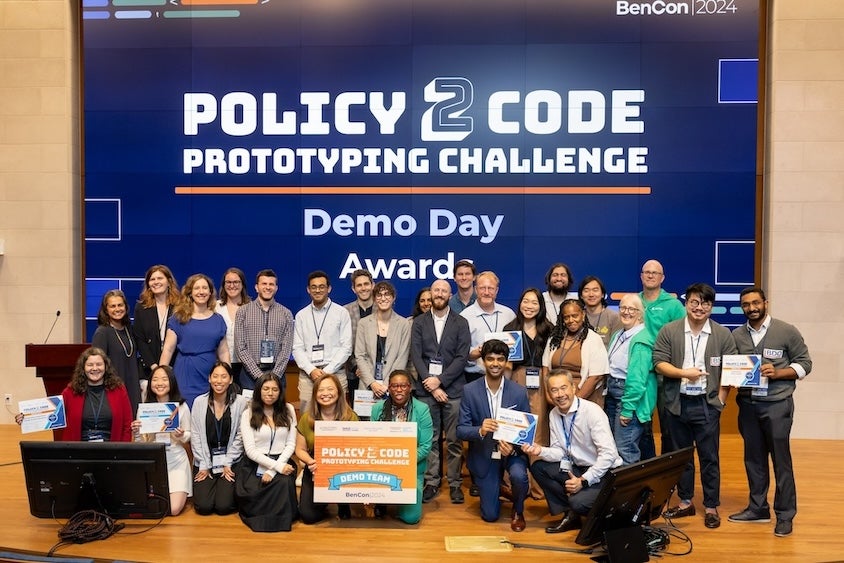
Policy2Code Demo Day Recap
A recap of the twelve teams who presented during the Policy2Code Prototyping Challenge Demo Day at BenCon 2024.
AI-Powered Rules as Code
On March 24, 2025 the Digital Benefits Network at the Beeck Center and the Massive Data Institute released a new report, AI-Powered Rules as Code: Experiments with Public Benefits Policy, which documents four experiments exploring if artificial intelligence (AI) can be used to expedite the translation of SNAP and Medicaid policies into software code for implementation in public benefits eligibility and enrollment systems under a Rules as Code approach. This research originally started as part of the Policy2Code Prototyping Challenge.
AI-Powered Rules as Code: Experiments with Public Benefits Policy
This report documents four experiments exploring if AI can be used to expedite the translation of SNAP and Medicaid policies into software code for implementation in public benefits eligibility and enrollment systems under a Rules as Code approach.
AI-Powered Rules as Code: Experiments with Public Benefits Policy: Summary
This is the summary version of a report that documents four experiments exploring if AI can be used to expedite the translation of policies into software code for implementation in public benefits eligibility and enrollment systems under a Rules as Code approach.
Implementing Benefits Eligibility + Enrollment Systems: A Review of State Practices
This research documents states’ current processes for building and maintaining IEE systems, including how they interpret and translate policies into code.Throughout summer 2025, the DBN conducted interviews with leaders from seven states which operate or are building IEEs for core programs (i.e., the Supplemental Nutrition Assistance Program (SNAP), Medicaid, Temporary Assistance for Needy Families (TANF), child care, etc).
Implementing Benefits Eligibility + Enrollment Systems: State Responses to H.R. 1
This report summarizes insights from interviews with seven states on how they are adapting integrated eligibility and enrollment (IEE) systems in response to sweeping federal changes to SNAP and Medicaid under H.R. 1.
Implementing Benefits Eligibility + Enrollment Systems: Key Context
This publication explains the fundamentals of state IEE systems—including the technology, opportunities, risks, and stakeholders involved. It is a resource for state officials, advocates, funders, and tech partners working to implement these systems.