This report discusses the financial resilience strategies families used to manage gaps before benefits arrived, in addition to providing recommendations for how benefits can be better designed in the future to fit the financial lives of lower-income households.
Led by the Digital Benefits Network in partnership with Public Policy Lab, the Digital Doorways research project amplifies the lived experiences of beneficiaries to provides new insights into people’s experiences with digital identity processes and technology in public benefits. This executive summary gives an overview of the project’s findings.
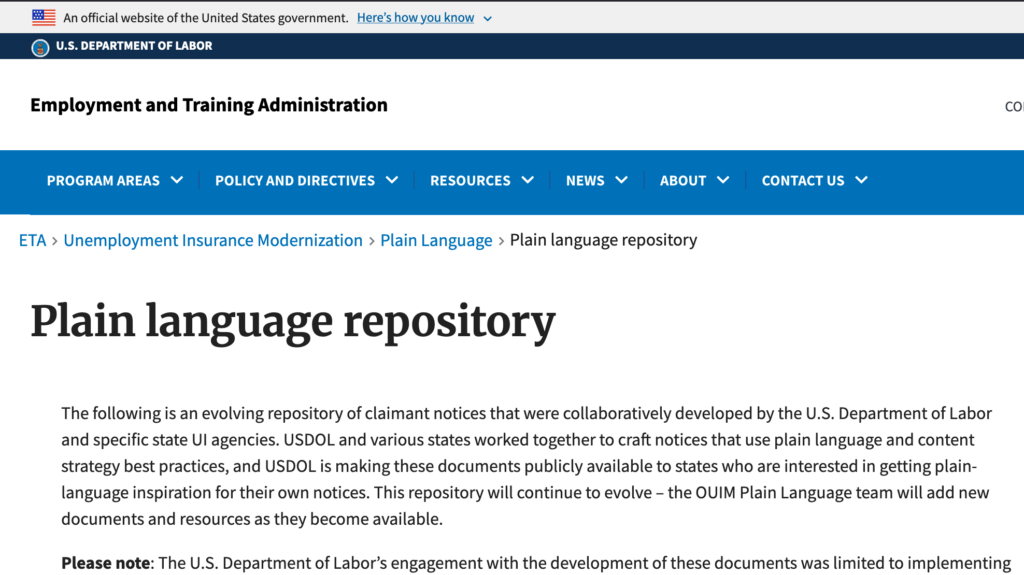
Plain language unemployment insurance claimant notices developed in collaboration with state agencies to serve as models of clear, accessible communication.
This presentation was recorded at the Texting and Notification Working Group meeting coordinated in part by the Aspen Institute Financial Security Program on February 28, 2024.
On May 19, 2023, the Digital Benefits Network published a new, open dataset documenting authentication and identity proofing requirements across online SNAP, WIC, TANF, Medicaid, child care (CCAP) applications, and unemployment insurance applications.
On May 19, 2023, the Digital Benefits Network published a new, open dataset documenting authentication and identity proofing requirements across online SNAP, WIC, TANF, Medicaid, child care (CCAP)applications, and unemployment insurance applications. This page includes data and observations about authentication and identity proofing steps specifically for online unemployment insurance applications.
The GAO placed the UI system on its High Risk List in June 2022, leading the DOL to develop a transformation plan detailing activities and strategies for building a resilient UI system capable of responding effectively to future economic challenges.
The Center on Budget and Policy Priorities (CBPP) report highlights the disproportionate hardships faced by Black and Latina mothers during the COVID-19 pandemic, exacerbated by systemic inequities.
Nava partnered with California's Employment Development Department (EDD) to rapidly develop two cloud-based digital services, enhancing unemployment benefit access during the COVID-19 pandemic.
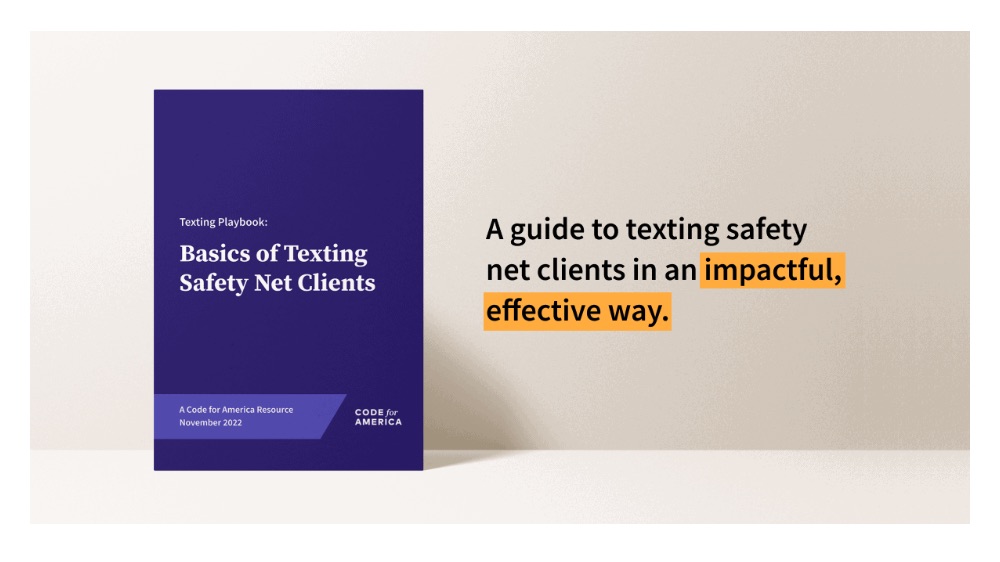
The Texting Playbook provides guidance and well-researched strategies to help state agencies implement texting in support of Medicaid, SNAP, WIC, and other benefits programs. It provides an overview of how to start texting clients; the types of messages to send, including real examples; Federal Communications Commision (FCC) policy guidance; how to encourage opt-ins and collect consent; how to avoid coming across as spam; and a cost analysis of texting.
During the call, we heard from two speakers: April Dunlap, Policy Administrator for Arizona’s Department of Economic Security and Professor Michele Gilman, Venable Professor of Law and Associate Dean for Faculty Research and Development at the University of Baltimore School of Law.
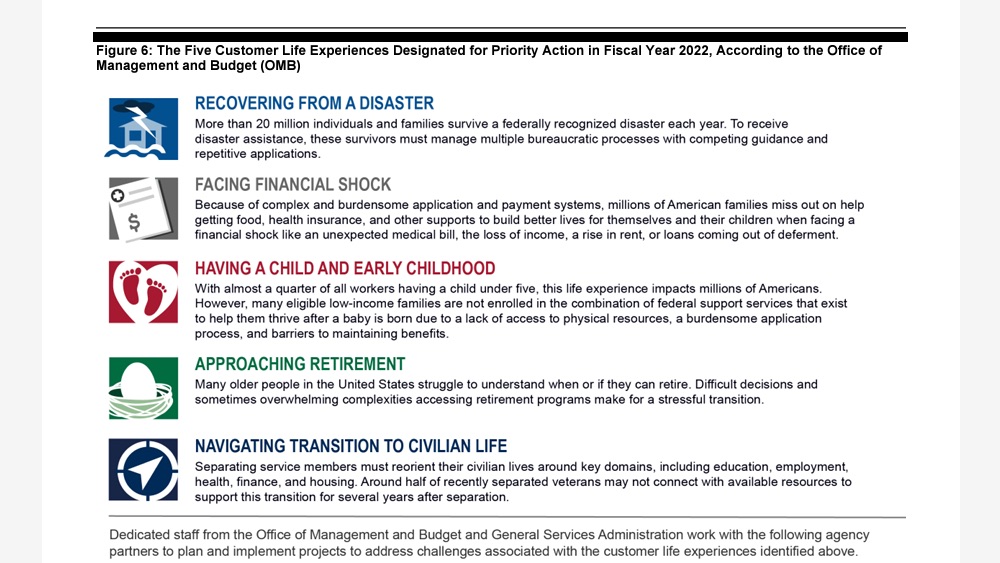
The 2021 President’s Management Agenda identified federal customer experience as a priority area for improvement. GAO was asked to review OMB and selected federal agencies’ efforts to improve federal customer experience.