This research summary presents findings from a randomized controlled trial demonstrating how mRelief’s simplified SNAP application significantly increases application rates among eligible individuals.
This resource provides examples and practical guides that explain how to use existing regulations and data sharing agreements to transfer client information or eligibility status between benefit programs.
This guide addresses technical and engineering requirements for a text messaging program, including texting platform options, and procurement and vendor management, among other technical implementation topics.
Report by the Aspen Institute discussing Benefits21, a multi-stakeholder, multi-faceted initiative to integrate and modernize benefits systems. This paper provides an overview of Benefits21, along with a discussion of the shortcomings of current public and private benefit systems.
This article discusses how Code for America enhanced the CalFresh application process to better assist self-employed individuals in accessing their full benefits by clarifying self-employment definitions and simplifying income verification.
This Urban Institute article argues that poverty is driven by structural barriers rather than individual choices and advocates for safety net programs that address systemic inequities.
In 2024, the Center on Budget and Policy Priorities and Digital Benefits Network led a workshop to explore key terms related to digital identity, and provide ecosystem-level context on how authentication and identity proofing may show up in the online benefits experience and impact clients. This resource links to the presentation slides.
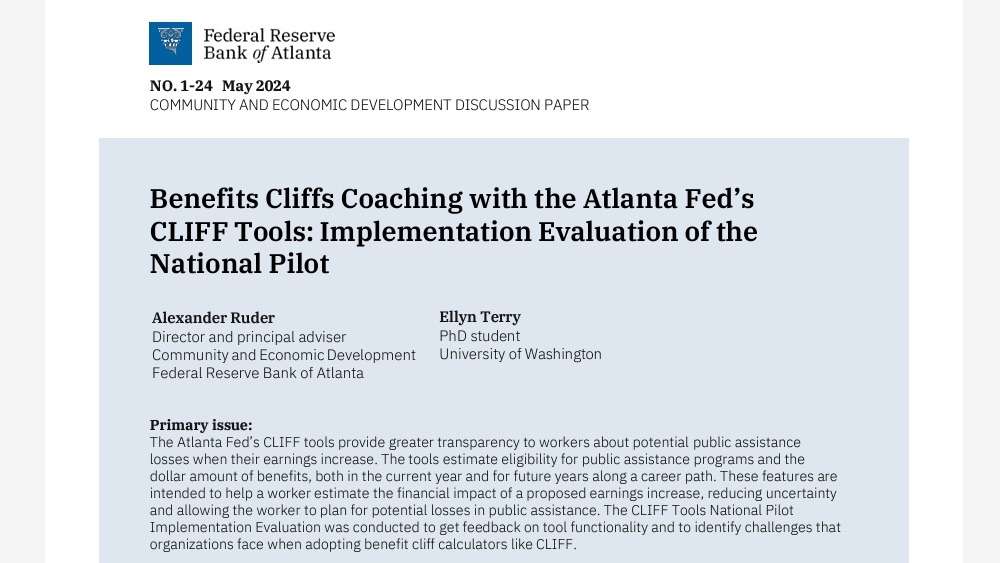
The Atlanta Fed’s CLIFF tools provide greater transparency to workers about potential public assistance losses when their earnings increase. We find three broad themes in organization-level implementation of the CLIFF tools: identifying the tar- get population of users; integrating the tool into existing operations; and integrating the tool into coaching sessions.
This report examines how state governments organize and manage human services programs, analyzing various agency structures and their impact on service delivery and coordination with the health care sector.
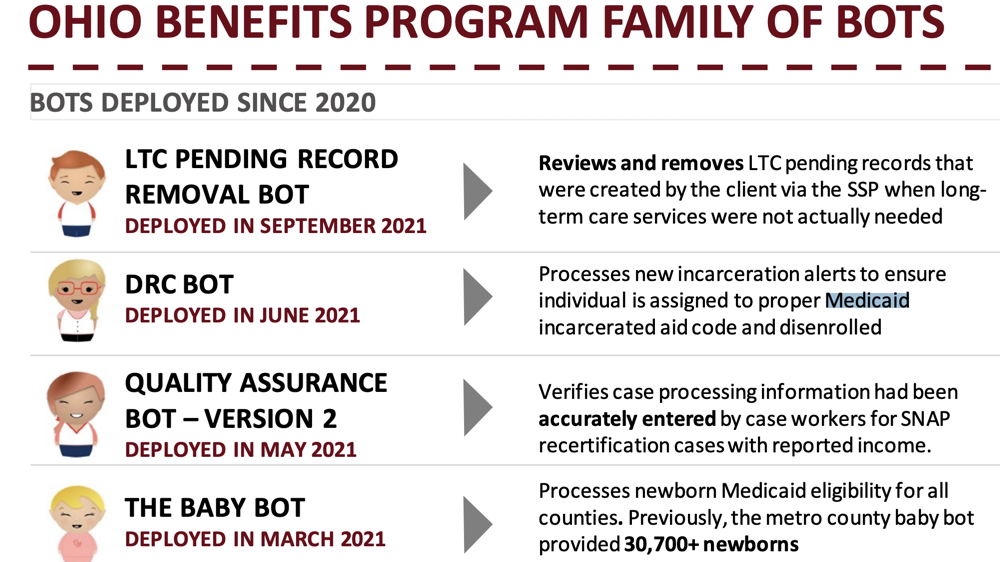
This award documentation from the National Association of State Chief Information Officers (NASCIO) explains how agencies in Ohio used automation to support administration of public benefits programs.
National Association of State Chief Information Officers (NASCIO)
Comprehensive and sustained improvement in benefits access and customer experience requires changes across policy, operations, technology, staffing, procurement, and more. This guide offers a collection of actions and best practices for states to apply.