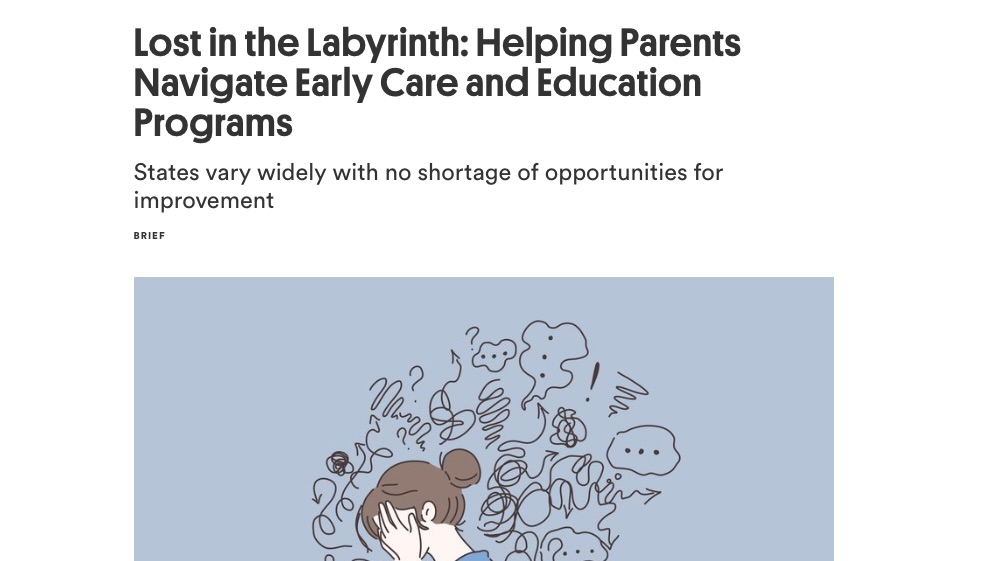
The Lost in the Labyrinth brief examines how fragmented early care and education (ECE) programs across the U.S. create challenges for families seeking services for young children.
This report examines how the U.S. federal government can enhance the efficiency and equity of benefit delivery by simplifying eligibility rules and using a Rules as Code approach for digital systems.
This report examines how states strategically approached managing and administering the historic influx of COVID-19 relief funds for child care and early childhood systems, focusing on governance structures, funding management systems, and data systems
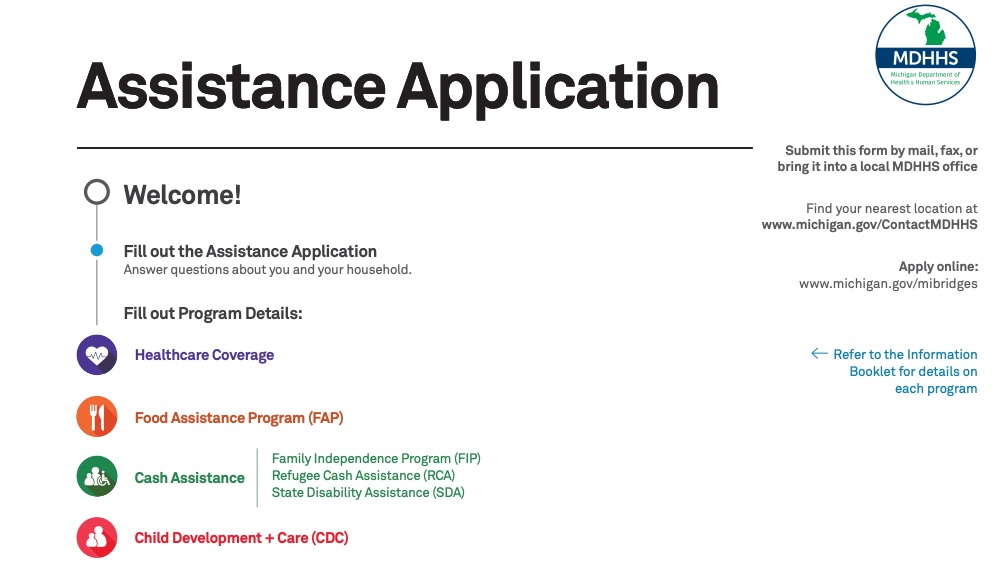
This publication explains current state integrated eligibility and enrollment (IEE) system implementation processes, approaches, and opportunities for future processes and technologies. It is a resource for state officials, advocates, funders, and tech partners working to implement these systems.
This brief offers a new, anti-racist vision for transforming the Child Care and Development Fund (CCDF) into a program that actively pushes back against structural racism and advances racial equity and economic prosperity for all families.
The Atlanta Fed’s CLIFF tools provide greater transparency to workers about potential public assistance losses when their earnings increase. We find three broad themes in organization-level implementation of the CLIFF tools: identifying the tar- get population of users; integrating the tool into existing operations; and integrating the tool into coaching sessions.
This toolkit provides resources for training and technical assistance (T/TA) providers in the Child Care Technical Assistance Network (CCTAN) to help State, Territory, and Tribal CCDF Lead Agencies be prepared to conduct equity assessments.
Data provided by the NYC Mayor’s Office for Economic Opportunity regarding benefit, program, and resource information for over 80 health and human services available to NYC residents in all eleven local law languages.
On May 19, 2023, the Digital Benefits Network published a new, open dataset documenting authentication and identity proofing requirements across online SNAP, WIC, TANF, Medicaid, child care (CCAP) applications, and unemployment insurance applications.
The COVID Response Project was funded by the W.K. Kellogg Foundation to document the real-time impacts of the COVID-19 pandemic on state human services agencies and capture state perspectives on lessons learned to guide future federal policymaking and state implementation. The project was completed by the American Public Human Services Association (APHSA) in partnership with the U.S. Department of Health and Human Services, Administration for Children and Families (ACF), Office of Regional Operations. Insights from the report reflect information obtained through APHSA’s on-going support of state human services agencies’ COVID-19 response efforts as well as a series of in-depth interviews with executive leadership of the 14 state health and human services agencies in ACF’s Region 1 (New England) and Region 4 (Southeast) areas.
American Public Human Services Association (APHSA)