The team developed an application to simplify Medicaid and CHIP applications through LLM APIs while addressing limitations such as hallucinations and outdated information by implementing a selective input process for clean and current data.
This study describes the potential of human-centered design principles to identify burdens, reducing the effects of what we label as administrative checkpoints.
This report summarizes insights from interviews with seven states on how they are adapting integrated eligibility and enrollment (IEE) systems in response to sweeping federal changes to SNAP and Medicaid under H.R. 1.
Code for America describes its work building the P-EBT online application and the consulting it provided to 10 states regarding implementing the program in a quick, effective, and human-centered way. Despite herculean efforts among human services and education agencies to get P-EBT off the ground, there were a few key technological, operational, and logistical barriers that consistently got in the way and hampered a smooth rollout of the program across the country.
In response to the COVID-19 crisis, the federal government authorized a new emergency program, Pandemic EBT (P-EBT), to replace school meals with money for groceries while schools are closed. Code for America describes its efforts to launch an accessible, online P-EBT application under an accelerated timeline due to to immense demand caused by the pandemic.
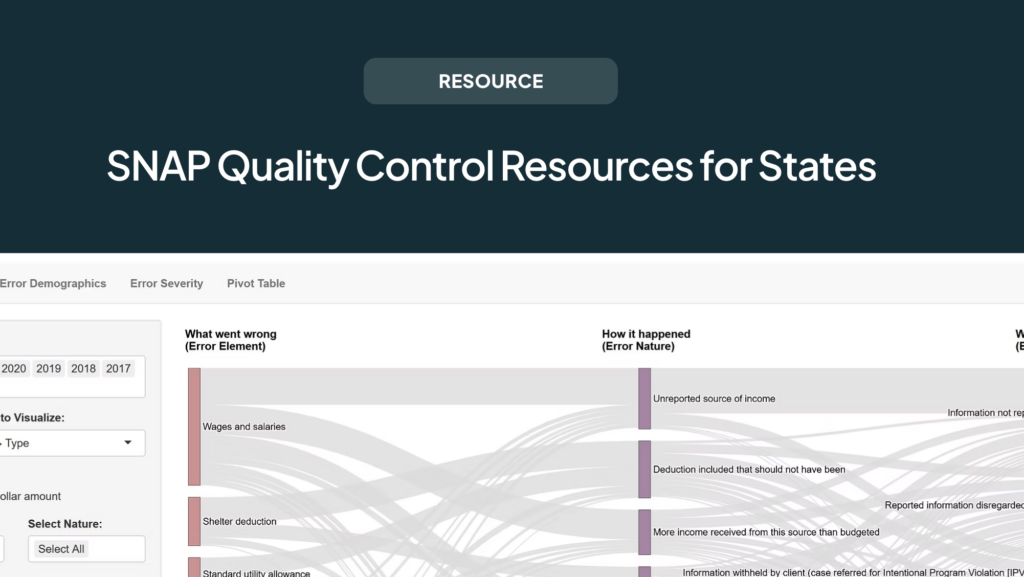
A blog introducing an interactive viewer that helps users explore SNAP Quality Control error data to better understand payment accuracy trends and administrative challenges across states.
This update highlights progress in improving federal customer experience (CX) following Executive Order 14058, showcasing service enhancements across agencies.
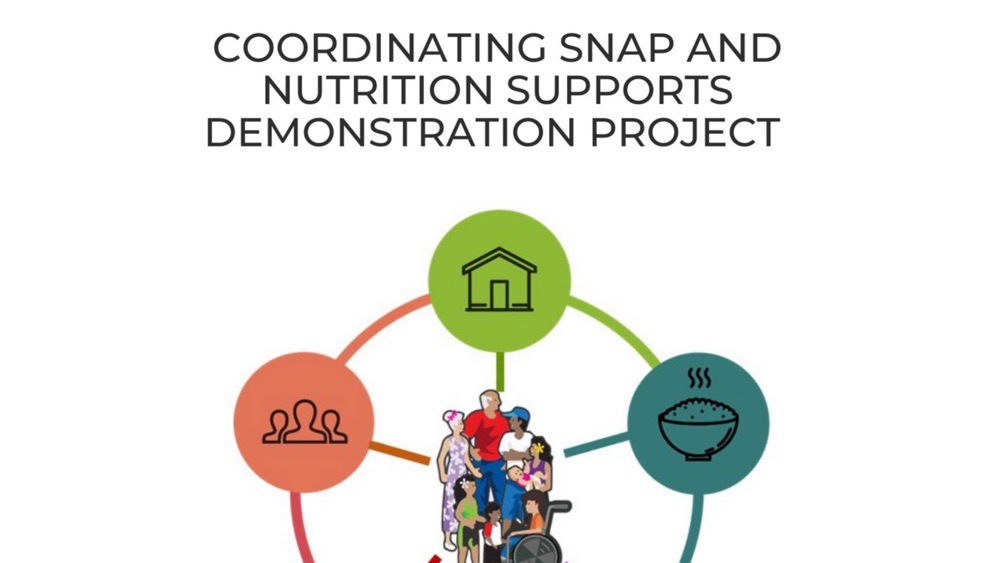
This white paper documents Hawai'i's journey and lessons learned from their 18-month Coordinating SNAP and Nutrition Supports project which laid the foundation for interagency data-sharing and built capacity to analyze administrative data across nutrition programs--specifically SNAP and WIC.
Well-designed, user-focused tools that allow for simple application are key to ensuring that families most in need receive the Child Tax Credit. Reaching these households will require a robust effort from the IRS to create user-friendly tools in partnership with organizations with a direct connection to eligible recipients.