This guide explains how states can implement new Medicaid work requirements introduced by H.R. 1, focusing on minimizing harm to eligible clients while preparing for compliance by 2027.
This budget request details ADES's FY2027 funding priorities—including developmental disability services, child care, IT modernization, and compliance with H.R. 1—and outlines projected fiscal impacts, caseload growth, and programmatic needs across the state
This memorandum summarizes the fiscal and programmatic impacts of Public Law 119-21 (H.R. 1 – “One Big Beautiful Bill”) on the state, detailing major provisions related to SNAP, Medicaid, higher education, taxation, and other federally funded programs.
This publication explains the fundamentals of state IEE systems—including the technology, opportunities, risks, and stakeholders involved. It is a resource for state officials, advocates, funders, and tech partners working to implement these systems.
This publication summarizes a body of research about how state benefits administering agencies build and maintain integrated eligibility and enrollment (IEE) systems. It is an easy to reference guide for state administrators, legislators, advocates, and delivery partners.
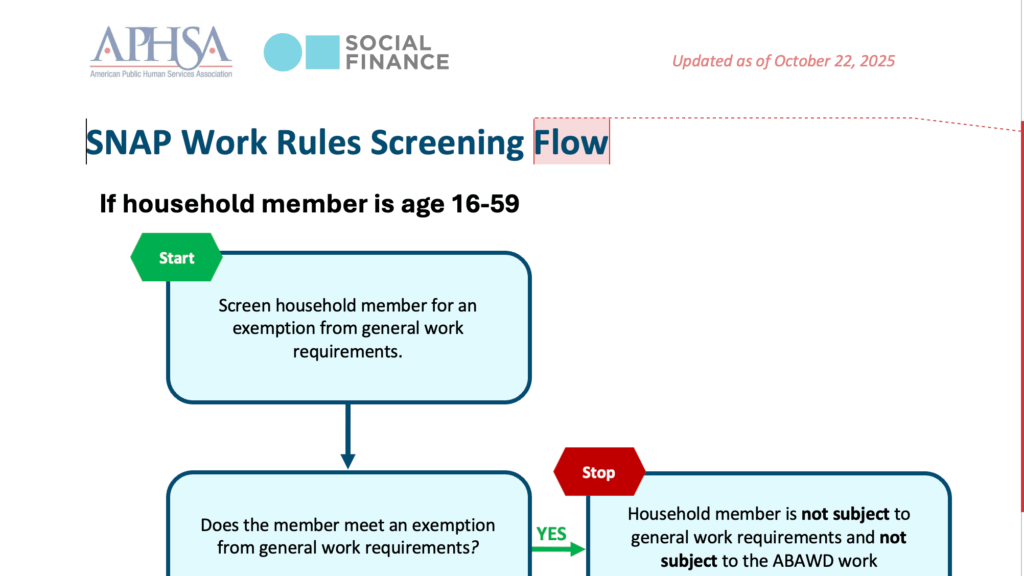
This document is a caseworker-facing flowchart for use in screening SNAP applicants and participants to determine if they are subject to work requirements.
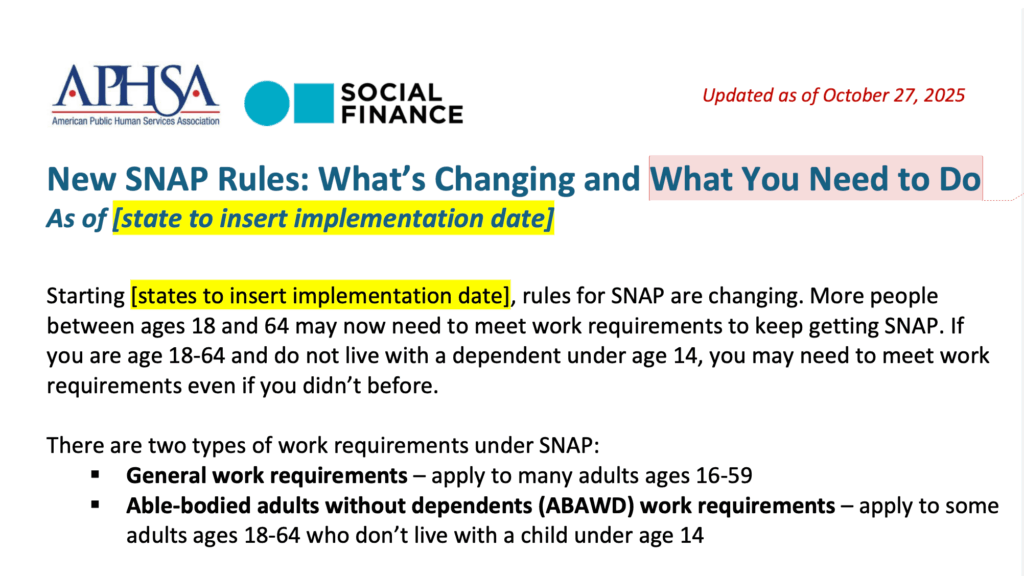
American Public Human Services Association (APHSA)
A detailed guide outlining how states can minimize coverage losses and administrative burden while implementing new Medicaid work requirements established under the 2025 federal reconciliation law.