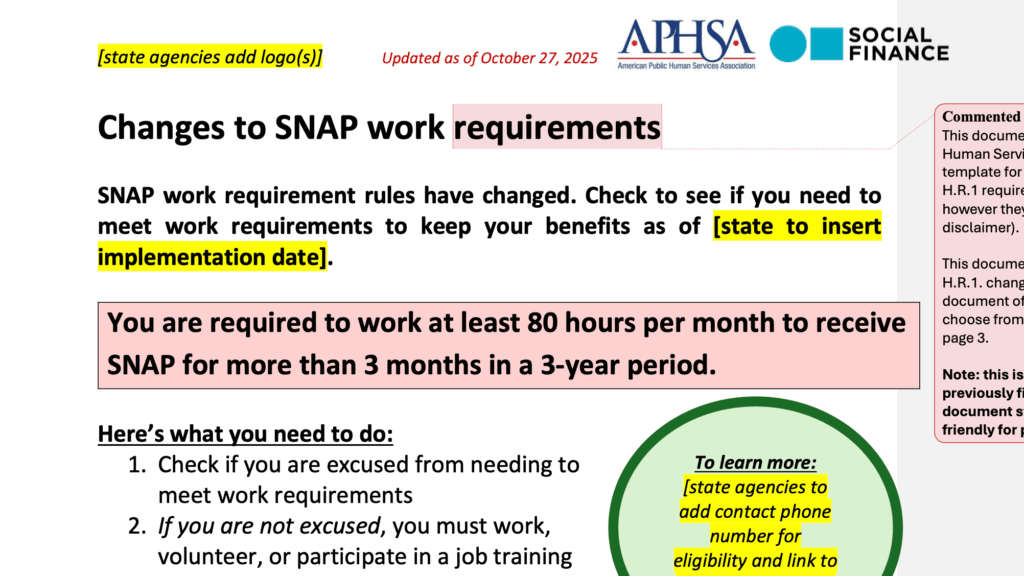
This blog discusses how the “Big Beautiful Bill” (H.R. 1) contains provisions that undermine SNAP and warns that states will be burdened by its fiscal and administrative impact.
Michigan's UIA director, Julia Dale, is leading the agency through transition by prioritizing lived experience, hope, grit, and values. Virginia's SNAP Program Manager, Michele Thomas, highlighted the success of Sun Bucks, a summer EBT child nutrition program that fed over 700,000 kids in its first year.
Code for America describes its work building the P-EBT online application and the consulting it provided to 10 states regarding implementing the program in a quick, effective, and human-centered way. Despite herculean efforts among human services and education agencies to get P-EBT off the ground, there were a few key technological, operational, and logistical barriers that consistently got in the way and hampered a smooth rollout of the program across the country.
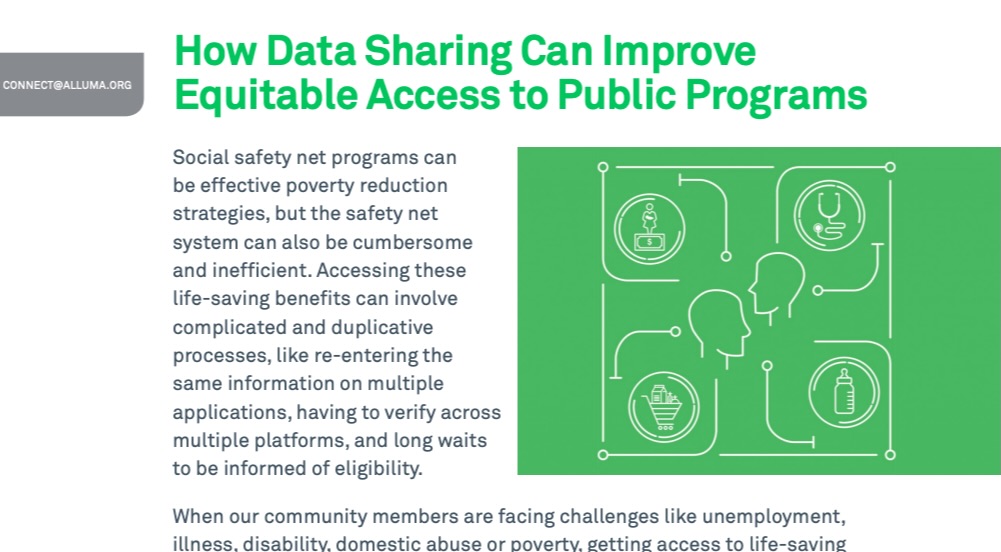
Accessing safety net benefits can involve complicated and duplicative processes that create barriers to access. Using cross-enrollment strategies can minimize the difficulties community members face in getting access to life-saving resources.
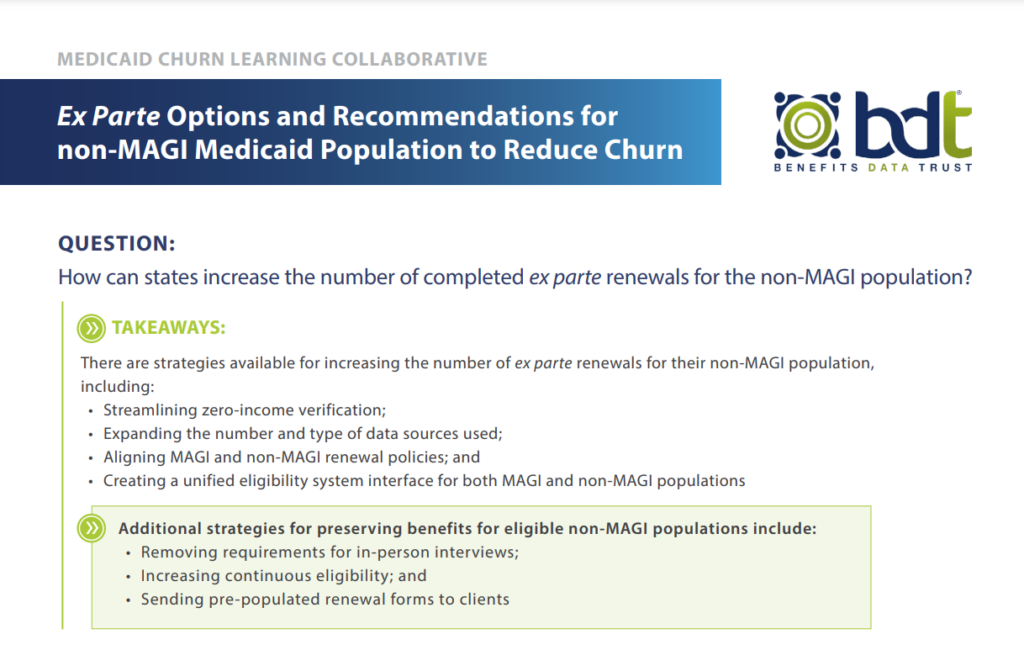
As a part of Benefit Data Trust (BDT)’s Medicaid Churn Learning Collaborative, BDT has created a memo describing policy options and state examples for Medicaid administrators to reduce churn for non-MAGI Medicaid enrollees when the federal public health emergency ends.
The report discusses how state Medicaid agencies can enhance efficiency and maintain coverage for eligible individuals by implementing ex parte renewals, which automatically renew beneficiaries' coverage using existing data without requiring action from enrollees.
This guide consolidates learning and spotlights principles, insights, and emerging practices to guide municipal leaders and public-private partnerships interested in designing basic income programs that are ethical, equitable, rigorous, informative, and consequential for local, state and national policymaking.
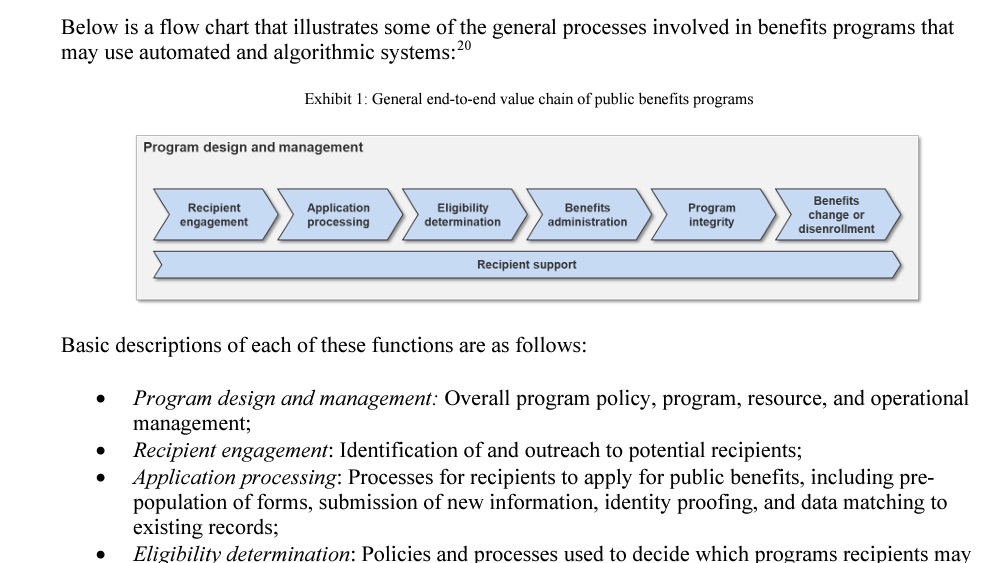
This plan promotes responsible AI use in public benefits administration by state, local, tribal, and territorial governments, aiming to enhance program effectiveness and efficiency while meeting recipient needs.
U.S. Department of Health and Human Services (HHS)
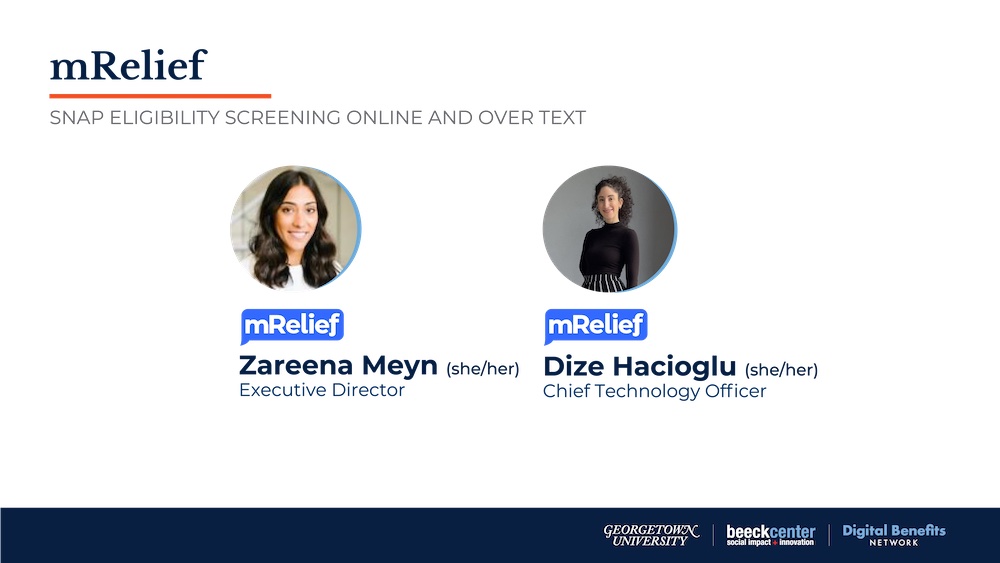
At Rules as Code Demo Day Executive Director Zareena Mayn and Chief Technology Officer Dize Hacioglu of mRelief demoed the code for their Supplemental Nutrition Assistance Program (SNAP) eligibility screener. mRelief is a women-led team that provides a web-based and text message-based SNAP eligibility screener to all 53 states and territories that participate in SNAP. They demonstrated how they have modularized their code to host federal program rules and state-specific rules.
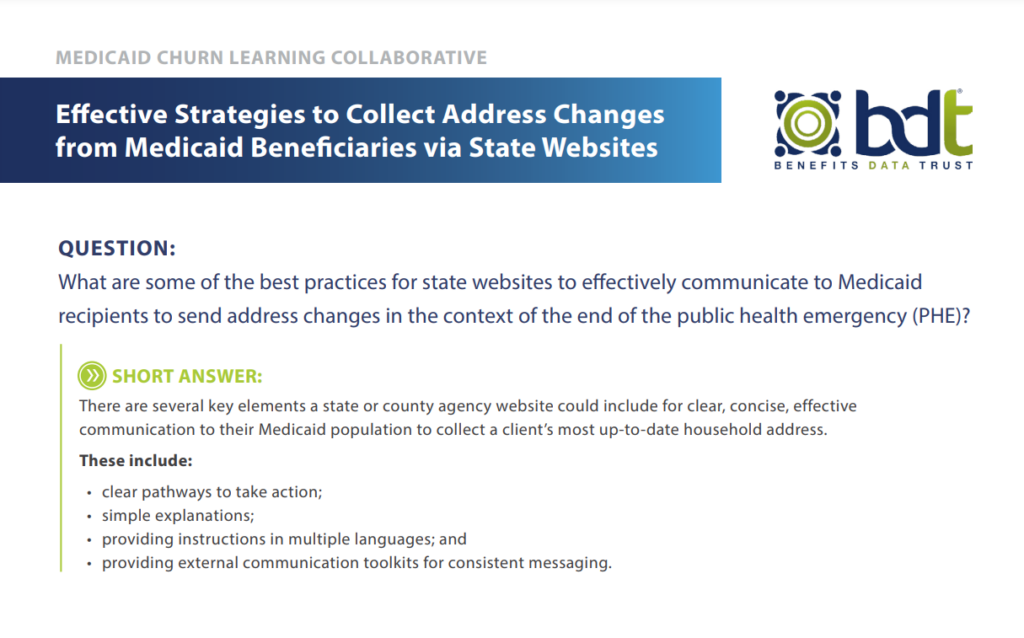
As a part of Benefit Data Trust (BDT)’s Medicaid Churn Learning Collaborative, BDT has created a memo describing strategies for states to collect current mailing addresses of Medicaid beneficiaries in advance of the Medicaid continuous coverage requirement — in effect under the federal public health emergency — unwinding.
This Urban Institute article argues that poverty is driven by structural barriers rather than individual choices and advocates for safety net programs that address systemic inequities.