This blog post describes the launch of NJ.gov/disabilities, an accessible, co-created online hub that centralizes information and services for individuals with disabilities.
This publication from the Digital Service Network (DSN) explores how state and local leaders are tackling the challenge of finding, keeping, and growing digital service talent in government. Through real-world stories and actionable strategies, it highlights how teams are making the case for digital roles, improving hiring practices, and upskilling staff to build a strong, sustainable digital workforce.
A framework that helps policy and digital service teams interpret legislation by identifying user needs, intent, and implementation challenges to support more effective, human-centered government service delivery.
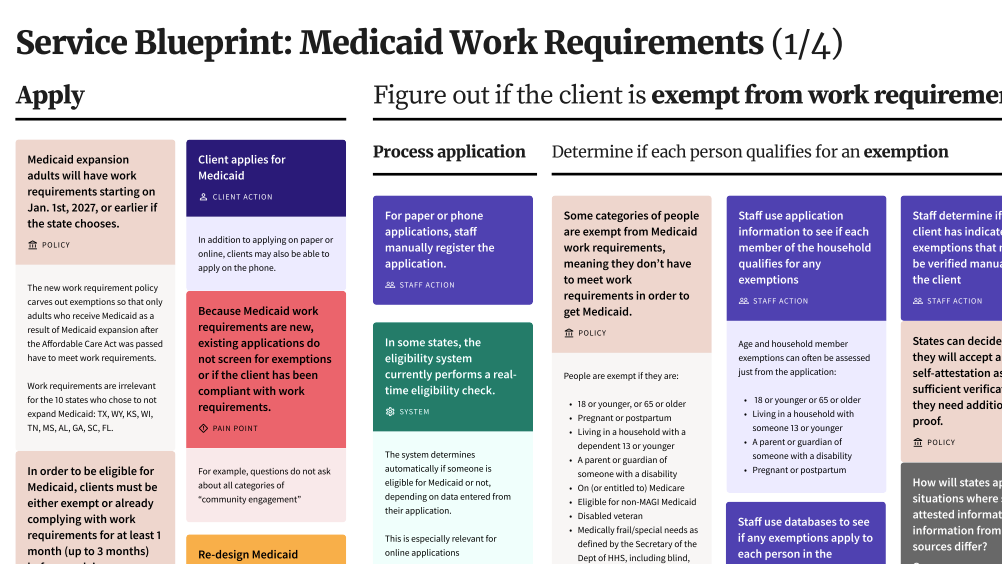
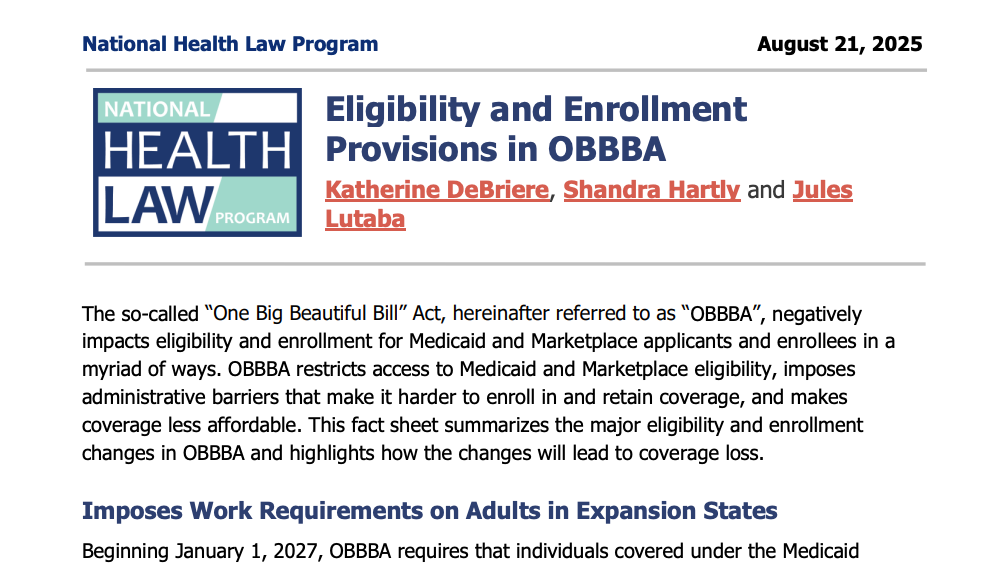
This guide explains how states can implement new Medicaid work requirements introduced by H.R. 1, focusing on minimizing harm to eligible clients while preparing for compliance by 2027.
This webpage provides state agency resources and policy memos detailing how the One Big Beautiful Bill Act (H.R. 1) of 2025 affects SNAP implementation.
This report catalogs the policy choices, demonstration projects, and waivers each state uses to administer SNAP, highlighting how states adapt federal rules to local needs.
A profile on FormFest speaker Karissa Minnich, a civic design manager with The Lab @ DC, whose innovative approach to redesigning government forms has transformed paperwork into a model of human-centered design.
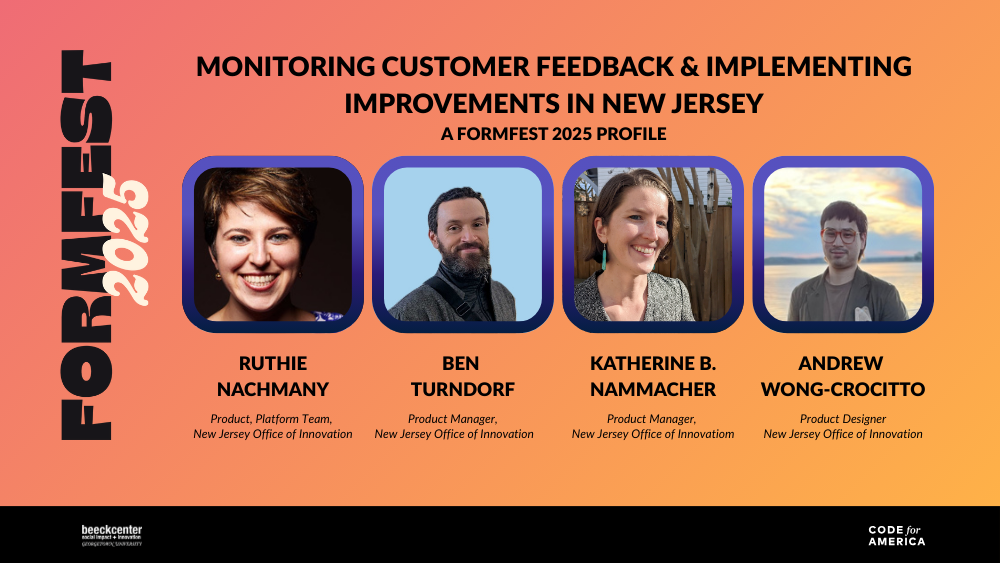
This FormFest profile spotlights the New Jersey State Office of Innovation’s Feedback Widget team, which collects resident input across state websites to improve services and empower agencies to act on real-time feedback.
This event convened policy experts and state leaders to explore how states can operationalize new Medicaid work reporting mandates—covering technical, legal, and implementation challenges.
This 8.5x11 service blueprint visually maps how Medicaid work requirements will function once implemented in 2027, detailing each policy step, system interaction, and client experience to help states identify administrative challenges and opportunities for human-centered redesign.