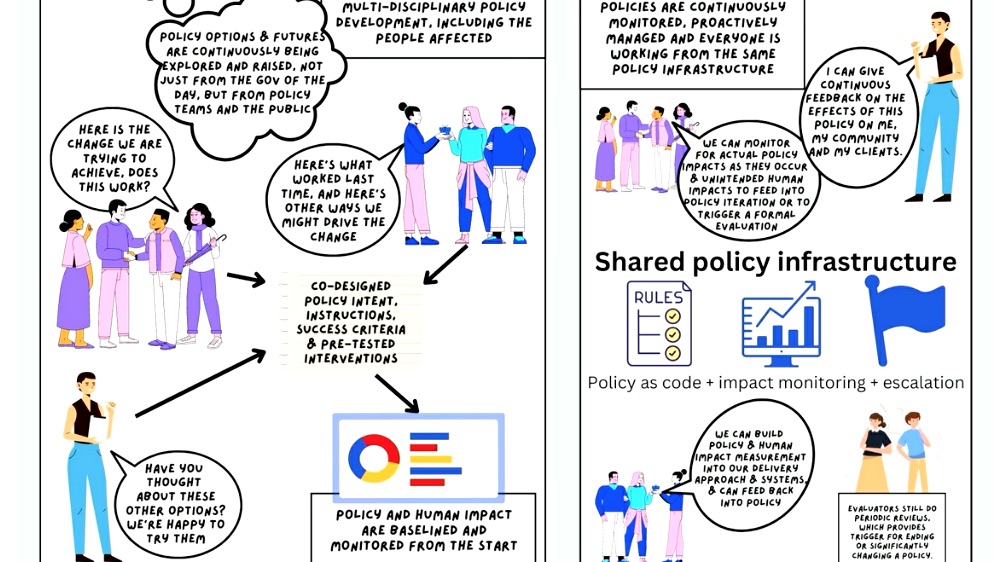
In this presentation, Pia Andrews explores how open source legislation as code can be a public utility to increase transparency, and enable better implementation and testing of government systems.
This report explores how despite unresolved concerns, an audit-centered algorithmic accountability approach is being rapidly mainstreamed into voluntary frameworks and regulations.
A report from the State of California presenting an initial analysis of where generative AI (GenAI) may improve access of essential goods and services.
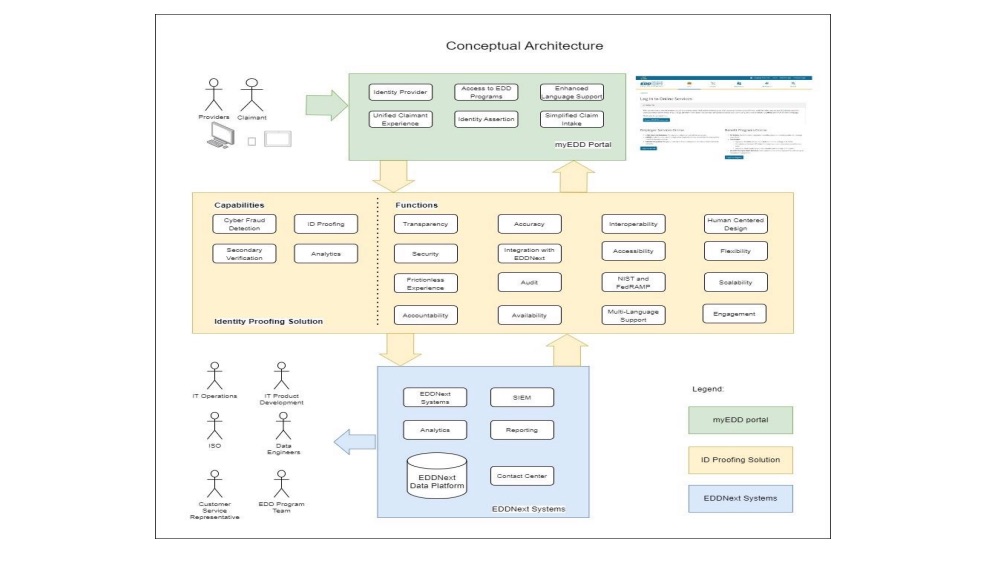
This 2023 presentation from the California Employment Development Department details the user personas the agency used to evaluate vendor proposals for a new identity proofing contract.
State of California Employment Development Department (EDD)
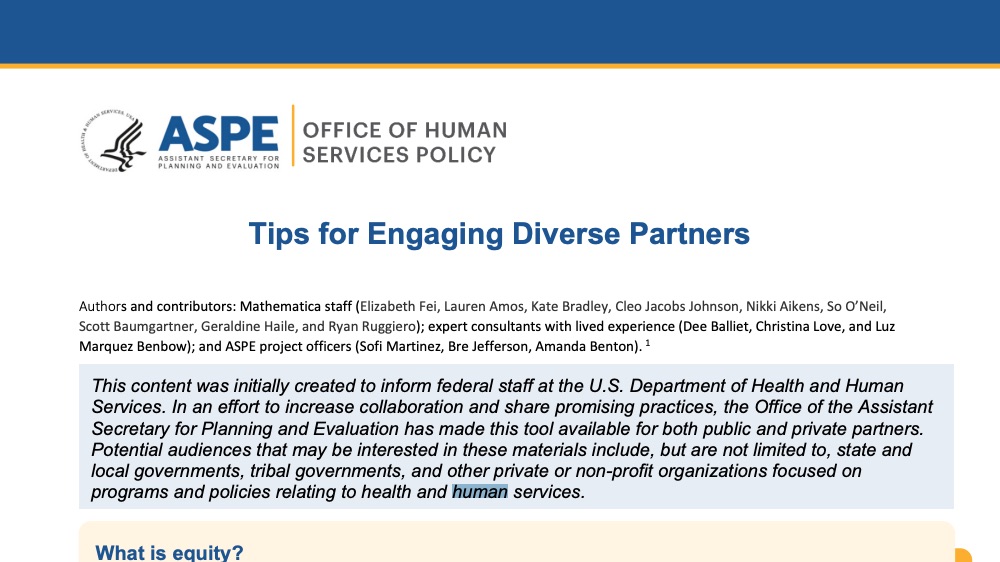
Initially created to inform federal staff at the U.S. Department of Health and Human Services, this tip sheet provides key considerations for how organizations can identify potential diverse external partners, conduct outreach to them, and build and sustain productive relationships with them.
Office of the Assistant Secretary for Planning and Evaluation (ASPE)
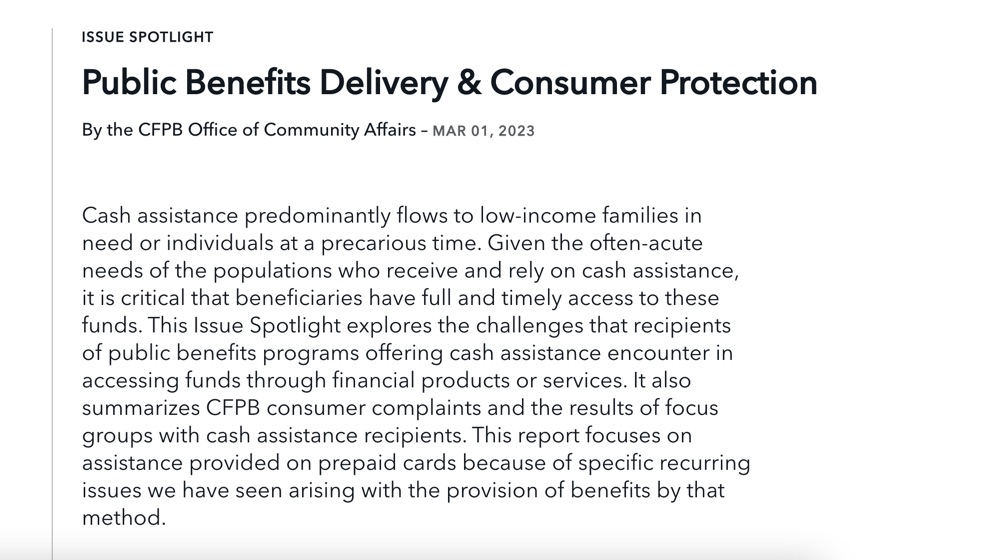
This Issue Spotlight explores the challenges that recipients of public benefits programs offering cash assistance encounter in accessing funds through financial products or services, with a specific focus on assistance provided on prepaid cards.
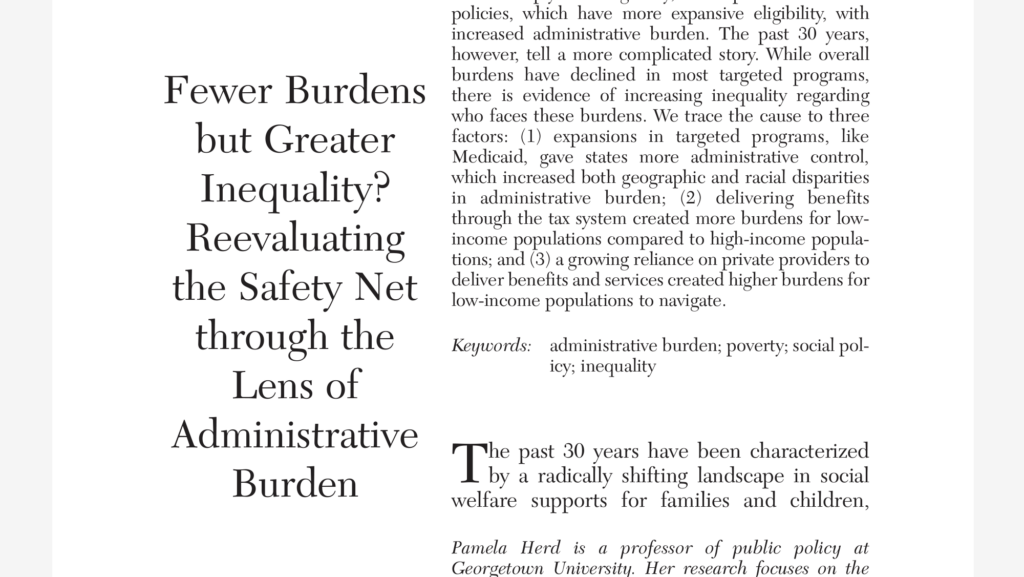
This article examines how administrative burdens in U.S. social safety net programs have changed over the past 30 years, showing that while average burdens have declined, inequality in who faces these burdens has grown.
The ANNALS of the American Academy of Political and Social Science
On May 19, 2023, the Digital Benefits Network published a new, open dataset documenting authentication and identity proofing requirements across online SNAP, WIC, TANF, Medicaid, child care (CCAP) applications, and unemployment insurance applications.
This brief analyzes the current state of federal and state government communication around benefits eligibility rules and policy and how these documents are being tracked and adapted into code by external organizations. This work includes comparisons between coded examples of policy and potential options for standardizing code based on established and emerging data standards, tools, and frameworks.
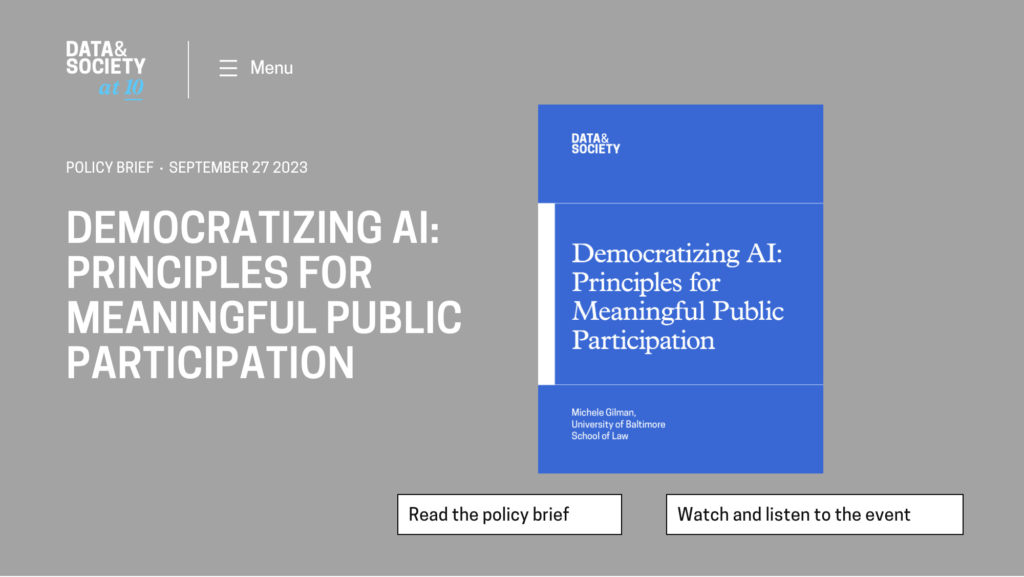
In this policy brief and video, Michele Gilman summarizes evidence-based recommendations for better structuring public participation processes for AI, and underscores the urgency of enacting them.