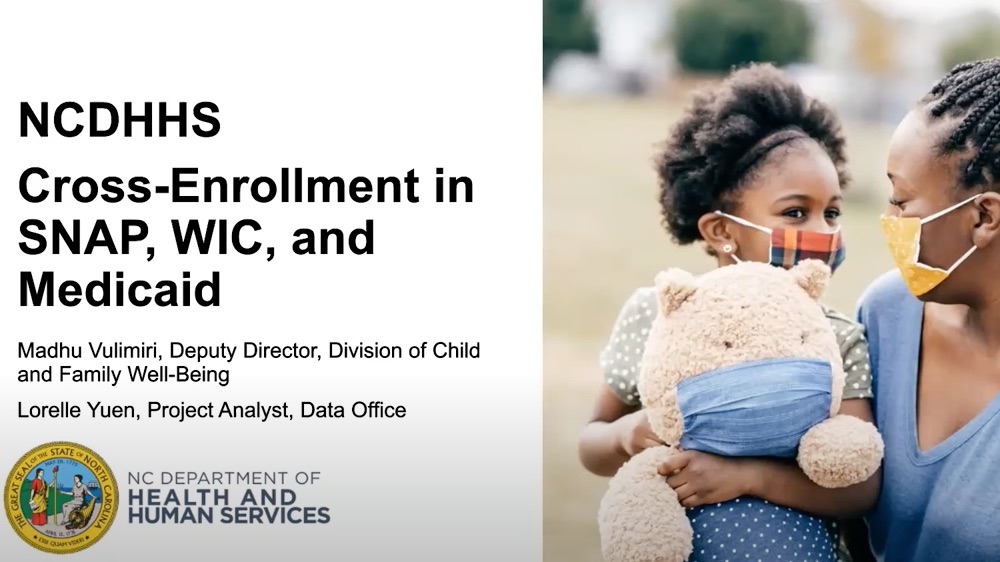
In this presentation, team members from the North Carolina Department of Health and Human Services provide an overview of the implementation process for cross enrollment with SNAP, WIC, and Medicaid in North Carolina.
North Carolina Department of Health and Human Services
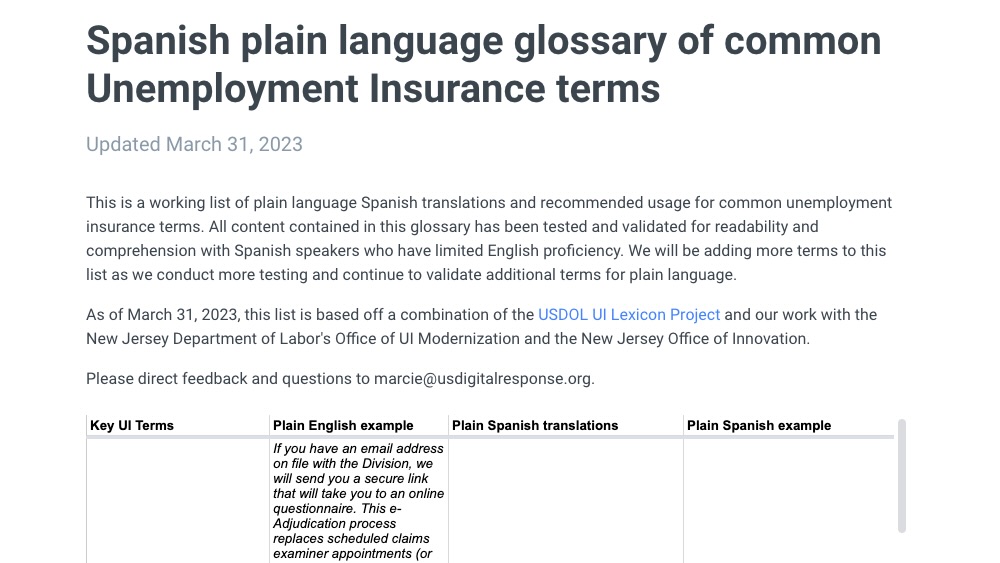
This is a working list of plain language Spanish translations and recommended usage for common unemployment insurance terms. All content contained in this glossary has been tested and validated for readability and comprehension with Spanish speakers who have limited English proficiency.
Starting November 1, 2023, the Centers for Medicare & Medicaid Service (CMS) began asking three new optional sexual orientation and gender identity (SOGI) questions on the single, streamlined application developed by the Secretary. This guidance gives instructs states on the process for modifying SOGI questions in their applications.
Concerns over risks from generative artificial intelligence systems have increased significantly over the past year, driven in large part by the advent of increasingly capable large language models. But, how do AI developers attempt to control the outputs of these models? This primer outlines four commonly used techniques and explains why this objective is so challenging.
Center for Security and Emerging Technology (CSET)
This study examines the adoption and implementation of AI chatbots in U.S. state governments, identifying key drivers, challenges, and best practices for public sector chatbot deployment.
This resource examines how improvements in customer service experiences in public benefit programs like Medicaid, CHIP, and TANF can help better meet enrollees’ needs and build trust in government.
This report summarizes 19 SNAP policy options (in effect as of Oct. 1, 2023) and waivers (implemented as of July 1, 2023) chosen by SNAP state agencies (50 states, the District of Columbia, Guam, and Virgin Islands) in federal fiscal year (FY) 2023.