The guidelines for bias-free language contain both general guidelines for writing about people without bias across a range of topics and specific guidelines that address the individual characteristics of age, disability, gender, participation in research, racial and ethnic identity, sexual orientation, socioeconomic status, and intersectionality.
Delve into our exploration of the executive orders, legislation, and administrative rules and guidance that shape government digital transformation across states and territories with our database and visualization tools.
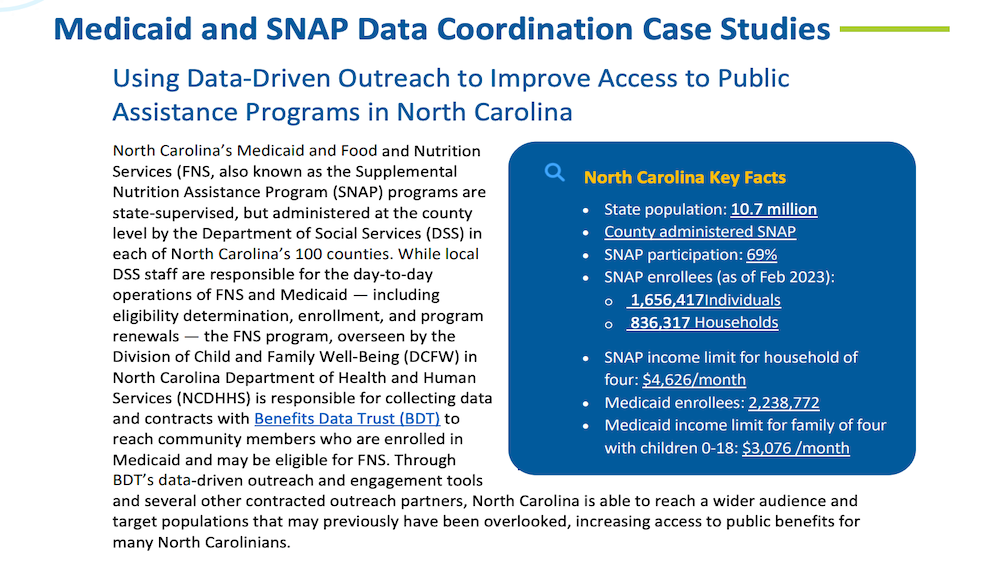
This case study series highlights innovative state strategies to improve data coordination between SNAP and Medicaid agencies and increase access for eligible people.
This summary outlines statewide progress in improving digital services, reducing administrative burdens, and elevating customer satisfaction through human-centered and data-informed government design.
This presentation, from the Data Sharing Working Group, highlights a Michigan Department of Health and Human Services and Benefits Data Trust project to increase enrollment in the Women, Infants, and Children (WIC) program.
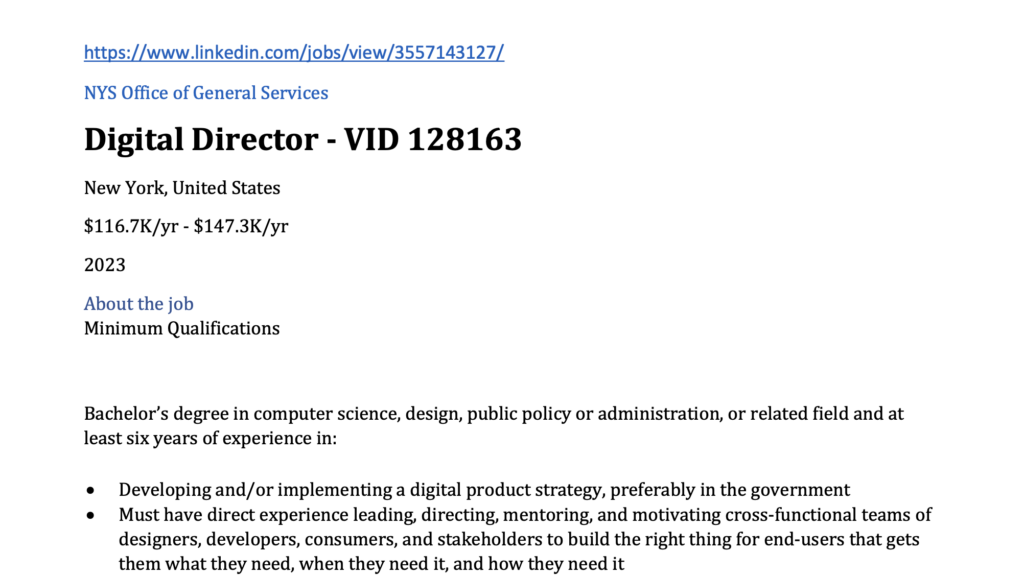
A public sector job posting for New York State’s Digital Director role, focused on building a modern digital services team and improving online experiences for residents through user-centered strategy and execution.
A toolkit that explains how to apply a content-first design approach to public services, helping teams design content strategy and interfaces based on user needs.
The Digital Service Network (DSN) spoke with two staff members from the Digital Office—Director of Digital Strategy Amy Kirtay and Team Lead Annie Goodwin, to learn more about the Government of British Columbia's Digital Code of Practice.
This proposal recommends a set of new federal performance standards that would measure and improve UI access. The proposal is intended to supplement existing federal UI standards, but all UI standards and metrics should be periodically reevaluated and updated as the conditions facing unemployed workers and benefit delivery change.
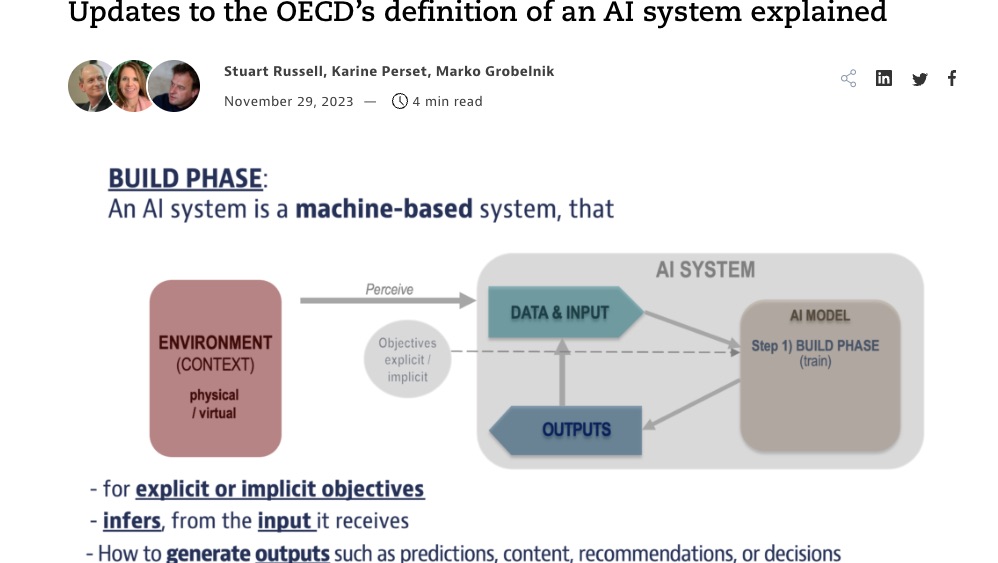
In 2023, OECD member countries approved a revised version of the Organisation’s definition of an AI system. This post explains the reasoning behind the updated definition.
Organisation for Economic Co-operation and Development (OECD)