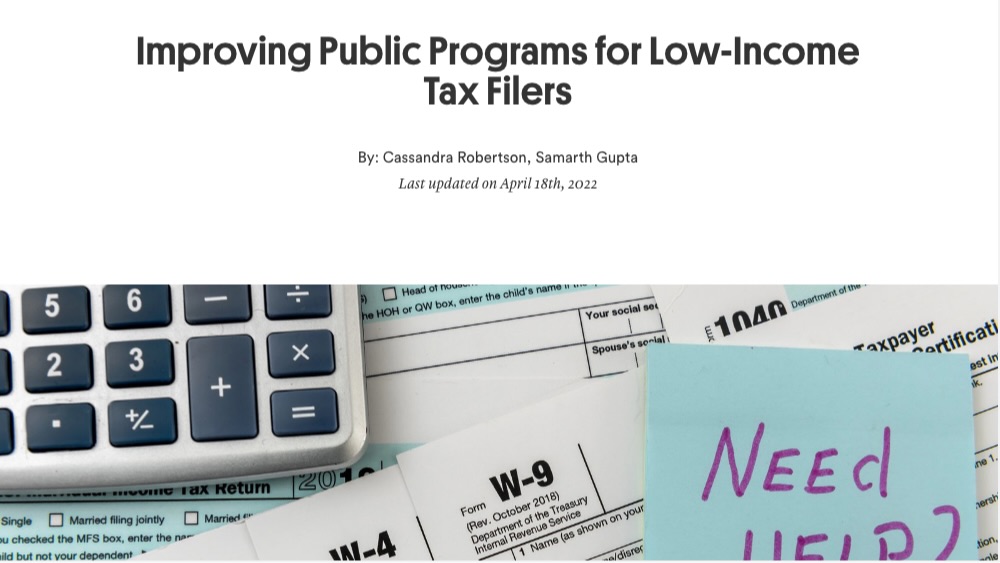
A New America report examines the Volunteer Income Tax Assistance (VITA) program, highlighting its role in aiding low-income tax filers and offering recommendations to enhance public benefit access through improved tax filing assistance.
Usability tests can help teams develop products that are user-centered, accessible, and inclusive. This guide will help you create a robust plan to promote a successful usability test.
Understanding the strengths and weaknesses of the available low-code/no-code tools will help you pick the right tool for the job and balance their sometimes significant weaknesses with their tremendously valuable strengths.
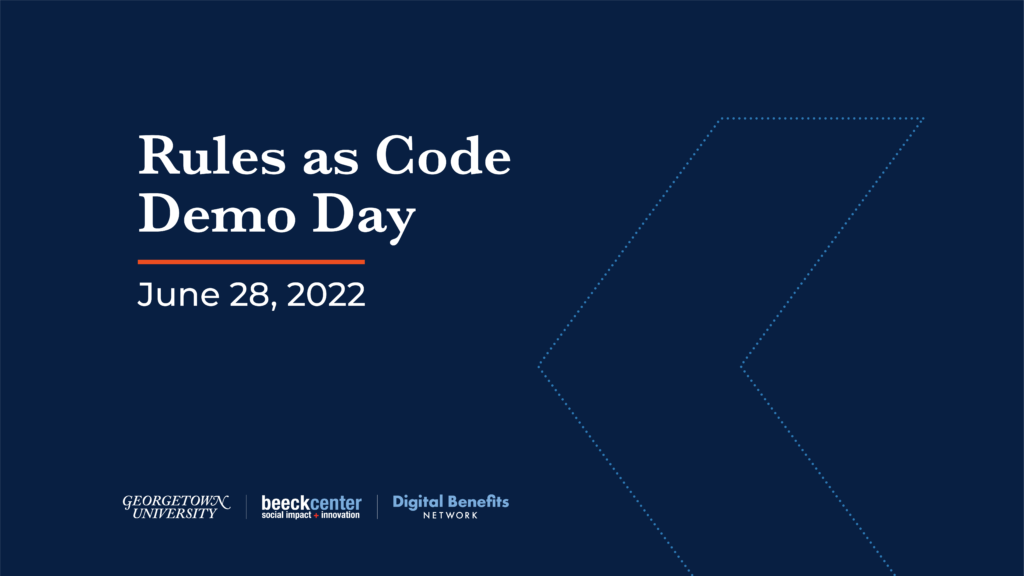
Building on our February 2022 report Benefit Eligibility Rules as Code: Reducing the Gap Between Policy and Service Delivery for the Safety Net, the Beeck Center’s Digital Benefits Network (DBN) hosted Rules as Code Demo Day on June 28, 2022 where there were eight demonstrations of projects and code followed by a collaborative problem solving session on how to continue advancing rules as code for the U.S. social safety net.
This paper introduces the problem of semi-automatically building decision models from eligibility policies for social services, and presents an initial emerging approach to shorten the route from policy documents to executable, interpretable and standardised decision models using AI, NLP and Knowledge Graphs. There is enormous potential of AI to assist government agencies and policy experts in scaling the production of both human-readable and machine executable policy rules, while improving transparency, interpretability, traceability and accountability of the decision making.
To assist states in closing digital skill gaps and preparing for digital equity planning, this brief offers key questions and resources for state leaders to consider.