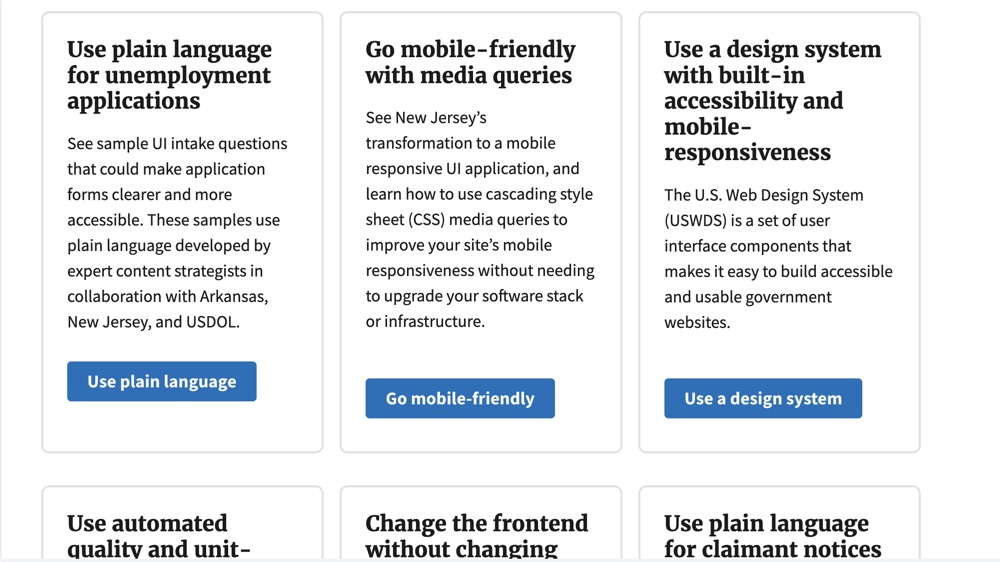
The U.S. Department of Labor is working with states, territories, and the public to develop strategies to continuously improve the nation’s unemployment insurance (UI) systems.
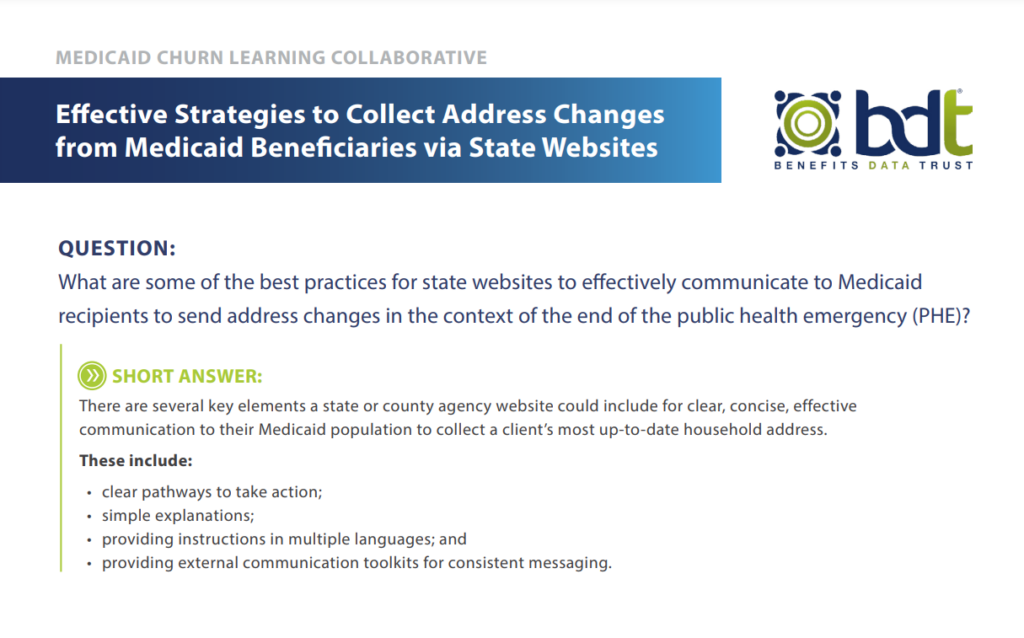
As a part of Benefit Data Trust (BDT)’s Medicaid Churn Learning Collaborative, BDT has created a memo describing strategies for states to collect current mailing addresses of Medicaid beneficiaries in advance of the Medicaid continuous coverage requirement — in effect under the federal public health emergency — unwinding.
This primer introduces two foundational software types that can support organizations that are committed to accessible benefits information: content management systems (CMS) and application program interfaces (APIs).
This report examines how the U.S. federal government can enhance the efficiency and equity of benefit delivery by simplifying eligibility rules and using a Rules as Code approach for digital systems.
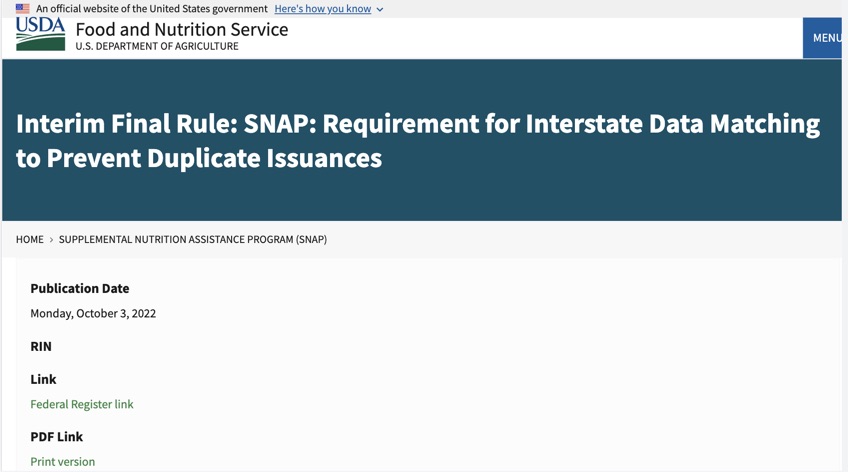
This interim final rule requires SNAP State agencies to provide information to the NAC regarding individuals receiving SNAP benefits in their states in order to ensure they are not already receiving benefits in another state.
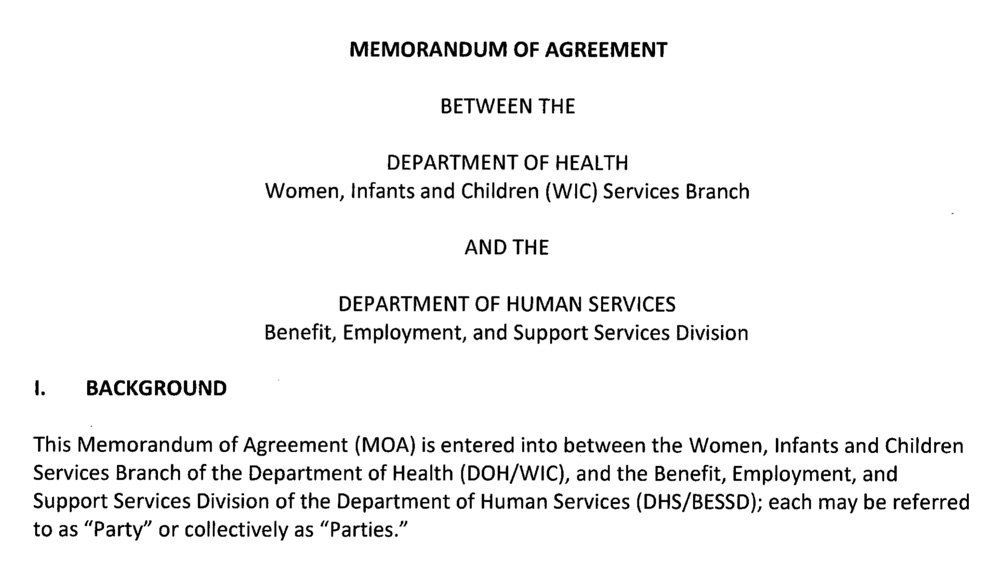
This MOA outlines Hawai'i's legal data sharing agreement between the Women, Infants and Children Services Branch of the Department of Health (DOH/WIC), and the Benefit, Employment and Support Services Division of the Department of Human Services (DHS/BESSD) to exchange SNAP and WIC data.
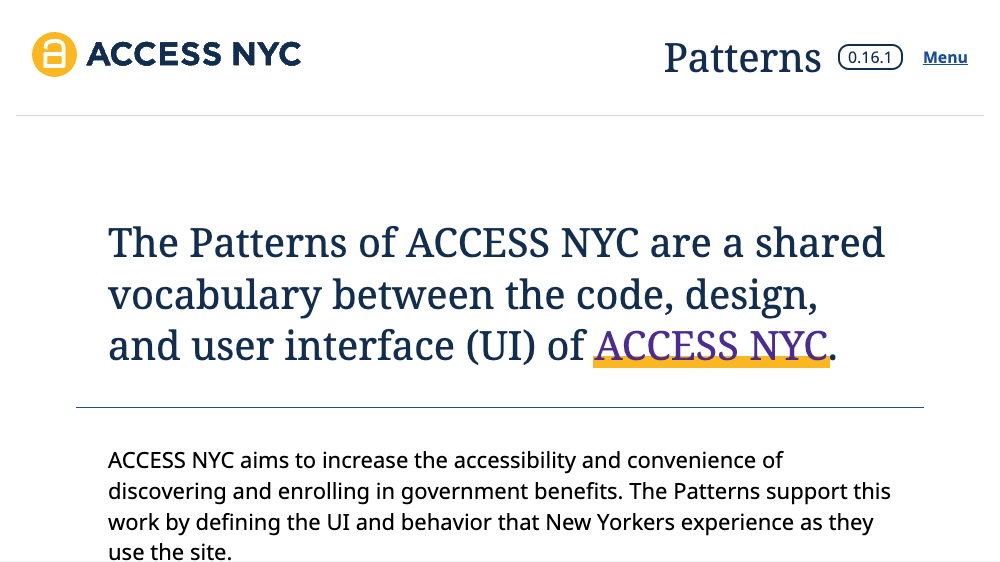
ACCESS NYC aims to increase the accessibility and convenience of discovering and enrolling in government benefits. These patterns support this work by defining the UI and behavior that New Yorkers experience as they use the site.
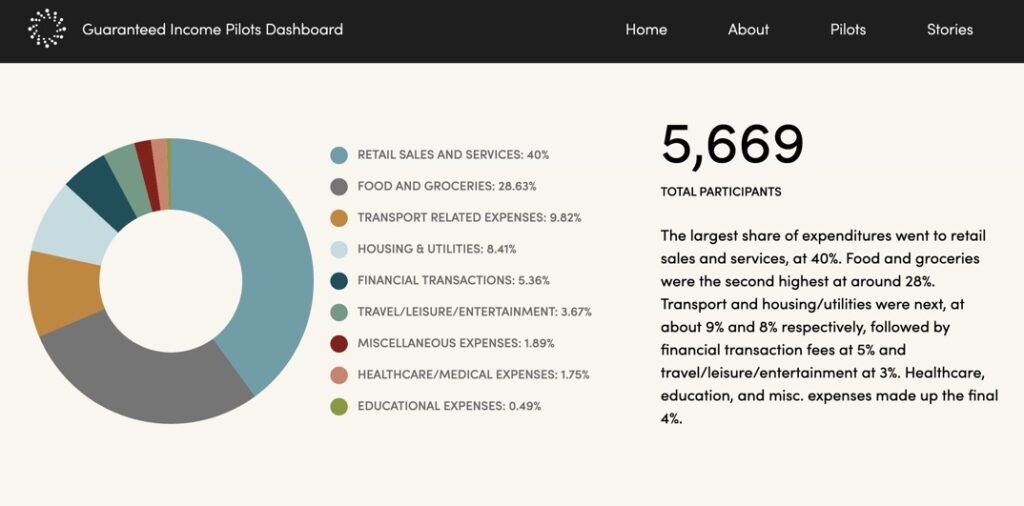
The Guaranteed Income Pilots Dashboard is designed to visualize data from 30+ guaranteed income pilots across the United States. This data and testimonies from participants shed light on ways in which unconditional cash is providing people the opportunity, freedom, and resilience to build financial security.