This report from the Joint Financial Management Improvement Program outlines efforts to use identity verification to reduce improper payments in government programs, while mitigating bias and disparate impacts.
The Joint Financial Management Improvement Program (JFMIP)
This resource outlines strategies for cross-enrollment outreach, which can break down silos between programs and reach applicants who may be eligible for under-enrolled benefits programs.
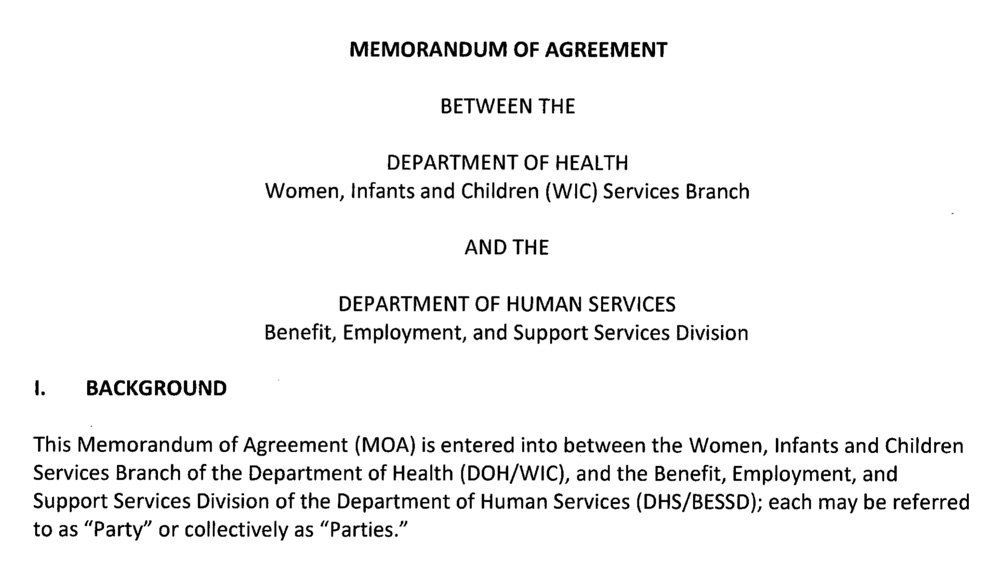
This MOA outlines Hawai'i's legal data sharing agreement between the Women, Infants and Children Services Branch of the Department of Health (DOH/WIC), and the Benefit, Employment and Support Services Division of the Department of Human Services (DHS/BESSD) to exchange SNAP and WIC data.
As a next step in Iowa's modernization effort, the MEME project released a video describing Iowa's proposed approach and next steps for the purpose of engaging with vendors. The video linked here provides additional information on the project's learnings so far.
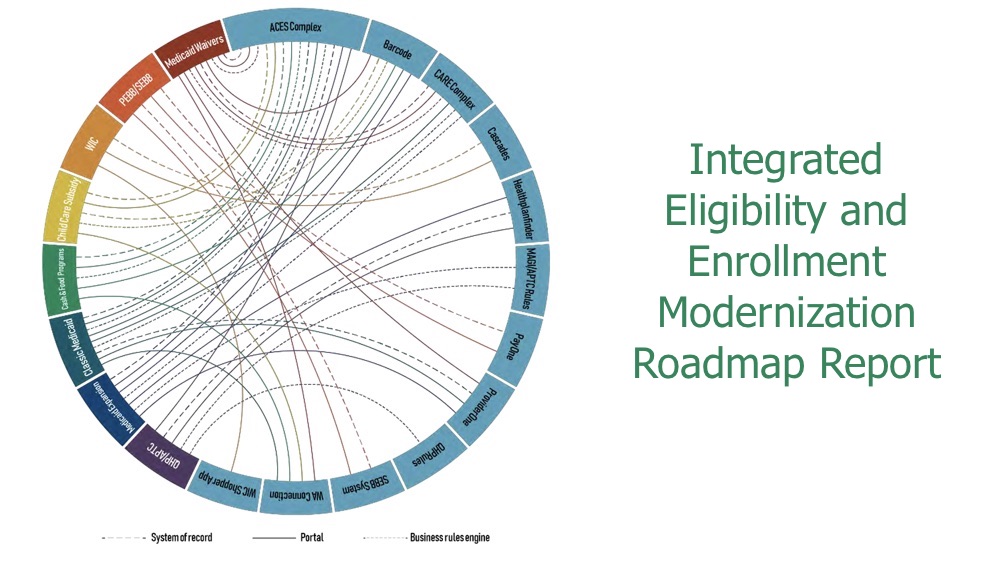
This roadmap provides a vision and plan for how to deliver modernized integrated eligibility and enrollment for health and human services using human-centered design, modular approaches to replacing legacy technology, change management, and iterative product processes.
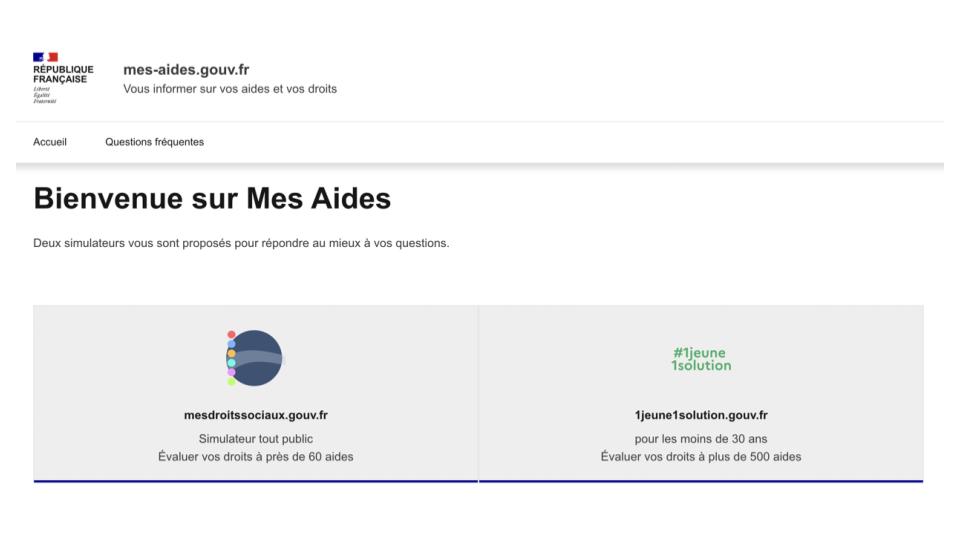
beta.gouv.fr, a French government incubator, developed Mes Aides, an online benefits simulator launched in 2014 to help residents assess their eligibility for various social programs, addressing the issue of unclaimed benefits. The tool, built with open-source technology, enabled users to quickly estimate their potential benefits but was later integrated into a broader platform in 2020 following internal government disputes over authority.
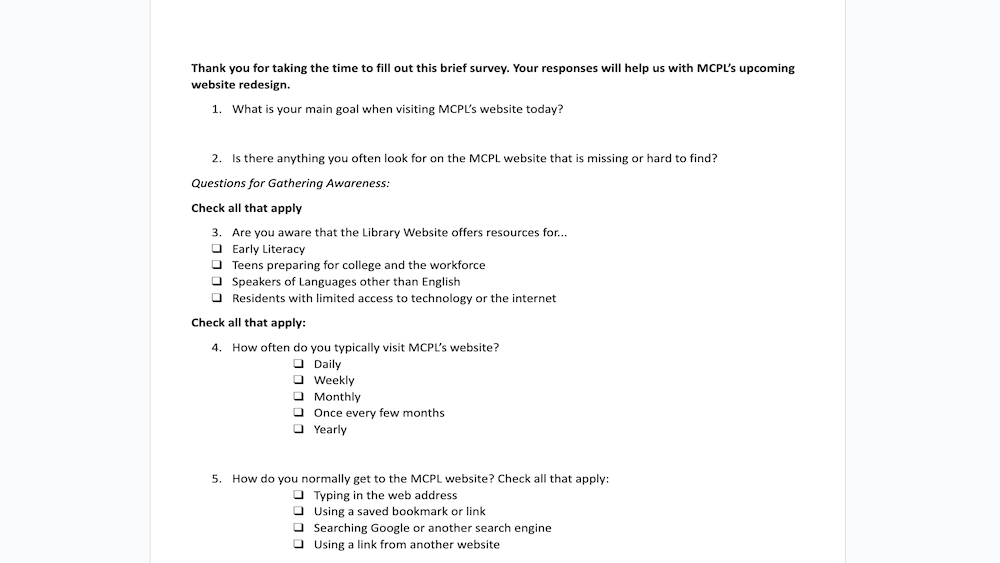
The folder for conducting user surveys for the Montgomery County Public Libraries website redesign includes materials such as Homepage Usability Questions and a comprehensive Website Survey. These tools are designed to gather user feedback on the homepage's functionality and overall website experience, helping inform improvements that align with user needs and expectations.
Montgomery County Public Library (MCPL) Digital Strategies Team
This guidance provides detail on activities to be conducted by designated High-Impact Service Providers (HISPs) under the Executive Order on Customer Experience.
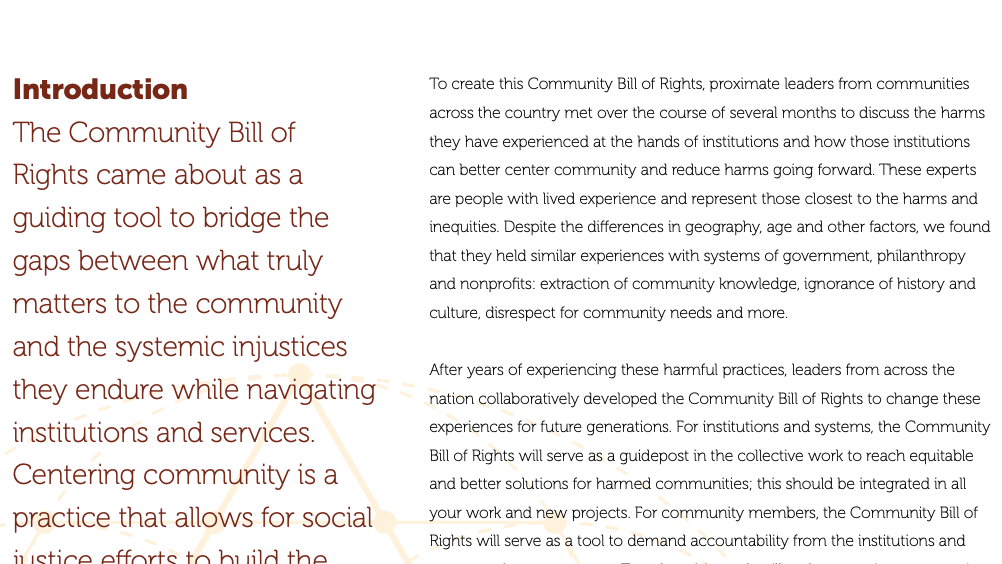
The Community Bill of Rights outlines principles and expectations for institutions to center community voices, share power, and build equitable partnerships with communities affected by systemic harm.
The Long Beach Tree Map shows trees throughout the Long Beach region which centralizes, organizes, and visualizes information regarding where and how many trees as well as their type.