During the call, we heard from two speakers: April Dunlap, Policy Administrator for Arizona’s Department of Economic Security and Professor Michele Gilman, Venable Professor of Law and Associate Dean for Faculty Research and Development at the University of Baltimore School of Law.
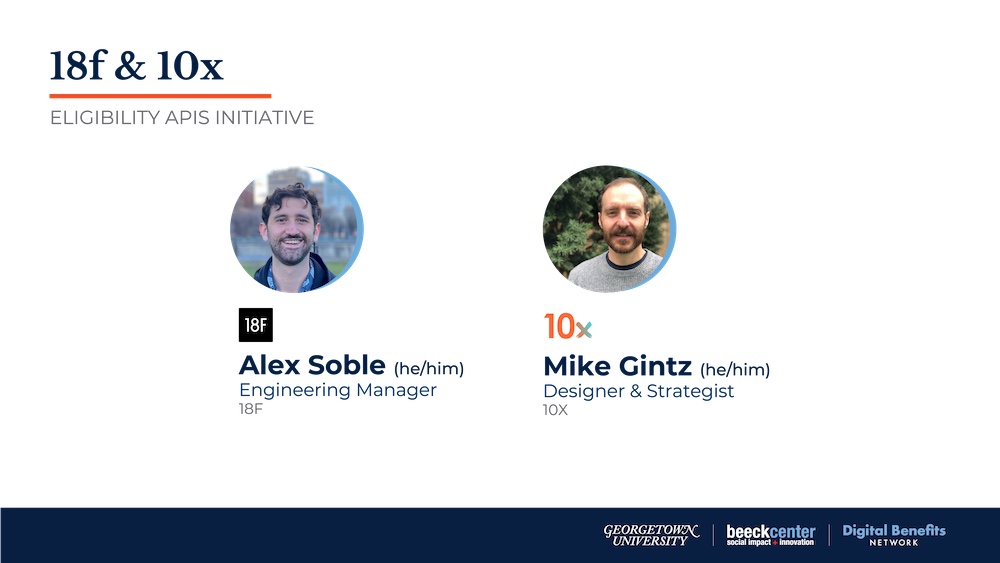
We kicked off Rules as Code Demo Day with Alex Soble of 18F and Mike Gintz of 10x presenting their Eligibility APIs Initiative that explores whether APIs and rules as code might improve the efficiency and effectiveness with which federal public benefits programs communicate their policy to states. They demonstrated their original prototype, and how the open source code has now been extended into several initiatives.
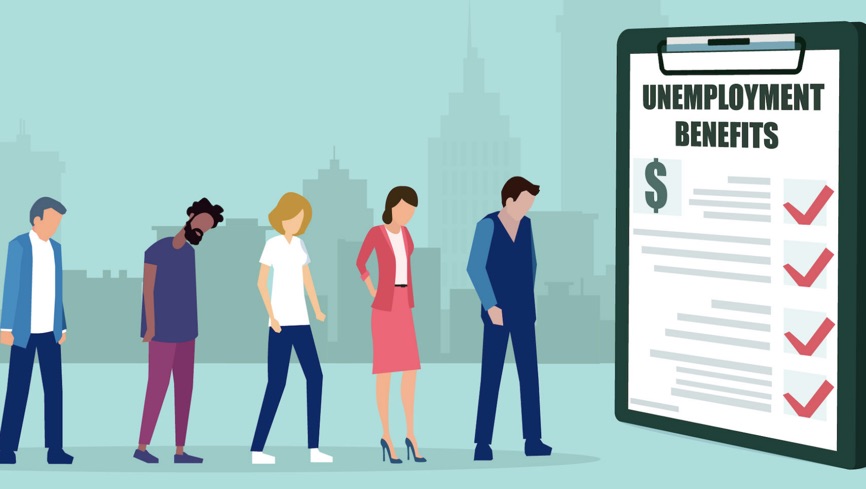
The experience of the COVID-19 pandemic and its induced recession underscored the crucial importance of unemployment insurance (UI) to workers, and to the stability of the American economy. Temporary federal expansions of unemployment systems during the pandemic showed how they can quickly be scaled to increase benefit levels and to include categories of workers who were not previously eligible, such as the self-employed, caregivers, and low-wage workers. And, states showed that separate programs can be set up to provide similar benefits to workers who are explicitly excluded from unemployment insurance—in particular immigrants who do not have a documented immigration status.
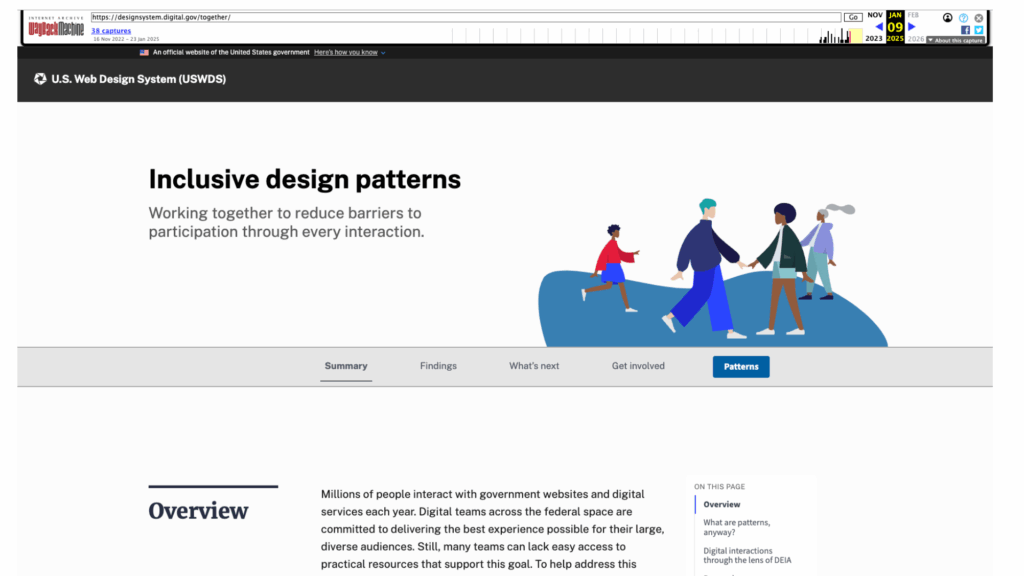
USWDS provides a new library of guidance and examples focused on key digital interactions that foster effective. inclusive, and equitable digital experiences.
This guide helps UK public bodies understand how to responsibly procure, develop, and use AI while meeting their legal duties to prevent discrimination and promote equality under the Public Sector Equality Duty (PSED).
This guidance provides detail on activities to be conducted by designated High-Impact Service Providers (HISPs) under the Executive Order on Customer Experience.
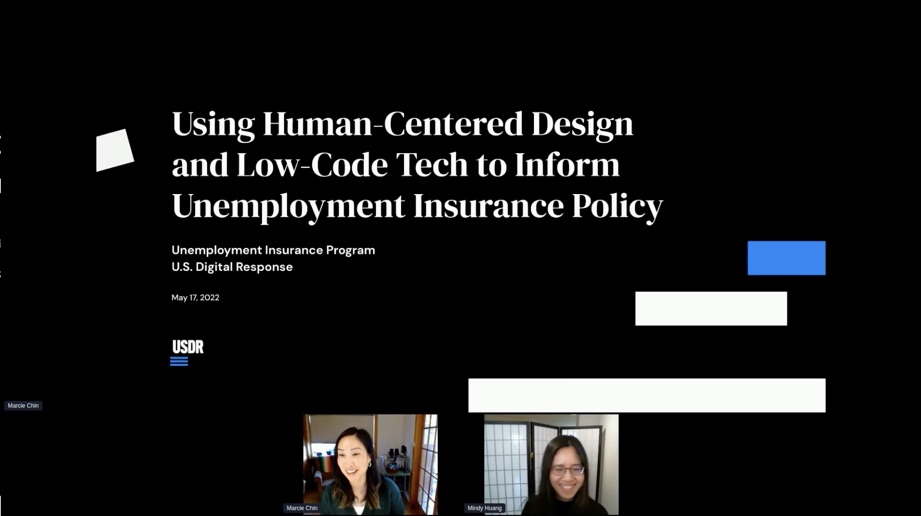
U.S. Digital Response partnered with the Department of Labor to design a human-centered, low-code solution for efficient retroactive unemployment benefit determination.
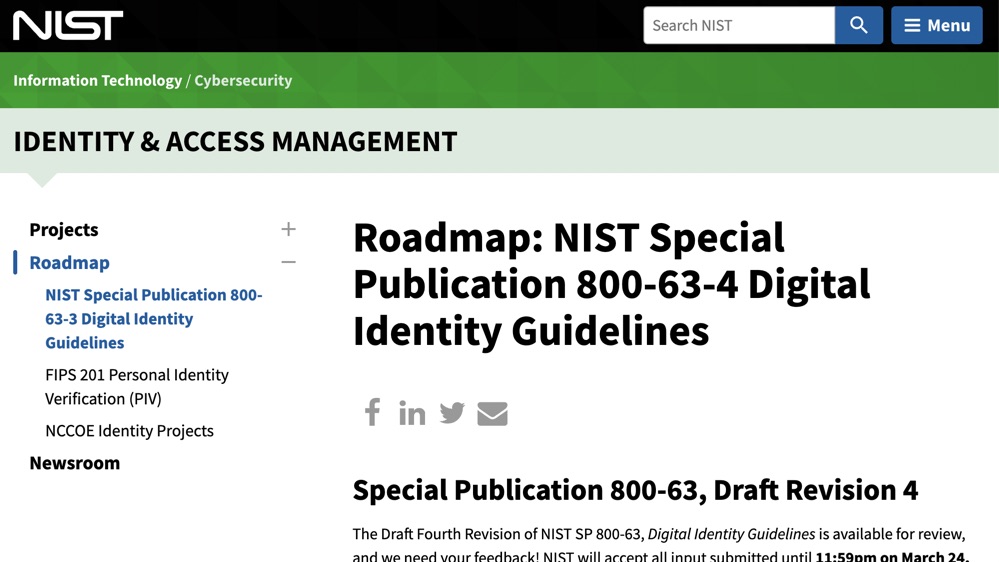
Revision 4 of the National Institute of Standards and Technology (NIST) Special Publication 800-63, Digital Identity Guidelines, responds to the changing digital landscape that has emerged since the last major revision of this suite was published in 2017.
Through a field scan, this paper identifies emerging best practices as well as methods and tools that are becoming commonplace, and enumerates common barriers to leveraging algorithmic audits as effective accountability mechanisms.
ACM Conference on Fairness, Accountability, and Transparency (ACM FAccT)
This paper argues that a human rights framework could help orient the research on artificial intelligence away from machines and the risks of their biases, and towards humans and the risks to their rights, helping to center the conversation around who is harmed, what harms they face, and how those harms may be mitigated.