This brief outlines research recommendations to better understand and improve income support and employment services for low-income and at-risk LGBT populations.
U.S. Department of Health and Human Services (HHS)
This brief outlines research recommendations to strengthen child welfare services for LGBT youth and adults, focusing on experiences of maltreatment, foster care, and adoption.
U.S. Department of Health and Human Services (HHS)
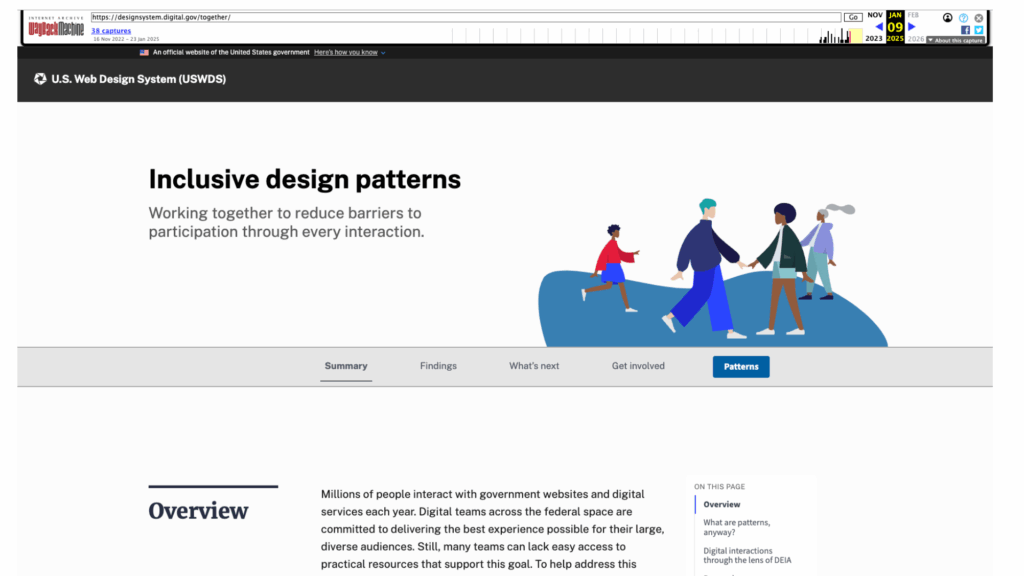
USWDS provides a new library of guidance and examples focused on key digital interactions that foster effective. inclusive, and equitable digital experiences.
This article highlights how state unemployment insurance (UI) agencies are leveraging data to modernize systems and enhance access for unemployed workers.
This report provides an overview of the task force’s work in assessing, guiding, and recommending policies for the safe, ethical, and effective use of generative AI across Alabama’s executive-branch agencies.
State of Alabama Generative Artificial Intelligence (GenAI) Task Force
This research used observational research with unemployment insurance (UI) claimants to identify pain points in the application process and inform customer experience improvements.