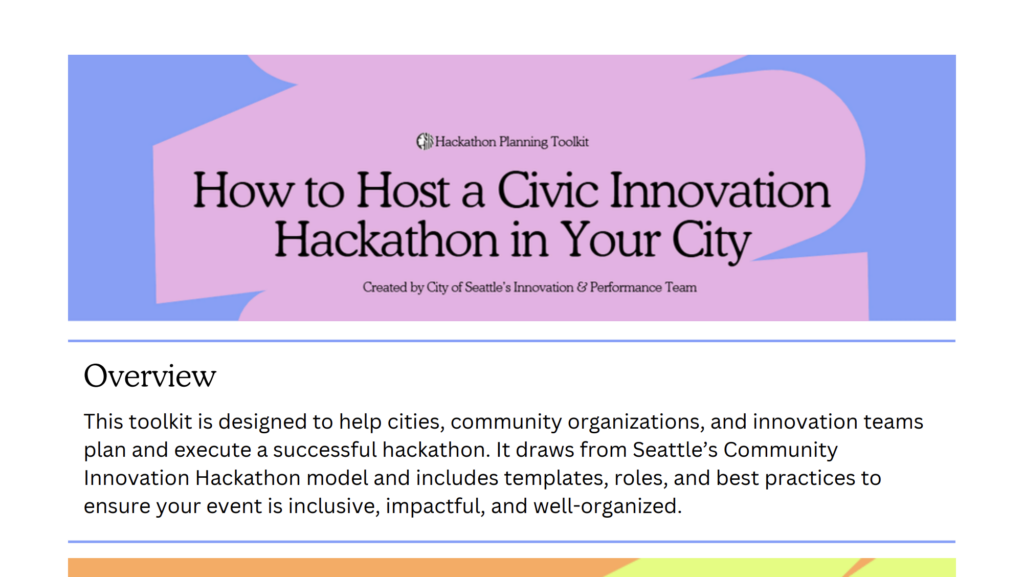
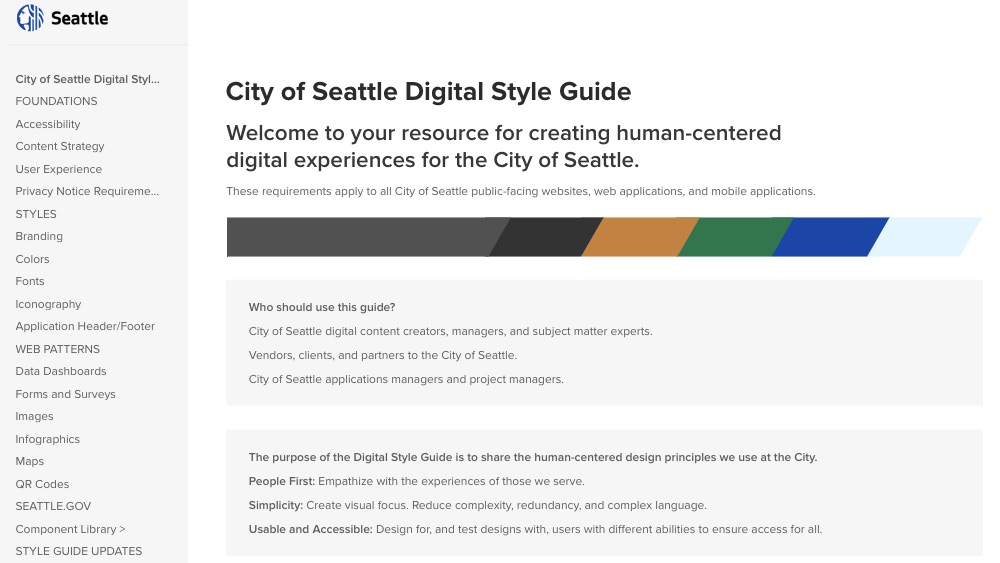
A reusable UI design template showcasing key interface patterns, components, and layout structures for the Seattle Next Move digital service to support consistent, user-centered design across screens.
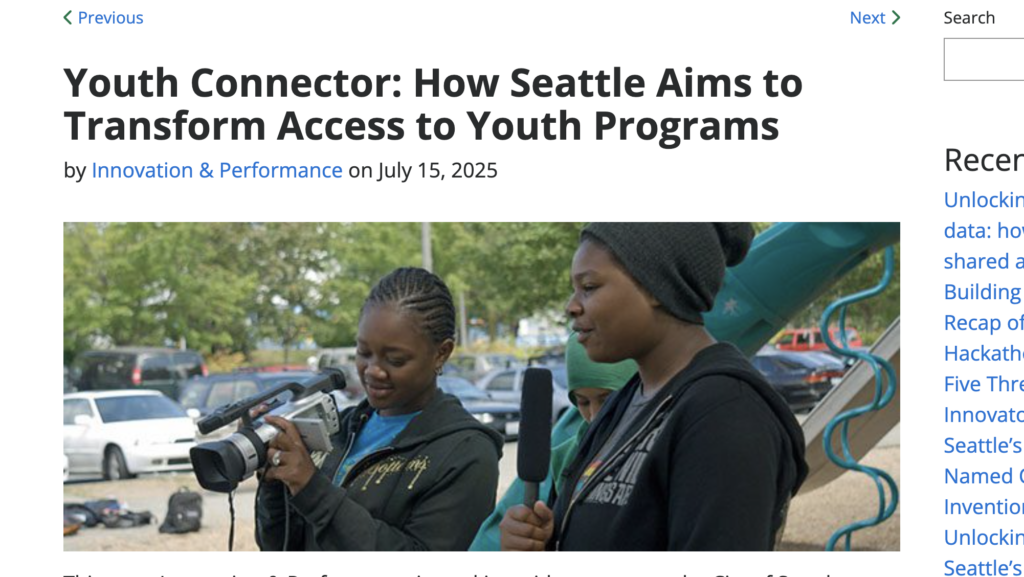
A blog post describing Seattle’s Youth Connector initiative, a city effort to make it easier for young people to discover, access, and connect with youth programs and supports that promote mental health, enrichment, and opportunity.
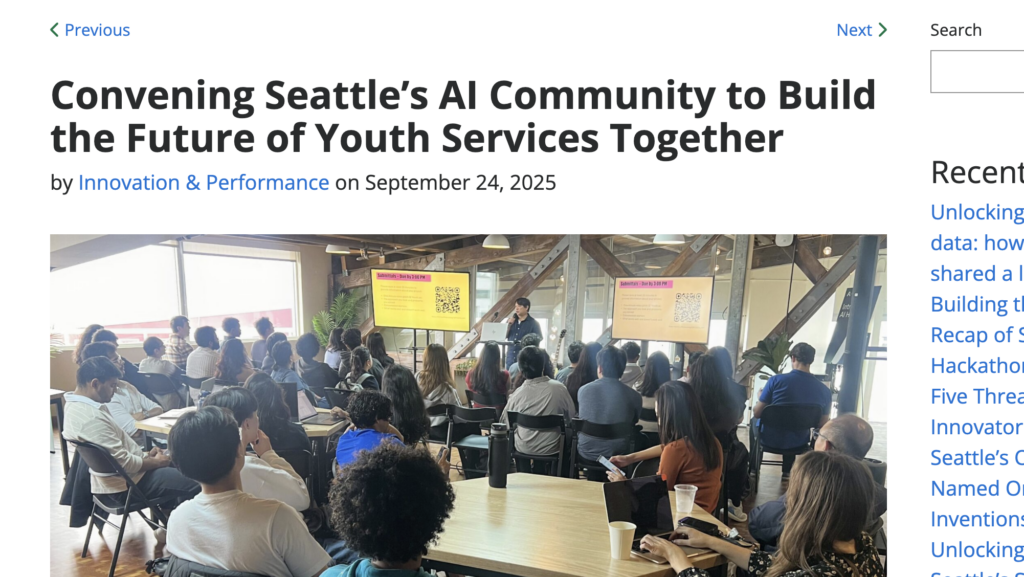
A recap of a community innovation hackathon in Seattle where technologists and students used AI to prototype solutions that help youth discover and access local programs and services.
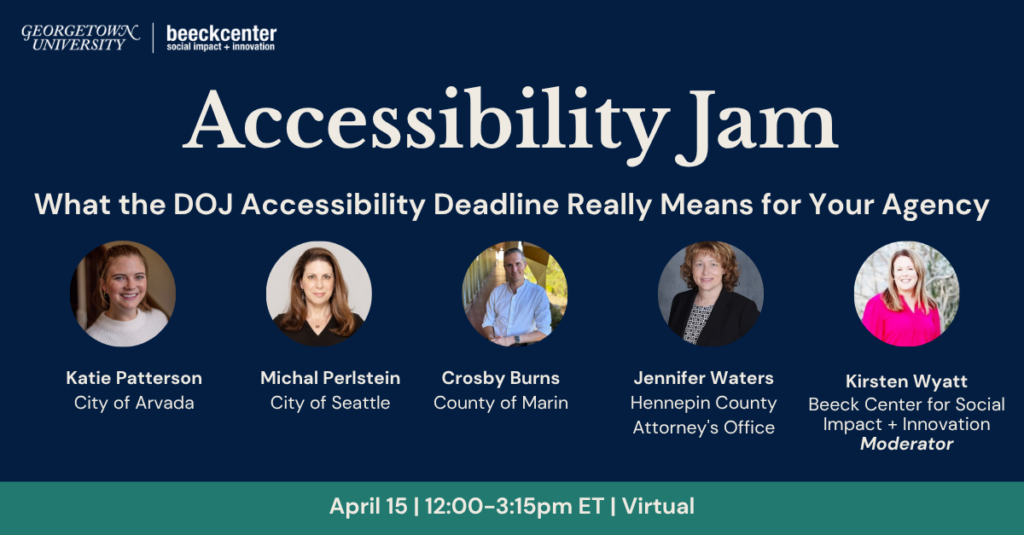
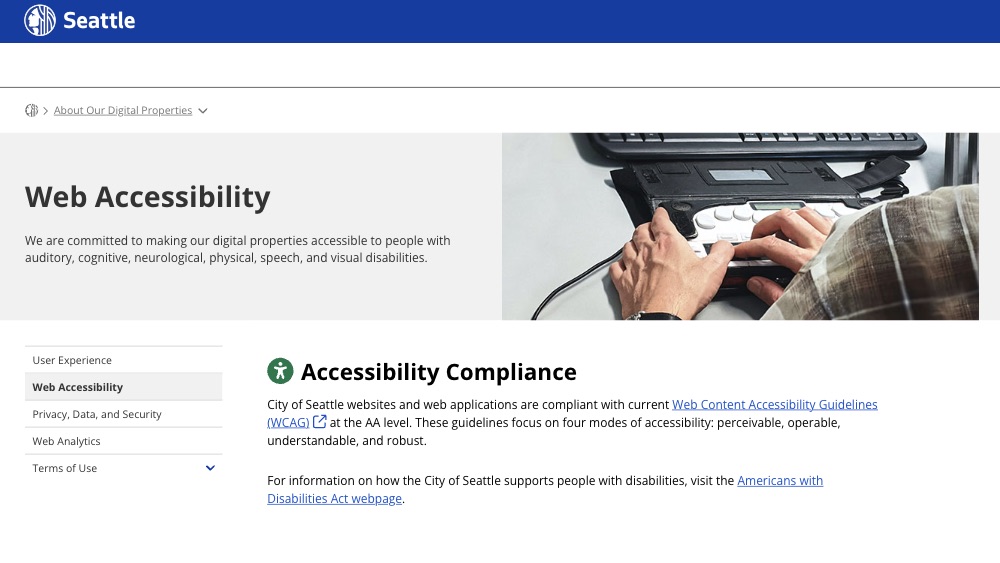
A11y Jam session focused on how local governments are advancing DOJ accessibility compliance using practical, resource-conscious strategies across high-impact digital services.
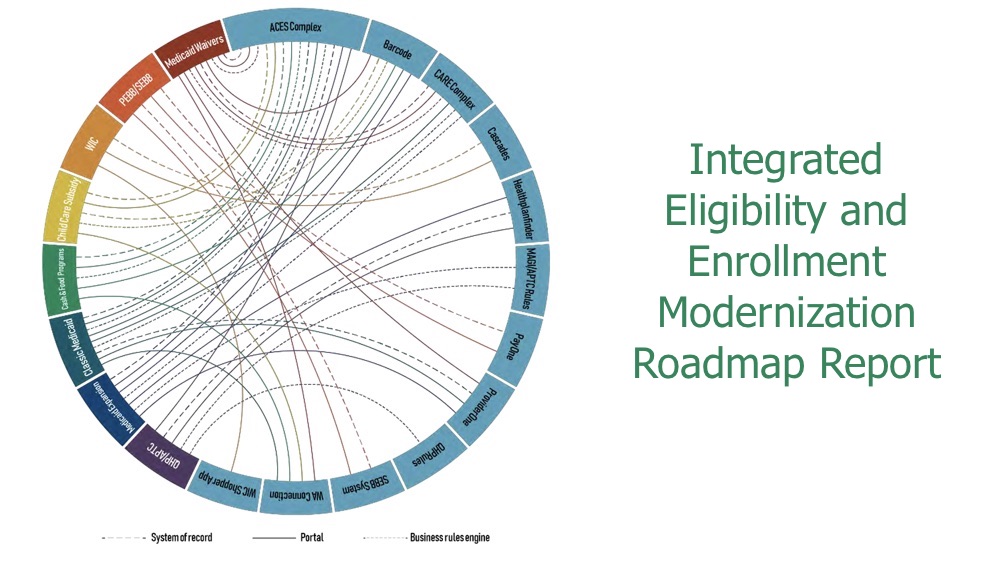
This roadmap provides a vision and plan for how to deliver modernized integrated eligibility and enrollment for health and human services using human-centered design, modular approaches to replacing legacy technology, change management, and iterative product processes.
This Executive Order mandates citywide actions to make government information more inclusive, accessible, and understandable through digital accessibility and plain language initiatives.
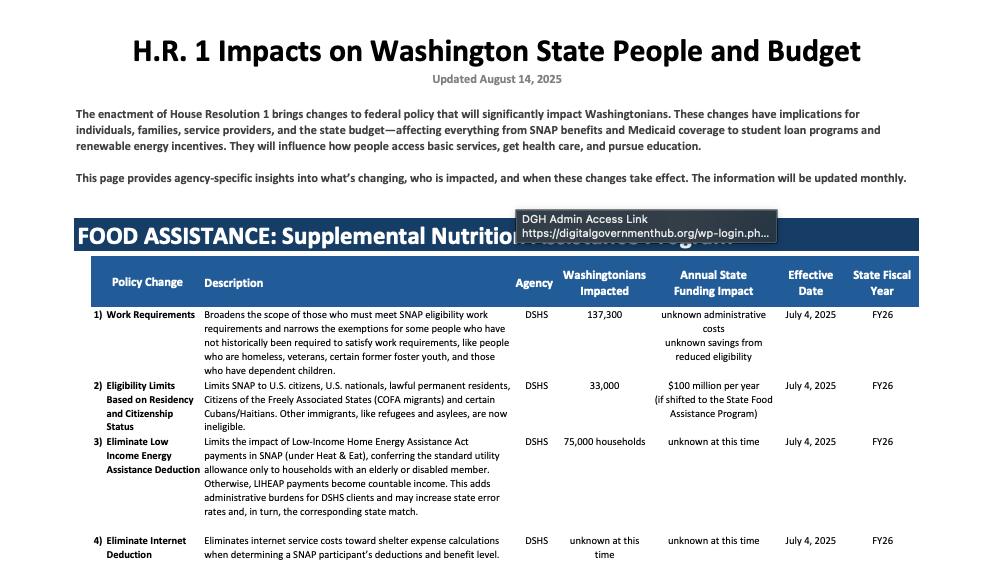
This analysis outlines how the federal H.R. 1 legislation will reshape funding, eligibility, and service delivery across key state programs—including SNAP, Medicaid, higher education, and energy—quantifying projected fiscal and human impacts across multiple agencies
Washington State Office of Financial Management (OFM)