This blog summarizes an event exploring how the City of Boston and Washington State are designing and implementing Single Sign-On (SSO) systems to simplify access to government services.
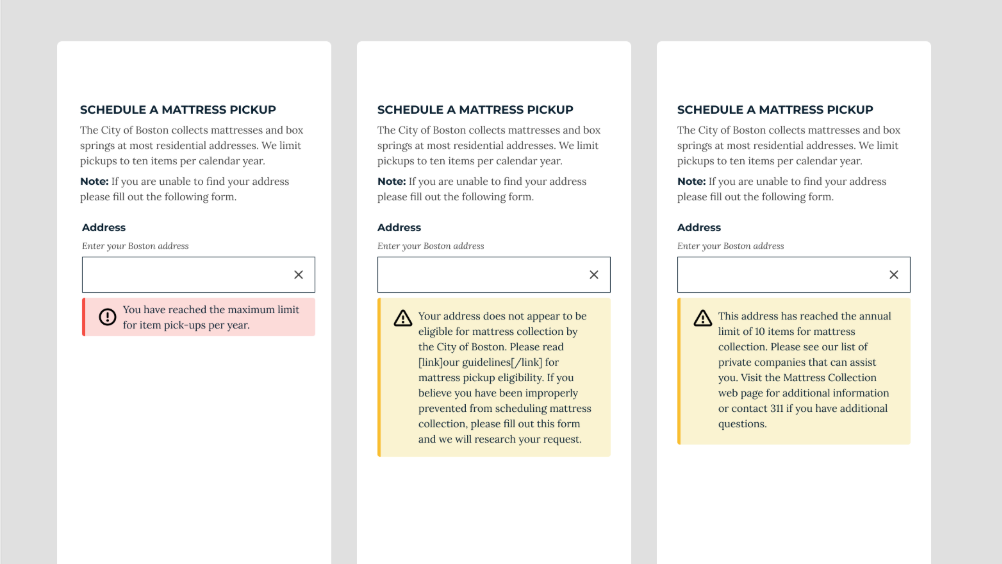
These Figma artifacts illustrate the end-to-end design of Boston’s digital mattress recycling service, including resident scheduling flows, mobile interfaces, alerts, and design system components.
A case study documenting how a modular API layer was built to support a state-level paid family and medical leave program, improving interoperability, scalability, and user experience.
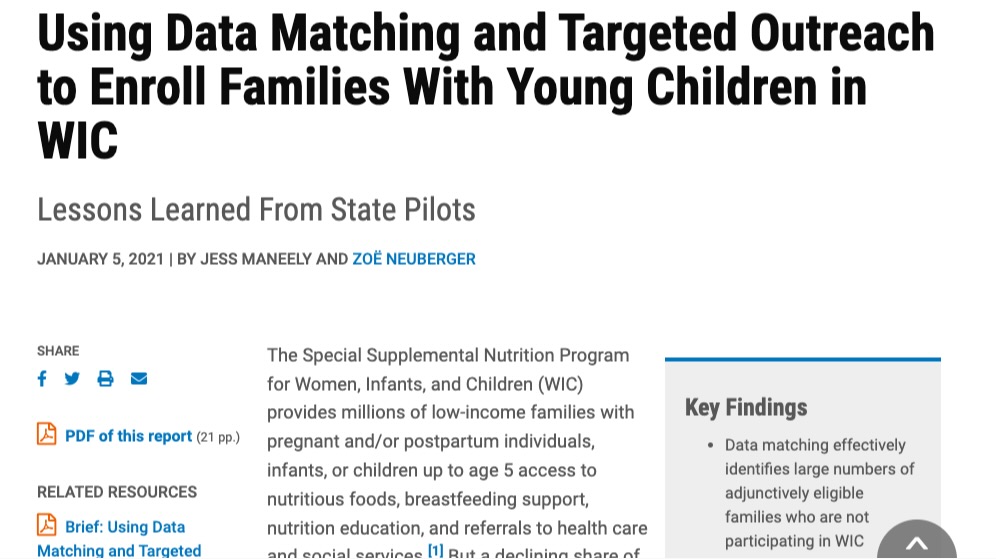
The report examines pilot projects in multiple states that utilized data matching and targeted outreach to enroll eligible families with young children in the WIC program, demonstrating the effectiveness of this approach in increasing participation rates.
This session from FormFest 2024 focused on improving service delivery by hearing about work in multiple cities to rapidly digitize service delivery and work by the Department of Veteran Affairs around implementing service design principles in form revisions.
This report provides guidance on building equitable and user-friendly affordable housing portals, highlighting best practices from platforms like Bloom Housing and Housing Navigator MA.
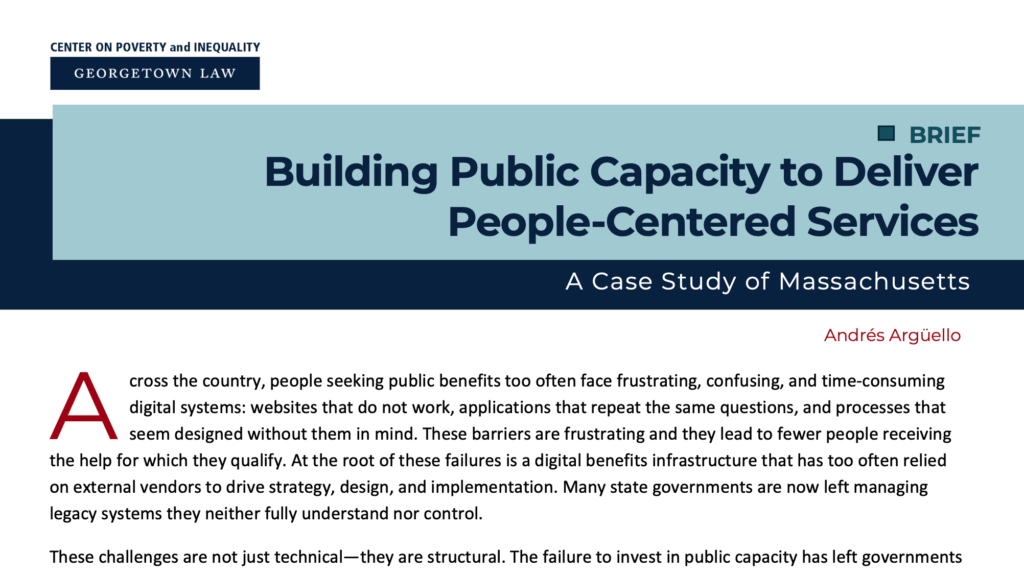
A case study describing how Massachusetts is building long-term public-sector capacity to deliver people-centered digital services by strengthening in-house expertise, shared tools, and agency-embedded support.