This memo provides information to child and family service agencies on improving support for intersex children, adolescents, and their families through affirming practices, resources, and partnerships.
U.S. Department of Health and Human Services (HHS)
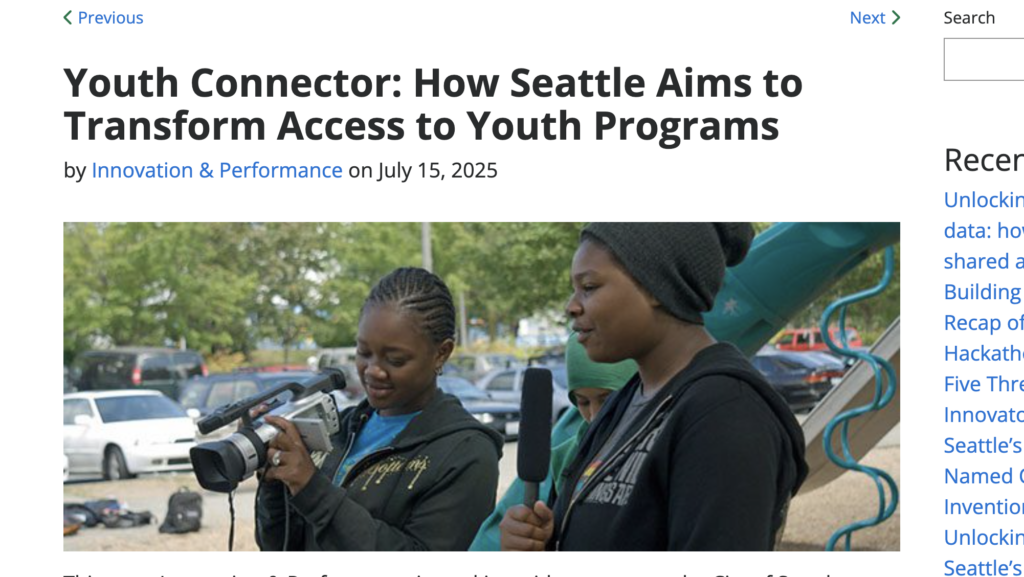
A blog post describing Seattle’s Youth Connector initiative, a city effort to make it easier for young people to discover, access, and connect with youth programs and supports that promote mental health, enrichment, and opportunity.
A comprehensive report outlining a student-led strategy to improve access to mental health supports through prevention, early intervention, and treatment across schools and community partners.
This factsheet outlines the Administration for Children and Families’ (ACF) 2024 initiatives to promote health equity across its programs by embedding equity into funding, service delivery, and community engagement.
U.S. Department of Health and Human Services (HHS)
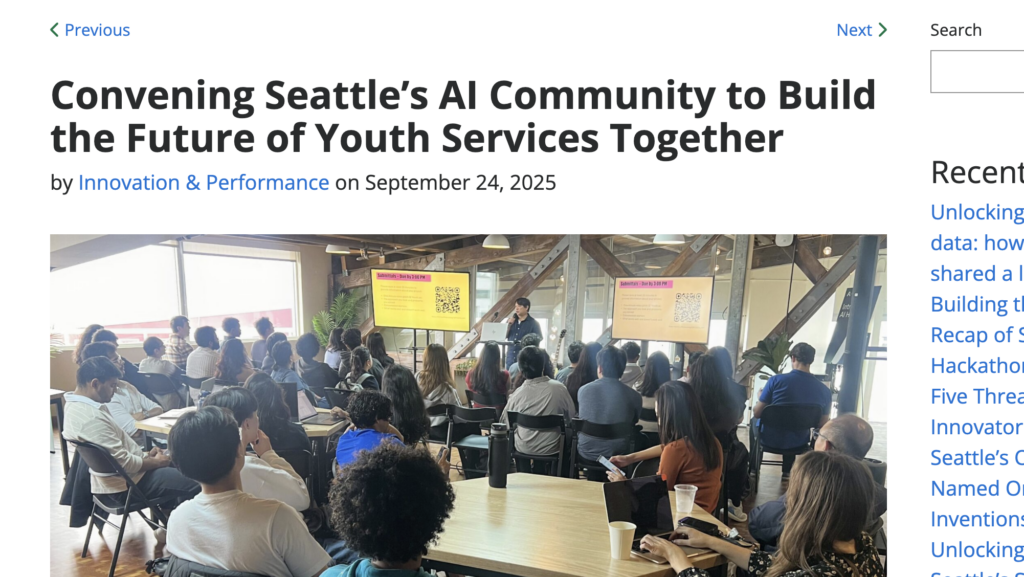
A recap of a community innovation hackathon in Seattle where technologists and students used AI to prototype solutions that help youth discover and access local programs and services.
This brief highlights key takeaways from APHSA’s work on young families, starting with an overview of the young families work and its early years, followed by key takeaways and highlights from its final year, ending with opportunities for future work in the young families space.
American Public Human Services Association (APHSA)
This expansive toolkit provides guidance, real world examples, and resources to help TANF and child support programs engage the families they serve in improving service delivery, policy, and program operations.
Growing Up NYCÂ is mobile-friendly website that makes it simple for families to learn about and access city programs, as well as services and activities available to New York residents.
This course provides Head Start program leaders with strategies and tools to foster inclusive environments for LGBTQIA2S+ individuals within their programs.
U.S. Department of Health and Human Services (HHS)
This case study examines how Michigan’s Department of Health and Human Services uses data practices to advance racial equity in child welfare through identity-informed data collection and anonymous decision-making.
U.S. Department of Health and Human Services (HHS)